Featured
Last news
Genesis GV60 Magma before launch
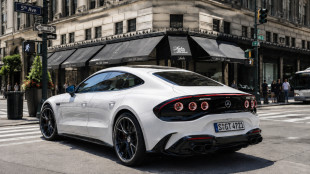
The new Genesis GV60 Magma is a model that means much more to the brand than just another particularly powerful version of an existing electric car. The car represents a strategic change of direction. Genesis no longer wants to define itself solely through design, material quality and quiet luxury, but also through its own credible form of high performance. That's exactly why the GV60 Magma is so important: it's not just any sporty derivative, but the first production vehicle in the new Magma world – and thus concrete proof that an idea is now becoming a real product.The timing is well chosen. The regular GV60 has recently undergone noticeable technical and visual enhancements, the brand has visibly sharpened its electric expertise, and at the same time, pressure is growing in the premium segment to more closely link performance, digitalisation and brand character. Many manufacturers today can build fast-accelerating electric cars. The real question is no longer just how much power a vehicle offers, but how this power is staged, dosed and translated into a credible overall picture. This is precisely where Genesis is trying to make its mark with the GV60 Magma.Even at first glance, it is clear that the Magma is not just a cosmetically enhanced GV60. The car appears wider, lower and significantly more taut. The proportions seem more compact, the body sits more solidly on the road, and the add-on parts are not merely decorative, but designed for downforce, cooling and high-speed stability. The front end, side skirts, rear spoiler and air ducts visibly follow a functional logic. Added to this are forged 21-inch wheels, wide tyres and an overall appearance that focuses less on striking aggression and more on controlled presence. This is precisely one of the most interesting features of this vehicle: Genesis is attempting to define sportiness not through visual exaggeration, but through excitement, attitude and technical credibility.The GV60 Magma also goes a clear step beyond the previous GV60 range in terms of drive technology. Two electric motors and all-wheel drive form the technical basis. A very high level of performance is already available as standard, and in boost mode, the system performance increases significantly once again. Genesis is thus positioning the Magma at the top of its electrified model range. Added to this is a top speed that stands out in this class, as well as a 0-200 km/h time that clearly shows that this is not just the usual electric sprint from a standing start, but real performance beyond the first few metres. This is an important difference: many electric cars feel spectacular at first, but lose their punch as speed increases. The GV60 Magma is designed to close this gap.It is noteworthy that Genesis does not present the car as an uncompromising race track machine despite its performance orientation. Instead, the focus is on a synthesis of power, control and premium comfort. The battery is generously sized at 84 kWh, the fast-charging capability remains high, and the official range also shows that the vehicle does not sacrifice everyday usability for mere effect. The GV60 Magma therefore aims not only to impress, but also to remain usable. This is crucial for its future market role.A model like this has to meet two expectations at the same time: it should be emotionally charged, but at the same time not seem exhausting in everyday use. It is precisely this balancing act that Genesis has made its core message.A look beneath the surface shows that the Magma is not just a show car exercise. The chassis, geometry and roll centre have been specifically revised, and electronic damper systems, special control strategies and a braking system tuned to the increased performance level have been added. Equally important is the temperature control of the battery system. Anyone who takes high-performance electric cars seriously knows that raw peak values alone mean little if thermal management, reproducibility and stability cannot keep up. Genesis addresses precisely these points with its own high-performance battery management system. This is an indication that the GV60 Magma is not only designed for spectacular acceleration manoeuvres, but also for repeatable performance under load.The interior is particularly interesting because it encapsulates the actual philosophy of the vehicle. Genesis does not compromise on luxury – on the contrary. High-quality surfaces, a deliberately calm interior, special seats, exclusive material combinations and the brand's characteristic attention to detail remain intact. At the same time, a new, more performance-oriented operating logic has been introduced. A special Magma mode changes the instrument display, bringing important driving data to the fore, while the head-up display focuses more on driving-related information. Added to this are virtual gear changes, specific soundscapes, launch control, drift function and various driving programmes designed to noticeably change the character of the vehicle. This is interesting from both a technological and cultural perspective, because Genesis is bringing two worlds together here: the classic premium idea of calm and sovereignty on the one hand, and the digitally supported performance experience that has been reinvented in the electric age on the other.It is precisely this combination that is likely to distinguish the GV60 Magma from other high-performance electric cars on the market. While some competitors focus on maximum toughness, aggressive communication and the most spectacular driving dynamics possible, Genesis is clearly opting for a more refined interpretation. The driver should feel fast, but not overwhelmed. The car should make its reserves felt without constantly proclaiming how serious it is about them. This approach is anything but insignificant. It could become the actual identity of the model – and, in the long term, the calling card of an entire Magma family.The development programme also shows how seriously Genesis takes this claim. The GV60 Magma was not left in the protected space of a design study, but was put through a broad-based test programme. Winter testing, heat, high altitude, real roads, racetracks and fine-tuning in the home market – all this is part of the preparation. Added to this is the early public demonstration of the concept car in Goodwood, where the Magma gained attention as a serious performance project even before series production began. This is important for the brand's image. Genesis presents high performance not as an afterthought, but as something that has been systematically developed.What the GV60 Magma heralds for the coming years is also exciting. The Magma idea is bigger than this one car. Genesis sees it as a long-term programme and a testing ground for future performance models. The GV60 is a logical starting point for this: it is compact enough for agility, modern enough for a consistently digital interpretation of performance, and emotional enough to bring new substance to the brand. In this sense, the GV60 Magma is a production vehicle – and at the same time a manifesto. It shows how Genesis wants to see its future: electric, fast, luxurious and technically independent.
Speed cameras: Brazen rip-off or necessary?
Germany is once again engaged in increasingly heated debate on an issue that has long since become much more than a mere traffic matter: have speed cameras actually become a convenient source of revenue for cash-strapped towns and municipalities, or are they a necessary means of protecting lives on Germany's roads? The outrage felt by many motorists is not without reason. When you see local authorities raking in millions from speeding and red light violations while at the same time complaining about austerity measures, deficits and budget shortfalls, you quickly get the impression that this is not just about monitoring, but above all about collecting money. It is precisely this suspicion that has further fuelled the debate in recent months.In fact, the sums speak for themselves. In a recent evaluation of major German cities, numerous local authorities once again generated millions in revenue from traffic monitoring. It is particularly striking that it is not just a few outliers reporting high amounts, but that a permanently lucrative level of revenue has become established in many cities. This is politically sensitive because, although fines are justified on regulatory grounds, many citizens perceive them as a fixed component of municipal financial planning. Mistrust grows even stronger in cities that like to refer to safety but at the same time do not make a clear distinction between prevention and revenue generation.Hamburg in particular is a prime example of this tension. The figures currently available there show the scale that traffic monitoring has now reached. In 2024 alone, stationary and mobile speed monitoring generated almost £47 million in revenue. By far the largest share came from mobile controls, while stationary systems generated significantly less, but still tens of millions. In addition, there was revenue from stationary red light monitoring. Even in the following year, the city remained at a very high level: speeding offences alone again generated more than 40 million euros. Anyone who reads such figures immediately understands why the term ‘rip-off’ is no longer a polemical exaggeration for many people, but a perceived finding.There is a second point that exacerbates the criticism: in many cities, these revenues are not earmarked for improving road safety, but rather flow into the general budget. This is not surprising from a legal perspective, but it is politically explosive. Anyone who expects money from speed cameras to be automatically invested in safe routes to school, intersection renovations, better lighting, cycle paths or accident prevention is often mistaken. This creates a fatal image for citizens: the local authority measures, collects and records – but whether the revenue is visibly returned to dangerous traffic spots often remains unclear. Where transparency is lacking, suspicion grows that a legitimate safety instrument has gradually become a fiscal business model.The situation becomes particularly explosive when the financial side effect is no longer just tacitly accepted, but openly discussed in consolidation debates. A current case from Halle an der Saale illustrates this problem precisely. There, the budget consolidation concept is to include additional revenue from traffic monitoring. Last year, the revenue there was already in the millions, and now further amounts are to be added. At the same time, it is officially emphasised that the primary objective remains traffic safety. It is precisely this double message that is at the heart of the problem: as soon as a city promises more safety on the one hand, but openly expects higher revenues on the other, every new measuring system becomes politically explosive.
Germany: Electric car boom remains fragile
The German market for electric cars is showing signs of life again. After the setback caused by the abrupt end of subsidies at the end of 2023, new registrations are now rising noticeably again. At first glance, this looks like the belated return of the upswing. At second glance, however, a much more complicated picture emerges: Government support is once again in the billions, the expansion of the charging infrastructure is progressing, tax advantages remain in place – and yet many buyers, especially in the private market, continue to react with remarkable caution.This is what makes the current figures so contradictory. Pure electric cars are on the rise again in terms of new registrations, but there is no sign of a broad wave of purchases. The market is growing, but not with the momentum that might be expected after years of political prioritisation, new purchase incentives and infrastructure programmes worth billions. This is precisely the core problem of German e-mobility: it is making progress, but it is not yet convincing across the board.It is true that significantly more battery electric vehicles have recently been registered. In 2025 as a whole, Germany once again proved to be an important growth driver within Europe. At the same time, the share of purely electric cars in all new registrations remains at a level that looks more like stabilisation than a breakthrough. It is also striking that the overall market is growing only moderately and that the commercial sector continues to dominate the new car business. Where company cars, fleet vehicles and tax-privileged company cars are strong, the figures often appear more dynamic than private demand actually is.This is precisely why industry observers are now looking less at the pure number of new registrations and more at the question of who is actually buying. And here, the situation is much more sobering. In the private sector, there is still a great deal of reluctance. Many households are postponing the switch, driving their combustion engines for longer or opting for petrol, diesel or a hybrid again when buying their next vehicle. This means that mass acceptance in the everyday market has not yet been achieved.
Germany: Fuel rage and the 2026 election year
The war in Iran and the escalation in the Gulf region are no longer just foreign policy news from afar for Germany. They are having a major impact on people's everyday lives – and in the place where many feel the economic reality most directly: at the petrol pump. As soon as production volumes, transport routes and security situations in the Middle East start to slide, the price of oil jumps, traders factor in risk premiums, and ultimately the geopolitical turmoil ends up in motorists' wallets. That is exactly what is happening at the moment. What is a strategic crisis for governments, stock exchanges and commodity markets becomes a very real cost burden for commuters, families, tradespeople, delivery services and small businesses within hours.What is particularly explosive is not only the size of the price increases, but also their speed. Just a few days ago, fuel prices in Germany were already high enough for many people. But then a new dynamic set in: within a very short time, petrol and diesel prices shot up, with diesel even exceeding the two-pound-per-litre mark at times and, in some phases, exceeding the price of petrol. This picture alone reveals the nervousness of the market. Because when diesel – despite lower energy taxes – suddenly becomes more expensive than Super E10, it shows how strongly crisis fears, expectations of shortages and market mechanisms are influencing pricing.For millions of people, this is not a theoretical debate. Those who live in rural areas, work shifts, care for relatives, drive to construction sites, deliver goods or work in the field cannot replace mobility with Sunday speeches. In many regions of Germany, the car is not a convenient additional option, but a prerequisite for work, supplies and everyday life. If the price per litre rises by double-digit cents in a few days, this not only eats into purchasing power, but also directly impacts monthly budgets that are already under pressure. Those who have to fill up three times a week feel the difference not in abstract terms, but as a real additional burden. And those who drive commercially will sooner or later pass on these costs – to customers, to consumers, to the entire price chain.
United Chargers Unveils Grizzl-E Connect Commercial
Purchase a 3-Year Commercial License and Receive One Year for Free
New Nissan Leaf 2026 review
The name ‘Leaf’ stands like no other for the early breakthrough of electric mobility in everyday life. Now Nissan is bringing back the Leaf as a completely repositioned model – not as a classic compact car as before, but as an aerodynamically designed electric crossover in a family-friendly size. The central promise: long range, modern assistance and infotainment technology, and an entry-level price that currently stands out in the German market. At the same time, the equipment list shows that the aggressive price has not been achieved without compromises – especially in terms of charging and the winter suitability of the basic version.Pricing strategy: starting at £35,950 – and a clear focus on volumeNissan is focusing on a clear spread for the new Leaf (model year 2026): the entry-level price starts at £35,950 (recommended retail price, typically plus delivery). The variants are priced up to £48,000.Noteworthy: the smaller battery is only available in the basic version. Those who want more range and more comfort technology automatically end up with the larger battery and thus in a significantly higher price range. Although the Leaf is advertised at a ‘competitive price’, the configurations that are realistically in high demand (larger battery, more comfort) are in a price range where there is strong competition.
Rimac Nevera R: Beyond imagination
There are vehicles that define a class. And there are vehicles that define a benchmark for which there was not even a reasonable scale before. The Rimac Nevera R is just such a case: a fully electric hypercar that is not only faster than most of what we know, but whose technical logic stems more from the world of high-performance test benches, aerodynamics laboratories and control software than from classic sports car romanticism.Yet the Nevera R is not intended to be ‘just another special edition’. Rimac describes it as a counterpoint to the grand tourer concept of the original Nevera: less ‘hyper GT’, more ‘hyper sports car’. The letter R symbolises a philosophy that is rarely seen implemented so consistently in everyday life: radical, rebellious, relentlessly refined. The goal is clear – not only to achieve top speeds in a straight line, but above all to deliver a new level of quality in corners, when braking and in the feedback to the driver.
Luce: Ferrari's ingenious electric revolution
Rome is set to be the scene of a milestone that could hardly be more significant for Ferrari: on 25 May 2026, the manufacturer plans to present its first fully electric production Ferrari to the public. The name of the model has already been decided – ‘Luce’, Italian for ‘light’. And it says it all: not as a departure from tradition, but as a deliberate starting point for a future in which performance, emotion and electrification come together. Ferrari is not just talking about a new type of drive system – but about a new chapter in the brand's identity.Three phases until the world premiere – and a deliberately built-up suspense arcFerrari has designed the launch of the Luce not as a classic ‘curtain up’ moment, but as a multi-stage unveiling. After the early technical visualisation of key components, the next, strongly design-driven stage followed in early 2026: the name and interior were revealed in advance, without revealing the complete exterior. This dramaturgy is no coincidence. It signals that Ferrari does not want the Luce to be seen as merely an ‘electric model’, but rather as the start of a separate segment within its own model range – with its own character, its own design language and a clear message: electrification is not an end in itself here, but a tool for new possibilities.
Cayenne Turbo Electric 2026
With the Cayenne Turbo Electric, the Stuttgart-based sports car manufacturer is finally entering the age of fully electric SUVs. Back in 2002, the Cayenne was the model with which Porsche conquered the luxury off-road vehicle segment. With the fourth generation, a pure battery-powered vehicle is now available for the first time. Two variants will be launched in spring 2026: the Cayenne Electric and the top-of-the-range Cayenne Turbo Electric. Both feature all-wheel drive with one permanently excited synchronous motor per axle. The electric Cayennes are longer and wider than the previous models, yet still offer the characteristic silhouette with a low bonnet, curved roofline and striking fenders.Supercar-level performance and driving dynamicsIn the Turbo version, the E-Cayenne delivers a system output of up to 850 kW (1,156 hp) when the start or ‘push-to-pass’ function is activated. In normal operation, 630 kW (857 hp) is available; an additional boost of 130 kW (176 hp) can be called up for ten seconds at the touch of a button. The maximum torque is 1,500 Nm. With this power, the SUV, which weighs just under 2.72 tonnes, sprints to 100 km/h in 2.5 seconds and reaches 200 km/h in just 7.4 seconds. The top speed is 260 km/h. The standard Cayenne Electric achieves 300 kW (408 hp) in normal driving mode and 325 kW (442 hp) with the aid of Launch Control. It accelerates from 0–100 km/h in 4.8 seconds and reaches a top speed of 230 km/h. Both versions feature electronic Porsche Traction Management (ePTM), which regulates the power distribution between the front and rear axles in milliseconds.
Alfa Tonale 2026: With a new look
Alfa Romeo has given its Tonale compact SUV, launched in 2022, a very subtle but effective update. Three years after its debut, the designers are drawing on Alfa's typical heritage and sharpening its profile: The front now features a more pronounced, concave Scudetto radiator grille, which references the historic ‘33 Stradale’ with horizontal struts. The grille is flanked by a redesigned front apron, in which a wider air intake and side openings give the Tonale a more dynamic look. Alfa Romeo has also shortened the front overhang and widened the track, giving the car a more muscular appearance. Newly designed alloy wheels in sizes ranging from 17 to 20 inches and fresh paint finishes – including Rosso Brera, Verde Monza and Giallo Ocra – underline the refreshed look.Interior: new colours, more comfortThe interior also benefits from ‘a little cosmetic surgery’. Alfa Romeo is expanding its range with new colours and materials. In addition to the familiar black fabric and leather upholstery, bright red leather seats or a two-tone combination of white imitation leather and black Alcantara are available for the first time. A new ‘Cannelloni’ seat design with pronounced cross-beading is reminiscent of the sports seats from the 1960s. Perforated Alcantara upholstery with white or ‘Ice’ contrast stitching is available for the Sport Speciale variant; the dashboard is also trimmed in Alcantara. LED ambient lighting in various colours, including a serpentine pattern paying homage to the coat of arms of Milan, further enhances the cockpit. In Europe, a flat rotary knob replaces the previous gear lever, while the US version retains a classic gear selector – both variants feature large aluminium paddle shifters on the steering wheel. The infotainment system includes a 10.3-inch touchscreen and a 12.3-inch digital speedometer; a 360-degree camera, wireless charging and a Harman Kardon sound system are available as options.
BMW 7 Series and i7: facelift in 2026
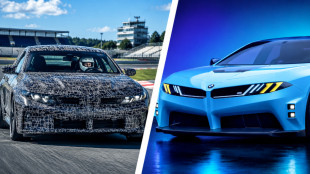
The seventh generation of the BMW 7 Series will be presented in a comprehensively revised form from 2026. We have created a graphic preview in the form of a photo, but whether this corresponds to reality is still questionable, to say the least. Around four years after the series made its debut, the Munich-based manufacturer's flagship model will undergo a so-called life cycle impulse, which offers much more than just cosmetic changes. The first prototypes, which were spotted on test drives around the Nürburgring, reveal that BMW is becoming bolder in its design: the striking double kidney grille remains divided into two parts, but appears lower and less bulky thanks to horizontal bars. In addition, the narrow daytime running lights have been redesigned into more delicate daytime running light clips. The rear end will feature a clearer, horizontal light signature based on the design of the 5 Series. Four trapezoidal tailpipes reveal that powerful combustion engines will continue to be used, while an extended body variant is unnecessary as the current G70 model already comes with a long wheelbase as standard.In the interior, BMW is focusing on a technological revolution. The new Panoramic iDrive – a further development of the classic head-up display – projects driving-related information across the entire width of the windscreen, largely replacing the conventional instrument cluster. The driver operates the system via a central touch display with Quick Select logic and a new multifunction unit on the steering wheel, whose buttons provide haptic feedback. Together with the optional 3D projection in the driver's field of vision, the system enables intuitive, distraction-free operation. Another highlight is the integration of innovations from the ‘New Class’, which BMW will gradually roll out in all model series from 2025 onwards. These include more connected on-board electronics and more powerful computers, which are a prerequisite for new Level 3 assistance systems. Additional sensors in the front apron indicate the use of the Personal Pilot system, which is designed to enable temporary autonomous driving in defined situations.
Lucid Gravity 2026: Test report
The new electric SUV from a US manufacturer combines the range of a saloon car with the elite space of a van. An extensive winter test covering 8,000 kilometres in Europe, in which pre-production vehicles travelled from the Munich development centre to the Arctic Circle, confirms this high and fulfilled claim. The development team examined both performance on unlimited motorway sections and charging at three-phase European AC connections and state-of-the-art fast charging stations. In extreme cold and summer heat, the interaction of drive, charging performance and comfort was tested to meet the expectations of European customers.Design and spaceWith a length of around 5.03 metres, a wheelbase of over 3.3 metres and a drag coefficient of 0.24, the SUV is surprisingly aerodynamic despite its imposing dimensions. The flat silhouette and flush-mounted door handles emphasise its elegant appearance. The raised windscreen extends seamlessly over the passengers' heads and, together with the panoramic glass roof, creates an airy feeling of space. Depending on the configuration, the vehicle can seat five to seven adults. The second row of seats can be folded electrically into the floor; individual seats will also be available in future. An additional storage compartment under the front bonnet – known as the frunk – has a capacity of 227 litres and can be converted into a bench seat thanks to upholstery. When the rear seats are folded down, the load volume increases to up to 3,450 litres.
Bentley: Visions for 2026
Bentley returns to its roots in 2026 with the Continental GT Supersports, one of the most extreme versions of the two-seater grand tourer ever to hit the road. A hundred years after the first ‘Super Sports’, the new Supersports remains true to its name: it will be limited to just 500 numbered units and offers the purest driving experience.At the heart of the Supersports is the revised 4.0-litre twin-turbo V8 with enlarged turbochargers and reinforced cylinder heads. With 666 PS and 800 Nm of torque, it achieves the highest performance ever achieved in a Bentley V8. Power is transmitted to the rear wheels via an eight-speed dual-clutch transmission – a departure from the usual all-wheel drive and an expression of the purist concept.The Supersports' performance is impressive: 0–100 km/h in 3.7 seconds and a top speed of around 310 km/h. To ensure the car remains stable at high speeds, the aerodynamics have been comprehensively optimised. A huge front splitter, side skirts, aprons and a fixed rear wing generate over 300 kilograms of additional downforce compared to the Continental GT Speed. The weight reduction extends from carbon fibre body parts to a complete titanium exhaust system; the total weight remains below two tonnes, enabling the car to achieve 1.3 g of lateral acceleration.In the interior, Bentley has opted for a combination of carbon fibre and fine leather. The traditional rear seats have been replaced by two lower-positioned sports seats to save weight and lower the centre of gravity. As usual, customisation is possible through the in-house refiner Mulliner, with new colour and material combinations available. Orders for the Supersports will start in March 2026, with production starting later in the year. Bentley has not yet announced official prices, but experts expect them to be well into six figures.Urban SUV – first all-electric production modelWhile the Supersports celebrates the petrol tradition, Bentley is simultaneously venturing into the fully electric future. The British manufacturer has announced its first all-electric SUV, currently known under the working title ‘Urban SUV’, for the end of 2026. With a length of less than five metres, it is set to be more compact than the Bentayga and create a new market segment. The manufacturer promises tailor-made luxury and a wide range of personalisation options, as well as state-of-the-art technology.Technical details are still scarce, but Bentley confirmed at a press conference that the Urban SUV will be based on an 800-volt platform and will offer a charging capacity for a range of 160 kilometres in under seven minutes. The developers are thus aiming for industry-leading charging times. The platform is likely to come from the Volkswagen Group, as is already the case with other models in the Premium Performance Electric (PPE) modular system.Production of the pre-series vehicles has already begun in autumn 2025, and Bentley emphasises that the Urban SUV will be designed, developed and built entirely in Crewe. The market launch is planned for the end of 2026, with the first deliveries to customers scheduled for 2027. Inside, customers can expect a new level of digital connectivity, paired with sustainable materials and the typical Bentley finish. The trade press estimates the starting price at around €140,000, which would be below the Bentayga.
Worksport Secures Key Certifications for COR(TM) System; Clearing Path to "Big Box" Retail in Q1 2026
Transport and Federal Approvals Now in Hand; UL Safety Certifications on Track to Finalize Q1 2026
2026 S-Class starry facelift
When Mercedes‑Benz unveiled the 2026 S‑Class, it was clear that this was no ordinary facelift. Engineers replaced or refined more than 2,700 components, meaning over half of the vehicle is new. The changes begin on the outside: a 20 percent larger grille filled with hot‑stamped chrome stars projects a grander presence, while the traditional hood ornament now illuminates as part of the car’s striking light signature. Mercedes’ trademark three‑pointed star motif also appears in the headlights and taillights, underscoring the brand identity with refined opulence. Optional 20‑inch cross‑spoke wheels use high‑pressure casting to reduce weight and material consumption, and customers can choose from more than 150 paint colours.Digital light and starry illuminationLighting technology takes centre stage on the facelifted S‑Class. New micro‑LED Digital Light headlamps cut energy consumption in half while offering ultra‑range high beams that illuminate up to 600 metres ahead. The headlamps and taillamps embed miniature three‑pointed stars in their lenses, and the lights can project patterns such as welcome animations or warnings for oncoming drivers. These lamps are paired with a 20 percent larger grille outlined by a luminous frame and an illuminated bonnet star. At the rear, triple‑pod taillights with a star pattern and chrome accents contribute to a wider stance.An interior defined by screens and AIInside, the S‑Class adopts the MBUX Superscreen architecture. A 14.4‑inch central display is flanked by twin 12.3‑inch screens—one for the driver and another for the front passenger—forming a sweeping glass surface. Rear passengers enjoy two 13.1‑inch high‑definition displays with built‑in cameras. Mercedes’ latest software platform, MB.OS, underpins the cabin: it unifies navigation, vehicle systems and voice assistants. Generative AI powers the “Hey Mercedes” virtual assistant, enabling complex dialogue through voice assistants based on ChatGPT‑4o and Google Gemini. Navigation relies on Google Maps‑based data to provide real‑time traffic and 3‑D surroundings. Even the air vents are electronically controlled through Digital Vent Control, and an updated Energizing Air Control system filters cabin air for maximum purity.Comfort innovationsAlthough the cabin brims with screens, Mercedes preserved its luxurious ambience. Heated seatbelts can warm occupants to 44 °C (111 °F), while detachable remote controls allow rear passengers to adjust seat functions, climate and entertainment. The expanded Manufaktur programme offers nearly 50 bespoke paint finishes and 25 leather options, emphasising individuality. The interior retains high‑quality materials and adds Digital Vent Control for precise airflow. Mercedes has also equipped up to 10 external cameras, five radar sensors and twelve ultrasonic sensors, enabling advanced driver assistance and environment awareness.Handling and suspensionThe 2026 S‑Class comes standard with rear‑wheel steering that turns the rear wheels up to 4.5 degrees, reducing the turning circle by nearly two metres. Buyers can upgrade to an optional 10‑degree system for even tighter manoeuvrability. E‑Active Body Control, an active suspension that reads the road ahead, uses cloud‑sourced Car‑to‑X data to adjust damping at each wheel and can lift the car within milliseconds to mitigate side‑impact forces. This predictive suspension works alongside AIRMATIC air springs and electronically controlled dampers, delivering a blend of comfort and agility.
Worksport Confirms Government Evaluation of Aetherlux(TM) Heat Pump for Potential Long-Term Supply Deal; Certification Accelerated
Company Confirms Structured Evaluation Underway as Engineering Progress Accelerates Path to AHRI, ENERGY STAR® Certification and 2H 2026 Revenue
Worksport Delivers Breakout Q4: Revenue Up 65% YoY, Gross Profit Up 380%
FY2025 Revenue Climbs 91% to Record $16.2M as Margin Expansion Accelerates and Clean Energy Portfolio Enters Monetization Phase
New 2026 Tax Relief Sparks Wave of Household and Vehicle Spending
JACKSONVILLE, FLORIDA / ACCESS Newswire / February 10, 2026 / The 2026 tax filing season began Monday, January 26, and everybody is expecting bigger refunds this year due to the 2025 tax changes. In the prior filing season, the Internal Revenue Service (IRS) processed over 140 million individual returns, with roughly 60% of taxpayers receiving refunds averaging around $3,000.
All-new Ioniq 3 coming in 2026
Hyundai is preparing to launch the Ioniq 3, a compact EV that will slot below the Ioniq 5. Inspired by the Concept Three unveiled in 2025, the production car will ride on a 400‑volt version of the E‑GMP platform and feature pixelated LED lighting, active aero shutters and a lounge‑like cabin. Two battery options are expected: a 58.3 kWh pack yielding around 270 miles of range and an 81.4 kWh pack delivering roughly 375 miles (WLTP). A front‑mounted motor producing about 201 hp should propel the car to 60 mph in roughly 7.5 seconds with a top speed near 105 mph. Vehicle‑to‑load bidirectional charging will be included.Hyundai is also reportedly developing a high‑performance Ioniq 3 N with dual motors and 288 bhp for a sub‑six‑second 0–60 mph time. The infotainment system will debut the new Pleos software, enabling over‑the‑air updates and Apple CarPlay Ultra. Designers intend to create a “living room” interior with flexible seating and sustainable materials.
New Twingo e-tech is at the starting line
Renault has reimagined its iconic Twingo as a purely electric city car. Built on the AmpR Small platform, the new model uses a lithium‑iron‑phosphate battery with 27.5 kWh of usable capacity and an 80 hp motor. This combination gives a WLTP range of about 163 miles (approximately 263 km). Standard charging is via a 6.6 kW AC charger, with options for 11 kW AC and 50 kW DC; the latter takes the battery from 10 to 80 percent in 30 minutes. A one‑pedal mode delivers strong regeneration for urban driving.The Twingo E‑Tech is slated to hit the European market in early 2026 with a target price below €20,000. Early adopters can secure an R Pass from December 2025, gaining priority ordering and perks such as a 1:43 scale model and early test drives. Inside, a seven‑inch digital instrument cluster is paired with a ten‑inch infotainment screen running Google services and voice control. Sliding rear seats allow the boot to expand to 360 litres, and up to 24 driver‑assistance systems—including automated emergency braking and lane‑keeping—make this tiny EV surprisingly sophisticated.
New Ypsilon and Ypsilon hf
Lancia’s revival begins with an all‑new Ypsilon supermini. Built on Stellantis’s CMP platform, it comes as a battery‑electric or 48‑volt mild‑hybrid. The electric Ypsilon uses a 51 kWh battery and a front‑mounted motor rated at 115 kW (156 hp), delivering up to 403 km of WLTP range and more than 500 km in urban use. DC fast charging takes the battery from 20 to 80 percent in 24 minutes, or adds 100 km of range in 10 minutes, while consumption is rated at 14.3–14.6 kWh/100 km. The mild‑hybrid pairs a 1.2‑litre three‑cylinder with a 48‑V system to produce 100 hp and achieve 0–100 km/h in 9 seconds.The cabin is co‑created with furniture maker Cassina, combining sustainable textiles with a minimalist design. Lancia’s SALA (Sound Air Light Augmentation) interface manages lighting, climate and media across dual displays. Half of the surfaces passengers touch are made from recycled or eco‑friendly materials. Outside, the Ypsilon wears a reinterpretation of Lancia’s grille, round Stratos‑inspired rear lights and clean lines.
The Cupra Raval will be launched in 2026
The Cupra Raval translates Cupra’s rebellious spirit into an urban electric hatch. Derived from the UrbanRebel concept, it rides on the Volkswagen Group’s MEB+ architecture and will be built in Martorell. Launching in early 2026, the Dynamic and Dynamic Plus versions deliver 210 hp and up to 450 km of range, while the VZ Extreme pushes output to 226 hp and adds an electronic limited‑slip differential and adaptive chassis tuning.Two battery sizes—expected around 38 kWh and 56 kWh—will enable sub‑7‑second 0–62 mph acceleration. Styling borrows from the edgy UrbanRebel with angular headlamps, bold creases and copper‑coloured details. Inside, a driver‑focused cockpit features configurable digital instruments, a large infotainment screen and an optional 12‑speaker Sennheiser audio system.
New id.Polo comes electric
Volkswagen’s ID.Polo ushers the iconic Polo name into the electric age. Pre‑sales begin at the end of April 2026. Built at the Martorell plant in Spain, the compact five‑door model is the first production car on VW’s updated MEB+ platform. Pricing will start below €25,000.Customers can choose between 37 kWh and 52 kWh batteries powering 85 kW, 99 kW or 155 kW motors; the GTI variant with 166 kW arrives later. The larger battery delivers up to 450 km of range and supports DC charging at up to 130 kW. New assistance systems include Travel Assist with traffic‑light and stop‑sign recognition.
BMW iX3 new style and design
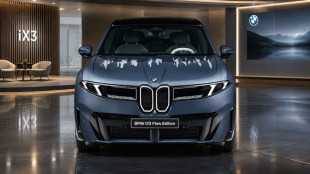
BMW’s iX3 heralds the Neue Klasse era. Revealed at CES 2026, the pre‑production SUV features a dual‑motor powertrain delivering 345 kW/469 hp and 645 Nm of torque, launching from 0–100 km/h in 4.9 seconds with a 210 km/h top speed. Sixth‑generation BMW eDrive technology introduces cylindrical cells and an 800‑volt battery with 108.7 kWh usable capacity, enabling up to 805 km of WLTP range.Ultra‑fast charging adds 372 km in 10 minutes at 400 kW DC stations. Charging from 10 to 80 % takes just 21 minutes, and the NACS port provides access to the Tesla Supercharger network with an optional 22 kW AC charger. Bidirectional charging (V2L, V2H and V2G) turns the iX3 into a mobile power bank or home energy store.Inside, the Panoramic iDrive spans the windscreen with a 43‑inch projection display and a 17.9‑inch infotainment screen. The AI‑powered Intelligent Personal Assistant, enhanced with Amazon Alexa+, allows natural voice interaction and controls vehicle functions. Sustainable materials contribute to a greener footprint, with recycled plastics and aluminium used in components. A flat floor improves space; the iX3 offers a 510‑litre boot plus a 58‑litre front trunk.
New Skoda Epiq: modern with range
Skoda’s Epiq is the first series‑production vehicle to fully adopt the brand’s new Modern Solid design language. Previewed as a show car in September 2025, the compact city SUV rides on Volkswagen’s MEB Entry platform and measures around 4.1 metres in length. Despite its small footprint, it seats five and provides a generous 475‑litre boot. Skoda aims to offer an affordable electric alternative to its conventional Kamiq with a targeted starting price of about €25,000. Production is slated to begin in Navarra, Spain, with sales expected in late 2026.Different battery sizes (around 38 kWh to 56 kWh) will deliver a WLTP range of up to 425 km. The platform is shared with the upcoming VW ID.Polo and Cupra Raval, ensuring competitive efficiency and low running costs. Externally, the Epiq is defined by its Tech‑Deck face with T‑shaped LED daytime running lights and a pronounced tornado line along the flanks. Cashmere matte paintwork combines with black accents to convey robustness.
Worksport Ltd. Announces Strategic Partnership With Potomac International Partners to Accelerate Federal Government and Commercial Market Adoption of Clean Energy Ecosystem
New Alliance Targets Department of War (DOW), FEMA and Global Commercial Fleet Sectors for SOLIS™, COR™ and Aetherlux™ ZeroFrost™ Technologies
Terravis Energy Secures Mass Manufacturing for No-Defrost Heat Pump Amid North American Polar Vortex Crisis
Aetherlux Pro Operates to -57°F Without Defrost Cycles or Backup Heat, Addressing Grid Stress and Soaring Energy Costs
United Chargers Boost Grizzl-E Club Rewards up to 10¢ per kWh
United Chargers Inc - manufacturer of popular Canadian made Grizzl-E EV chargers has announced a boost to its Clean Fuel Regulations based Grizzl-E Club payouts go from 3¢ per kWh to up to 10¢ per kWh
Worksport Subsidiary Terravis Energy Selects Major Asian Manufacturing Partner for Breakthrough Zerofrost(TM) Heat Pump; Announces Path to Commercialization Within 2026
Strategic Partnership Secures 2026 Production Scale; Breakthrough Heat-Pump Technology Eliminates Backup Heat While Maintaining High Efficiency in All Climates
AmeriTrust Announces Closing of Second and Final Tranche of Brokered Offering
Not for distribution to U.S. Newswire Services or Dissemination in the United States
Worksport Provides 2026 Business Update: Clean Energy Products Shipping Now, OEM and Major Distribution Conversations Deepen, Record Growth Forecasted
Entering 2026 with SOLIS solar systems shipping, expanding B2B and retail momentum, active EV OEM discussions, and major Aetherlux updates ahead.
Worksport Reports Highest Monthly Revenue in Company History
November sales reach $2.05 million with ~30% gross margins