Israelis, Palestinians torn over sacred shrine in city of Hebron / Photo: Hazem BADER - AFP


 London
 15 °C
15 °C

 Manchester
 11 °C
11 °C
 Glasgow
14 °C
Glasgow
14 °C
 Dublin
 7 °C
7 °C
 Belfast
6 °C
Belfast
6 °C
 Washington
9 °C
Washington
9 °C
 Denver
20 °C
Denver
20 °C
 Atlanta
17 °C
Atlanta
17 °C
 Dallas
21 °C
Dallas
21 °C
 Houston Texas
 27 °C
27 °C
 New Orleans
25 °C
New Orleans
25 °C
 El Paso
23 °C
El Paso
23 °C
 Phoenix
 31 °C
31 °C
 Los Angeles
31 °C
San Diego
27 °C
San Francisco
18 °C
Chicago
18 °C
Minneapolis
19 °C
Seattle
13 °C
Portland
18 °C
Salt Lake City
19 °C
Las Vegas
29 °C
Miami
27 °C
Jacksonville
23 °C
San Antonio
23 °C
Bermuda
26 °C
Nassau
11 °C
Iqaluit
-1 °C
Yellowknife
3 °C
Anchorage
7 °C
Fairbanks
2 °C
Barrow
-9 °C
Calgary
10 °C
Edmonton
13 °C
Winnipeg
10 °C
Goose Bay
6 °C
Halifax
6 °C
Boston
8 °C
Ottawa
6 °C
Toronto
12 °C
Detroit
15 °C
Cleveland
12 °C
New York
12 °C
Baltimore
9 °C
Philadelphia
10 °C
Nuuk (Godthåb)
3 °C
Hong Kong
Los Angeles
31 °C
San Diego
27 °C
San Francisco
18 °C
Chicago
18 °C
Minneapolis
19 °C
Seattle
13 °C
Portland
18 °C
Salt Lake City
19 °C
Las Vegas
29 °C
Miami
27 °C
Jacksonville
23 °C
San Antonio
23 °C
Bermuda
26 °C
Nassau
11 °C
Iqaluit
-1 °C
Yellowknife
3 °C
Anchorage
7 °C
Fairbanks
2 °C
Barrow
-9 °C
Calgary
10 °C
Edmonton
13 °C
Winnipeg
10 °C
Goose Bay
6 °C
Halifax
6 °C
Boston
8 °C
Ottawa
6 °C
Toronto
12 °C
Detroit
15 °C
Cleveland
12 °C
New York
12 °C
Baltimore
9 °C
Philadelphia
10 °C
Nuuk (Godthåb)
3 °C
Hong Kong
 27 °C
Singapore
32 °C
Melbourne
24 °C
Canberra
17 °C
Adelaide
22 °C
Darwin
27 °C
Singapore
32 °C
Melbourne
24 °C
Canberra
17 °C
Adelaide
22 °C
Darwin
 32 °C
Perth
21 °C
Fort Worth
22 °C
Honolulu
26 °C
Sydney
19 °C
Johannesburg
15 °C
Dubai
31 °C
Mumbai
31 °C
Zürich
12 °C
Tokyo
26 °C
Seoul
24 °C
Delhi
30 °C
Beijing
22 °C
Riyadh
27 °C
Prague
9 °C
Pennsylvania
7 °C
Valletta
24 °C
Manama
32 °C
Warsaw
11 °C
Stockholm
8 °C
32 °C
Perth
21 °C
Fort Worth
22 °C
Honolulu
26 °C
Sydney
19 °C
Johannesburg
15 °C
Dubai
31 °C
Mumbai
31 °C
Zürich
12 °C
Tokyo
26 °C
Seoul
24 °C
Delhi
30 °C
Beijing
22 °C
Riyadh
27 °C
Prague
9 °C
Pennsylvania
7 °C
Valletta
24 °C
Manama
32 °C
Warsaw
11 °C
Stockholm
8 °C
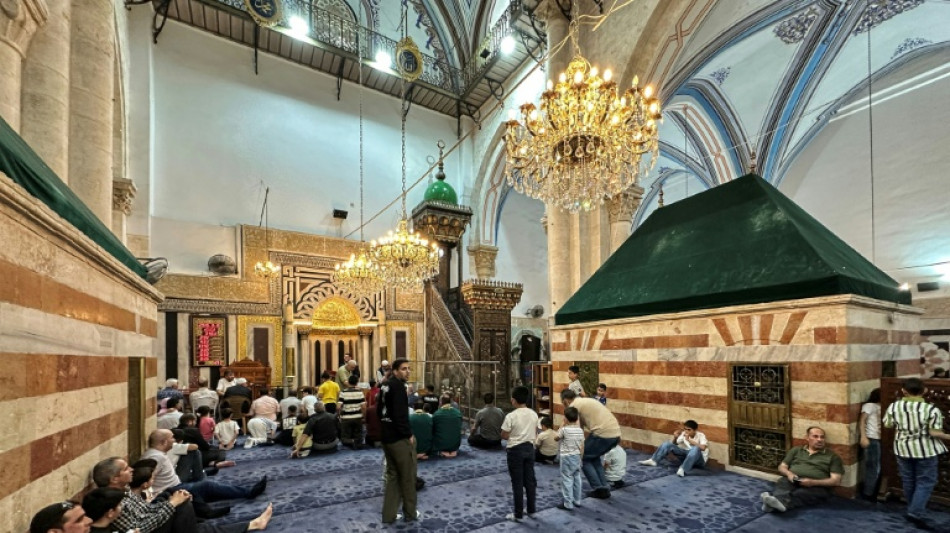
For Israeli settler Nitzan, Hebron's Old City and its sacred Cave of the Patriarchs shrine are a must-see for all of humanity, but for Palestinian Issa Amro, it has become a symbol of Israel's expanding grip on the city.
Holy to Jews, Muslims and Christians and believed to be the burial place of biblical figures including Abraham, the site has long represented the competing claims that define Hebron, the largest city in the Israeli-occupied West Bank.
Known to Muslims as the Ibrahimi Mosque, the shrine sits within a heavily controlled area where around 40,000 Palestinians live alongside about 200 Israeli settler families -- but under separate systems of movement and security.
Israeli authorities have installed checkpoints, gates and patrols across key streets in the area, citing security concerns, and Palestinians who do not live in the restricted zone are not allowed to enter freely.
Israel's far-right Finance Minister Bezalel Smotrich recently announced that the shrine's administration, including planning and construction powers, would be transferred to Israeli authorities, a significant shift that has alarmed Palestinians but cheered Israeli settlers.
"It's a place that all the humanity should visit to say thanks for Hashem, which is God," Nitzan, a resident of the nearby Kiryat Arba settlement, told AFP.
"We kind of visit our parents here," said the 36-year-old employee of Israeli national parks, declining to give his full name.
But for many Palestinians living in its shadow, the site now symbolises the steady tightening of Israeli control over a city where two communities live in close proximity but inhabit starkly different worlds.
"We feel that we live in a big jail in Hebron: the checkpoints restrict movement so nobody from outside can come to our houses," said Issa Amro, an activist who lives near buildings occupied by settlers.
Over time, many Palestinian shops in the Old City have shut, and the once vibrant thoroughfare flanked by old stone buildings now stands empty.
Amro showed AFP video of men throwing stones at his home's windows, saying they were Israelis who told him they had come to take his house. He is often harassed by settlers and Israeli soldiers, he added.
- Historical roots -
The Oslo Agreements of the 1990s between Israelis and Palestinians divided the West Bank into areas under each group's respective control.
Years later in 1997, Hebron became the territory's only Palestinian city to have an area under direct Israeli military control, named H2, which includes the Cave of the Patriarchs.
The holy site is also separated into an area for Jews and one for Muslims, each with a separate entrance.
The plaza leading to the entrance used by Jewish visitors is clean and orderly and, until recently, included a restaurant called the "Settlers' Cafe".
"Before, any little construction here used to need the prime minister's involvement," Aaron Marwani, a city councillor in Kiryat Arba, told AFP.
"But little by little, the process got easier," said the 35-year-old lawyer, who has been coming to the Cave of the Patriarchs since childhood.
Israeli parks employee Nitzan doesn't believe coexistence can happen in Hebron and said he favoured greater separation.
"For me it's difficult to live with those neighbours. The Palestinians don't want us here," he said.
Like several Israelis, Nitzan saw the Jewish presence in Hebron as a return to deep historical roots.
The city long had a Jewish community, but the British colonial authorities evacuated it after anti-Jewish violence in 1929, in which Arabs killed nearly 70 Jews.
Some families returned, only to be evacuated again during the 1936 Palestinian uprising and prevented from returning.
More bloodshed occurred in 1994 when Israeli-American settler Baruch Goldstein killed 29 Palestinian Muslims at the site.
- 'Chinatown in Israel' -
Excluding east Jerusalem, more than 500,000 Israelis live in settlements in the West Bank, which Israel has occupied since 1967, among some three million Palestinians.
Those settlements are illegal under international law.
In Hebron, some Israeli settler representatives say they want the city under full Israeli control.
"We'd like to see the reversal of Oslo and to put this town under Israeli control," said Ishai Fleischer, an Israeli-American, who serves as a spokesman for the settler community in Hebron.
"That doesn't mean that they can't have their own Arab mayor and their own Arab culture but it would be like a Chinatown within the broader Israel."
But Palestinians to whom AFP spoke feared being evicted entirely.
Moatz Abu Snena, director of the Ibrahimi Mosque, said that Smotrich's decision was part of a wider trend.
It is a "gradual takeover of the Ibrahimi Mosque, and also further Judaisation of the place and erasure of its Islamic and religious character", he said.
For Issa Amro, the issue goes beyond the religious site itself.
"It means that we live in our own city under military law while the Israelis live under civilian law," he said.
"It's apartheid, it's more segregation, more theft, more ethnic cleansing."
A.Jackson--SMC