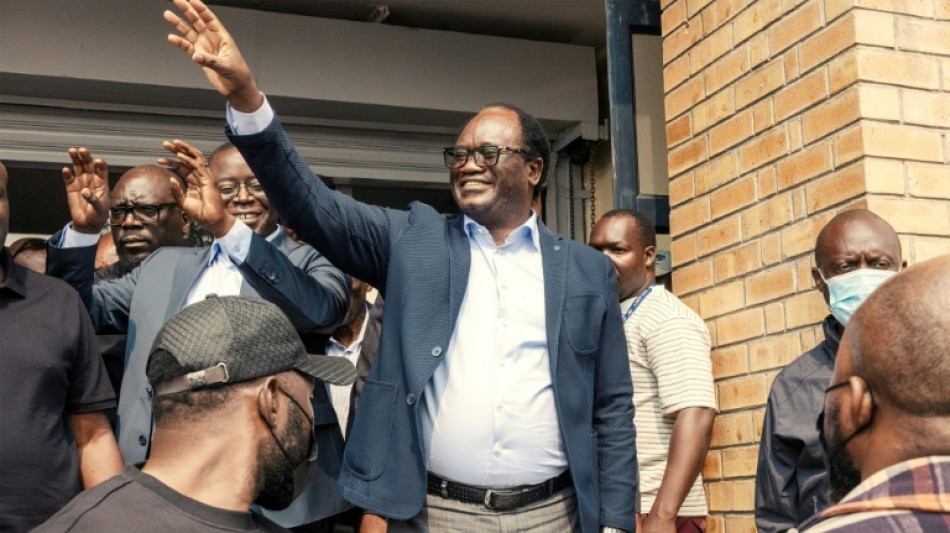
Zambia opposition leader surrenders to police: state media / Photo: GIANLUIGI GUERCIA - AFP/File


 London
 7 °C
7 °C

 Manchester
7 °C
Manchester
7 °C
 Glasgow
9 °C
Glasgow
9 °C
 Dublin
 9 °C
9 °C
 Belfast
 7 °C
7 °C
 Washington
 7 °C
7 °C
 Denver
15 °C
Denver
15 °C
 Atlanta
12 °C
Atlanta
12 °C
 Dallas
 18 °C
18 °C
 Houston Texas
20 °C
Houston Texas
20 °C
 New Orleans
19 °C
New Orleans
19 °C
 El Paso
18 °C
El Paso
18 °C
 Phoenix
20 °C
Phoenix
20 °C
 Los Angeles
17 °C
San Diego
17 °C
San Francisco
14 °C
Chicago
14 °C
Minneapolis
19 °C
Seattle
6 °C
Portland
7 °C
Salt Lake City
8 °C
Las Vegas
17 °C
Miami
24 °C
Jacksonville
15 °C
San Antonio
19 °C
Bermuda
23 °C
Nassau
9 °C
Iqaluit
-5 °C
Yellowknife
-6 °C
Anchorage
-1 °C
Fairbanks
-10 °C
Barrow
-4 °C
Calgary
0 °C
Edmonton
8 °C
Winnipeg
17 °C
Goose Bay
7 °C
Halifax
-1 °C
Boston
5 °C
Ottawa
1 °C
Toronto
7 °C
Detroit
8 °C
Cleveland
9 °C
New York
9 °C
Baltimore
8 °C
Philadelphia
7 °C
Nuuk (Godthåb)
Los Angeles
17 °C
San Diego
17 °C
San Francisco
14 °C
Chicago
14 °C
Minneapolis
19 °C
Seattle
6 °C
Portland
7 °C
Salt Lake City
8 °C
Las Vegas
17 °C
Miami
24 °C
Jacksonville
15 °C
San Antonio
19 °C
Bermuda
23 °C
Nassau
9 °C
Iqaluit
-5 °C
Yellowknife
-6 °C
Anchorage
-1 °C
Fairbanks
-10 °C
Barrow
-4 °C
Calgary
0 °C
Edmonton
8 °C
Winnipeg
17 °C
Goose Bay
7 °C
Halifax
-1 °C
Boston
5 °C
Ottawa
1 °C
Toronto
7 °C
Detroit
8 °C
Cleveland
9 °C
New York
9 °C
Baltimore
8 °C
Philadelphia
7 °C
Nuuk (Godthåb)
 -4 °C
Hong Kong
-4 °C
Hong Kong
 30 °C
Singapore
30 °C
Singapore
 25 °C
Melbourne
20 °C
Canberra
25 °C
Melbourne
20 °C
Canberra
 26 °C
Adelaide
20 °C
Darwin
33 °C
Perth
18 °C
Fort Worth
18 °C
Honolulu
24 °C
Sydney
24 °C
Johannesburg
19 °C
Dubai
32 °C
Mumbai
26 °C
Adelaide
20 °C
Darwin
33 °C
Perth
18 °C
Fort Worth
18 °C
Honolulu
24 °C
Sydney
24 °C
Johannesburg
19 °C
Dubai
32 °C
Mumbai
 34 °C
Zürich
34 °C
Zürich
 7 °C
Tokyo
17 °C
Seoul
17 °C
Delhi
29 °C
Beijing
16 °C
Riyadh
32 °C
Prague
9 °C
Pennsylvania
4 °C
Valletta
7 °C
Tokyo
17 °C
Seoul
17 °C
Delhi
29 °C
Beijing
16 °C
Riyadh
32 °C
Prague
9 °C
Pennsylvania
4 °C
Valletta
 19 °C
Manama
32 °C
Warsaw
7 °C
Stockholm
8 °C
19 °C
Manama
32 °C
Warsaw
7 °C
Stockholm
8 °C
The Zambian opposition leader who was runner-up in this month's disputed presidential election surrendered to police on Thursday after two weeks in hiding following a summons over an alleged national security threat, state media reported.
President Hakainde Hichilema won 60 percent of the vote and is due to be sworn in for a second term next week, despite uncertainty about whether a challenge to his victory was validly filed.
Opposition leader Brian Mundubile was interviewed by a team of law enforcement officers, ZNBC said, citing police spokesperson Godfrey Chilabi.
He was interrogated alongside his running mate in the presence of their lawyers, he said.
Mundubile took refuge the day after the August 13 election at an international human rights organisation after police raided his home in an operation against the opposition.
Former cabinet minister Mutotwe Kafwaya was shot and killed during the operation, which saw 11 people arrested. Police allege they were involved in insurgency or militia activity.
Mundubile has dismissed the allegations as fabricated.
While this month's vote was largely peaceful, international observers said it was marred by opposition claims of intimidation, arrests, abductions and violence.
- Court closure -
Mundubile, who scored around 38 percent, had vowed to challenge the result but Zambia closed its entire judiciary on Monday, the last day for filing an objection, citing "security reasons".
The Constitutional Court said Tuesday it had not received any petition challenging the election outcome, clearing the way for Hichilema's inauguration.
However, Chief Justice Mumba Malila said he had received a petition from a member of the public on his private email address.
He called the submission "highly irregular" but said he had referred it to the Constitutional Court for consideration.
The timing of the abrupt closure of the courts drew criticism from legal and rights groups.
Human Rights Watch (HRW) said it was "without credible explanation".
"Measures that effectively deny the opposition crucial access to the courts to challenge the conduct and validity of the presidential election are a blow to the administration of law, transparency, and due process in Zambia," HRW director Allan Ngari said.
- Opposition claims -
Hichilema entered the race as the clear favourite after steering Zambia -- Africa's second-largest copper producer -- through a major economic turnaround and restructuring its debt.
His first term was also marked by concerns over Zambia's political space, with opposition parties and civil society groups accusing his government of curbing dissent.
A lawyer by profession, Mundubile became the main opposition challenger after a fractured anti-government camp rallied around him through the Tonse Alliance, a coalition of opposition parties seeking to defeat Hichilema.
The 55-year-old was a close ally of the president in power before Hichilema, the late Edgar Lungu, and served as a minister in his administration.
Rights groups and election observer missions have said the post-election dispute has tarnished Zambia's democratic reputation.
Every change of president since the return to multiparty politics in 1991 has been achieved through elections.
A.Gagnon--SMC