Nepal recovers bodies but presses on for trapped tunnel workers / Photo: Arun SANKAR - AFP


 London
 15 °C
15 °C

 Manchester
15 °C
Manchester
15 °C
 Glasgow
 17 °C
17 °C
 Dublin
14 °C
Dublin
14 °C
 Belfast
15 °C
Belfast
15 °C
 Washington
22 °C
Washington
22 °C
 Denver
19 °C
Denver
19 °C
 Atlanta
 23 °C
23 °C
 Dallas
 30 °C
30 °C
 Houston Texas
28 °C
Houston Texas
28 °C
 New Orleans
28 °C
New Orleans
28 °C
 El Paso
30 °C
El Paso
30 °C
 Phoenix
28 °C
Phoenix
28 °C
 Los Angeles
22 °C
San Diego
22 °C
San Francisco
14 °C
Chicago
24 °C
Minneapolis
23 °C
Seattle
Los Angeles
22 °C
San Diego
22 °C
San Francisco
14 °C
Chicago
24 °C
Minneapolis
23 °C
Seattle
 14 °C
Portland
16 °C
Salt Lake City
17 °C
Las Vegas
29 °C
Miami
27 °C
Jacksonville
25 °C
San Antonio
27 °C
Bermuda
28 °C
Nassau
22 °C
Iqaluit
9 °C
Yellowknife
12 °C
Anchorage
11 °C
Fairbanks
14 °C
Portland
16 °C
Salt Lake City
17 °C
Las Vegas
29 °C
Miami
27 °C
Jacksonville
25 °C
San Antonio
27 °C
Bermuda
28 °C
Nassau
22 °C
Iqaluit
9 °C
Yellowknife
12 °C
Anchorage
11 °C
Fairbanks
 9 °C
Barrow
6 °C
Calgary
12 °C
Edmonton
24 °C
Winnipeg
19 °C
Goose Bay
16 °C
Halifax
19 °C
Boston
19 °C
Ottawa
14 °C
Toronto
19 °C
Detroit
22 °C
Cleveland
22 °C
New York
23 °C
Baltimore
23 °C
Philadelphia
22 °C
Nuuk (Godthåb)
6 °C
Hong Kong
28 °C
Singapore
9 °C
Barrow
6 °C
Calgary
12 °C
Edmonton
24 °C
Winnipeg
19 °C
Goose Bay
16 °C
Halifax
19 °C
Boston
19 °C
Ottawa
14 °C
Toronto
19 °C
Detroit
22 °C
Cleveland
22 °C
New York
23 °C
Baltimore
23 °C
Philadelphia
22 °C
Nuuk (Godthåb)
6 °C
Hong Kong
28 °C
Singapore
 31 °C
Melbourne
26 °C
Canberra
18 °C
Adelaide
19 °C
Darwin
31 °C
Perth
21 °C
Fort Worth
29 °C
Honolulu
24 °C
Sydney
19 °C
Johannesburg
16 °C
Dubai
41 °C
Mumbai
31 °C
Melbourne
26 °C
Canberra
18 °C
Adelaide
19 °C
Darwin
31 °C
Perth
21 °C
Fort Worth
29 °C
Honolulu
24 °C
Sydney
19 °C
Johannesburg
16 °C
Dubai
41 °C
Mumbai
 31 °C
Zürich
18 °C
Tokyo
27 °C
Seoul
25 °C
Delhi
33 °C
Beijing
31 °C
Riyadh
40 °C
Prague
17 °C
Pennsylvania
22 °C
Valletta
31 °C
Manama
40 °C
Warsaw
22 °C
Stockholm
17 °C
31 °C
Zürich
18 °C
Tokyo
27 °C
Seoul
25 °C
Delhi
33 °C
Beijing
31 °C
Riyadh
40 °C
Prague
17 °C
Pennsylvania
22 °C
Valletta
31 °C
Manama
40 °C
Warsaw
22 °C
Stockholm
17 °C
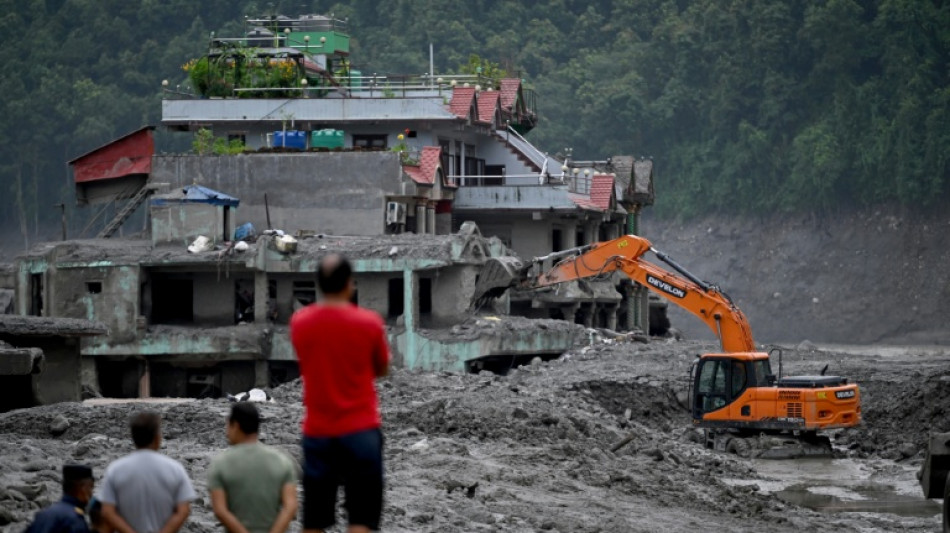
Nepali rescuers raced on Monday in a bid to free dozens of hydropower workers believed trapped in tunnels after devastating floods as search efforts entered a sixth day, officials said.
Rescuers pulled three dead bodies out of two tunnels, finding routes smothered in mud. No contact has yet been made with any of those feared trapped, but the government says more than 100 workers may still be alive inside multiple tunnels.
They are among 933 hydropower workers missing since a wall of mud and debris swept down on Wednesday morning, according to the National Disaster Risk Reduction and Management Authority.
At the Upper Trishuli 3A site, rescuers broke through into the upper part of a mud-swamped tunnel, pumping air inside, then using drilling and excavator machines to dig down.
"When members of the team descended using ropes and called out to those inside, there was no response," Prime Minister Balendra Shah said in an update on Sunday night.
The Nepal Army said on Monday morning that work continues to "clear water, mud, and sediment from inside the tunnel."
Specialised Indian, Chinese and South Korean tunnel-rescue teams are also helping.
At another site, Upper Trishuli-1, a Chinese team "entered approximately 300 meters (984 feet) into the tunnel and conducted a search, recovering one body", the Nepali Army said.
At the Chilime Hydro tunnel, where Indian teams are deployed, rescuers entered 100 metres inside, but then said it was blocked.
"Farther inside, was buried with mud and soil," the statement added. "During the operation, two bodies were recovered."
Nepali expert mountain rescue teams -- who regularly aid climbers on the world's highest peaks, including Everest -- are also taking part.
Rescue efforts continue to aid the tens of thousands impacted by the devastating floods, with roads smashed and bridges destroyed.
"We are continuing to work for search, rescue and relief operations," Netra Bahadur Karki, Armed Police Force spokesman, told AFP.
"Rescue teams have now reached most areas, by road or by helicopters. Our priority remains rescue and safety of the people."
The Nepal Electricity Authority said 11 hydropower stations and one solar power station, with a combined capacity of 431.1 megawatts, had stopped operating, about 10 percent of the country's installed electricity generation capacity.
Another 15 power projects under construction, with a planned capacity of 470 megawatts, were damaged.
F.T. Michaud--SMC