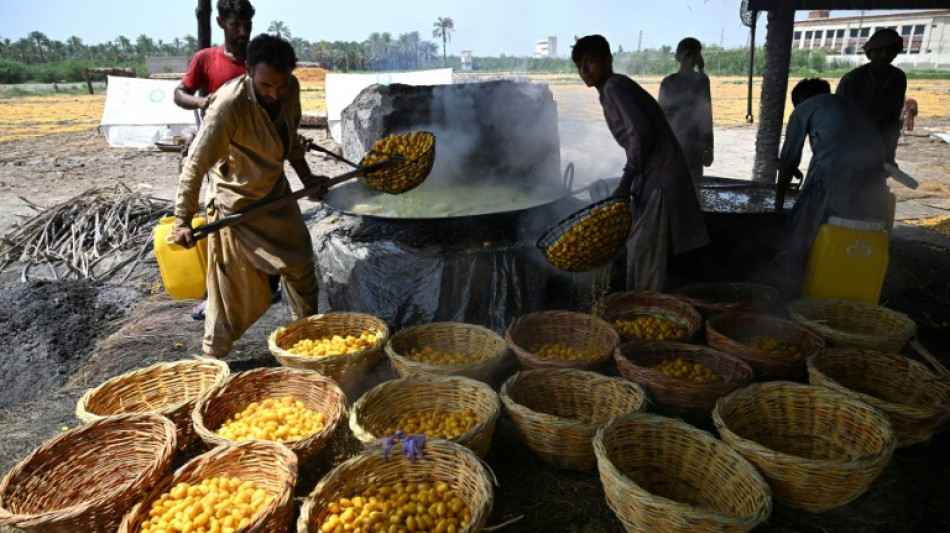
Pakistan's date workers toil through rising heat / Photo: Aamir QURESHI - AFP


 London
 9 °C
9 °C

 Manchester
9 °C
Manchester
9 °C
 Glasgow
 8 °C
8 °C
 Dublin
 9 °C
9 °C
 Belfast
8 °C
Belfast
8 °C
 Washington
11 °C
Washington
11 °C
 Denver
11 °C
Denver
11 °C
 Atlanta
15 °C
Atlanta
15 °C
 Dallas
23 °C
Dallas
23 °C
 Houston Texas
23 °C
Houston Texas
23 °C
 New Orleans
21 °C
New Orleans
21 °C
 El Paso
25 °C
El Paso
25 °C
 Phoenix
 26 °C
26 °C
 Los Angeles
 24 °C
San Diego
24 °C
San Diego
 24 °C
San Francisco
19 °C
Chicago
18 °C
Minneapolis
11 °C
Seattle
12 °C
Portland
24 °C
San Francisco
19 °C
Chicago
18 °C
Minneapolis
11 °C
Seattle
12 °C
Portland
 11 °C
Salt Lake City
11 °C
Salt Lake City
 12 °C
Las Vegas
22 °C
Miami
12 °C
Las Vegas
22 °C
Miami
 23 °C
Jacksonville
20 °C
San Antonio
25 °C
Bermuda
22 °C
Nassau
13 °C
Iqaluit
23 °C
Jacksonville
20 °C
San Antonio
25 °C
Bermuda
22 °C
Nassau
13 °C
Iqaluit
 -2 °C
Yellowknife
1 °C
Anchorage
-2 °C
Yellowknife
1 °C
Anchorage
 5 °C
Fairbanks
1 °C
Barrow
0 °C
Calgary
0 °C
Edmonton
16 °C
Winnipeg
1 °C
Goose Bay
10 °C
Halifax
8 °C
Boston
10 °C
Ottawa
13 °C
Toronto
14 °C
Detroit
14 °C
Cleveland
12 °C
New York
14 °C
Baltimore
12 °C
Philadelphia
13 °C
Nuuk (Godthåb)
-5 °C
Hong Kong
26 °C
Singapore
26 °C
Melbourne
24 °C
Canberra
16 °C
Adelaide
16 °C
Darwin
31 °C
Perth
16 °C
Fort Worth
23 °C
Honolulu
28 °C
Sydney
20 °C
Johannesburg
19 °C
Dubai
29 °C
Mumbai
29 °C
Zürich
7 °C
Tokyo
19 °C
Seoul
16 °C
Delhi
17 °C
Beijing
11 °C
Riyadh
25 °C
Prague
8 °C
Pennsylvania
9 °C
Valletta
20 °C
Manama
30 °C
Warsaw
8 °C
Stockholm
11 °C
5 °C
Fairbanks
1 °C
Barrow
0 °C
Calgary
0 °C
Edmonton
16 °C
Winnipeg
1 °C
Goose Bay
10 °C
Halifax
8 °C
Boston
10 °C
Ottawa
13 °C
Toronto
14 °C
Detroit
14 °C
Cleveland
12 °C
New York
14 °C
Baltimore
12 °C
Philadelphia
13 °C
Nuuk (Godthåb)
-5 °C
Hong Kong
26 °C
Singapore
26 °C
Melbourne
24 °C
Canberra
16 °C
Adelaide
16 °C
Darwin
31 °C
Perth
16 °C
Fort Worth
23 °C
Honolulu
28 °C
Sydney
20 °C
Johannesburg
19 °C
Dubai
29 °C
Mumbai
29 °C
Zürich
7 °C
Tokyo
19 °C
Seoul
16 °C
Delhi
17 °C
Beijing
11 °C
Riyadh
25 °C
Prague
8 °C
Pennsylvania
9 °C
Valletta
20 °C
Manama
30 °C
Warsaw
8 °C
Stockholm
11 °C
In blazing temperatures, Muhammad Idrees ladles boiled dates from a vat simmering over an open flame, work that labourers lament is getting hotter each year in Pakistan's southern Sindh province.
Date season arrives in July, when temperatures in Sindh regularly hit the mid-40 degrees Celsius.
Workers start before sunrise, and split the day into short shifts, but the heat soon catches up with them.
Their gruelling routine involves harvesting and boiling fruit picked from palms that line Khairpur district, which produces more than half the country's dates and supports thousands of farmers and seasonal labourers.
Idrees, who has worked the date harvest for more than a decade, said the heat has now become "unbearable."
Date labourers are one of many professions in agriculturally-dependent Pakistan that are becoming more difficult and dangerous as temperatures rise.
"It used to be less intense," Idrees told AFP as temperatures hit 42C.
Now "the heat is much harsher and the days are extremely hot. We fall ill because of it."
Multiple workers told AFP they often suffer heatstroke, fainting and fever.
"When the heat makes us sick, we go to the doctor for treatment and then return to work," Idrees added.
Pakistan is among the countries globally most vulnerable to climate change despite contributing less than one percent of global greenhouse gas emissions.
The country has experienced increasingly frequent heatwaves, erratic monsoon rains and devastating floods, including catastrophic 2022 floods that inundated around one-third of the country and displaced millions, hitting Sindh province particularly hard.
- Heat and harvest -
Workers descend on date farms to begin work around 2:00 am to avoid the worst of the daytime heat and take a break before continuing until the late evening.
Idrees said the physically demanding work earns him around 1,200 Pakistani rupees ($4) a day.
"We harvest the dates, load them onto trolleys and bring them here," he said.
"They are boiled over the fire and then spread outside in the sun to dry."
Pakistan, the world's fifth-largest date producer, normally earns more than $120 million a year in exports, according to industry estimates.
Date farmer Shahnawaz Phulpoto, who owns more than 1,500 palm trees, said that heavy monsoon rains from shifting weather patterns have hampered date crops and caused financial losses.
But for now the main challenge is the heat, he added, as the sun blazed overhead.
"The temperature rises every year," he told AFP.
"We are seeing the effects of climate change every year."
X.Gaboury--SMC