Tourism boom pushes limits of Athens air traffic control / Photo: Aris MESSINIS - AFP


 London
 11 °C
11 °C

 Manchester
 10 °C
10 °C
 Glasgow
 8 °C
8 °C
 Dublin
10 °C
Dublin
10 °C
 Belfast
 10 °C
10 °C
 Washington
 11 °C
11 °C
 Denver
7 °C
Denver
7 °C
 Atlanta
16 °C
Atlanta
16 °C
 Dallas
25 °C
Dallas
25 °C
 Houston Texas
25 °C
Houston Texas
25 °C
 New Orleans
20 °C
New Orleans
20 °C
 El Paso
22 °C
El Paso
22 °C
 Phoenix
 23 °C
23 °C
 Los Angeles
 24 °C
San Diego
24 °C
San Diego
 22 °C
San Francisco
19 °C
Chicago
17 °C
Minneapolis
13 °C
Seattle
11 °C
Portland
14 °C
Salt Lake City
12 °C
Las Vegas
20 °C
Miami
25 °C
Jacksonville
21 °C
San Antonio
25 °C
Bermuda
22 °C
Nassau
11 °C
Iqaluit
22 °C
San Francisco
19 °C
Chicago
17 °C
Minneapolis
13 °C
Seattle
11 °C
Portland
14 °C
Salt Lake City
12 °C
Las Vegas
20 °C
Miami
25 °C
Jacksonville
21 °C
San Antonio
25 °C
Bermuda
22 °C
Nassau
11 °C
Iqaluit
 -4 °C
Yellowknife
-4 °C
Anchorage
-4 °C
Yellowknife
-4 °C
Anchorage
 3 °C
Fairbanks
-1 °C
Barrow
1 °C
Calgary
1 °C
Edmonton
16 °C
Winnipeg
8 °C
Goose Bay
6 °C
Halifax
5 °C
Boston
8 °C
Ottawa
7 °C
Toronto
10 °C
Detroit
11 °C
Cleveland
11 °C
New York
13 °C
Baltimore
10 °C
Philadelphia
11 °C
Nuuk (Godthåb)
-4 °C
Hong Kong
26 °C
Singapore
3 °C
Fairbanks
-1 °C
Barrow
1 °C
Calgary
1 °C
Edmonton
16 °C
Winnipeg
8 °C
Goose Bay
6 °C
Halifax
5 °C
Boston
8 °C
Ottawa
7 °C
Toronto
10 °C
Detroit
11 °C
Cleveland
11 °C
New York
13 °C
Baltimore
10 °C
Philadelphia
11 °C
Nuuk (Godthåb)
-4 °C
Hong Kong
26 °C
Singapore
 27 °C
Melbourne
22 °C
Canberra
24 °C
Adelaide
13 °C
Darwin
29 °C
Perth
14 °C
Fort Worth
23 °C
Honolulu
28 °C
Sydney
30 °C
Johannesburg
17 °C
Dubai
29 °C
Mumbai
29 °C
Zürich
7 °C
Tokyo
25 °C
Seoul
13 °C
Delhi
18 °C
Beijing
12 °C
Riyadh
25 °C
Prague
4 °C
Pennsylvania
8 °C
Valletta
19 °C
Manama
30 °C
Warsaw
7 °C
Stockholm
10 °C
27 °C
Melbourne
22 °C
Canberra
24 °C
Adelaide
13 °C
Darwin
29 °C
Perth
14 °C
Fort Worth
23 °C
Honolulu
28 °C
Sydney
30 °C
Johannesburg
17 °C
Dubai
29 °C
Mumbai
29 °C
Zürich
7 °C
Tokyo
25 °C
Seoul
13 °C
Delhi
18 °C
Beijing
12 °C
Riyadh
25 °C
Prague
4 °C
Pennsylvania
8 °C
Valletta
19 °C
Manama
30 °C
Warsaw
7 °C
Stockholm
10 °C
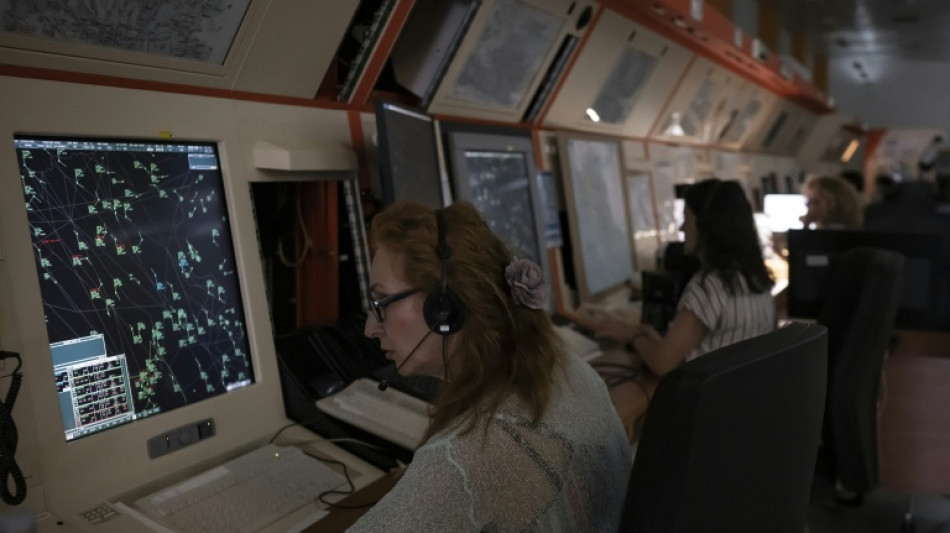
Green arrows representing tourist-laden jets pile up on the screens of the Athens air traffic controllers, a puzzle to solve at the height of tourist season.
"Look at this sky, it's crazy, there's no room for any more planes!" exclaimed Olga Toki, vice-president of the Association of Air Traffic Controllers of Greece.
There is no doubt that this is a busy summer for the overworked air traffic controllers.
In the low season, Greece's airports typically handle between 1,000 and 1,500 flights per day, according to the Greek Civil Aviation Authority. In the first week in July, by contrast, they handled an average of 2,700 flights per day.
Overall traffic in southeast Europe, which includes Greek airspace, has risen about 40 percent from 2019, according to Eurocontrol, the air navigation safety organisation.
That underlined a boom in tourist arrivals in Greece, which last year were 23 percent higher than the 2019 pre-Covid peak, at 38 million, in a country of around 10 million people.
Even before the summer rush, nerves were on edge; a January 4 breakdown in the communication system linking air traffic controllers and aircraft had laid bare a glaring weakness.
Controllers could see the planes on their screens but were unable to hear or talk with the pilots. The authorities had to close Greek airspace for hours, causing chaos, with a chain of cancellations and diversions to neighbouring countries.
- Short-staffed -
The crisis was the catalyst for the announcement of a renovation programme costing around 300 million euros ($350 million), including the installation of new digital communication systems.
The systems began to be installed in mid-August. The entire project -- which includes replacing ageing radar -- is supposed to be completed by 2028.
The European Commission last year brought a case before the Court of Justice of the European Union reproaching Greece for failing to bring its navigation procedures in line with the global Performance-Based Navigation (PBN) standard.
For those charged with keeping travellers safe, meanwhile, it is a sober responsibility. In the control room, the map of Greece is divided into 10 sectors, each managed by a controller assisted by an aide.
"In summer, we are desperately short of staff," explained shift supervisor Giorgos Stamoulakatos. "There are 154 of us controllers; we need 250," he estimated.
New controllers have been hired -- 92 in 2025 and 77 in 2026 -- but each newcomer must be trained for five years.
- 'Superhuman' efforts -
Areti Anastopoulos, an air traffic controller for more than 30 years, helps approaching pilots to line up their planes, one behind the other, before they touch down on the tarmac. Her husky voice is familiar to pilots in Greek skies -- as are her outbursts.
"Normally, we guide around 20 pilots over the course of an hour. But right now, 40 are in the queue. Inevitably, delays build up," she lamented. "Thirty-three planes landed in one hour. Twenty-eight is supposed to be our limit!"
More than once, she said, she has had to order planes to slow down or alter their trajectories to avoid accidents.
"What we're doing here is a superhuman attempt to keep everyone safe," she said.
The Middle East war has made the problem worse, adding around 300 extra flights crossing Greek airspace every day -- nearly six percent of daily traffic -- according to Eurocontrol.
"In addition to commercial flights, we monitor incursions by Turkish planes and drones. Greece's geographic position increases our workload," Toki said.
- More delays -
In the passenger terminal, Jose Lopez arrived recently from Barcelona, 30 minutes late.
"That's not shocking in the middle of August. I've already experienced much worse delays," he said.
Christos, a valet at a major Athens hotel, was more irritated.
"Delays are more frequent than last year. I've had to wait up to seven hours for American clients," he said.
"Tourism is our added value in Greece," acknowledged controller Anastopoulos. "But more planes without more investment is not possible."
V.Watson--SMC