New deadly Ebola outbreak hits DR Congo / Photo: JOHN WESSELS - AFP/File


 London
 17 °C
17 °C
 Manchester
10 °C
Manchester
10 °C
 Glasgow
 9 °C
9 °C
 Dublin
 14 °C
14 °C
 Belfast
12 °C
Belfast
12 °C
 Washington
22 °C
Washington
22 °C
 Denver
23 °C
Denver
23 °C
 Atlanta
24 °C
Atlanta
24 °C
 Dallas
 33 °C
33 °C
 Houston Texas
33 °C
Houston Texas
33 °C
 New Orleans
29 °C
New Orleans
29 °C
 El Paso
 28 °C
28 °C
 Phoenix
34 °C
Phoenix
34 °C
 Los Angeles
 28 °C
San Diego
28 °C
San Francisco
21 °C
Chicago
17 °C
Minneapolis
21 °C
Seattle
28 °C
San Diego
28 °C
San Francisco
21 °C
Chicago
17 °C
Minneapolis
21 °C
Seattle
 12 °C
Portland
18 °C
Salt Lake City
29 °C
Las Vegas
36 °C
Miami
29 °C
Jacksonville
24 °C
San Antonio
35 °C
Bermuda
27 °C
Nassau
19 °C
Iqaluit
3 °C
Yellowknife
12 °C
Anchorage
10 °C
Fairbanks
12 °C
Barrow
1 °C
Calgary
22 °C
Edmonton
24 °C
Winnipeg
18 °C
Goose Bay
21 °C
Halifax
16 °C
Boston
18 °C
Ottawa
23 °C
Toronto
20 °C
Detroit
19 °C
Cleveland
18 °C
New York
20 °C
Baltimore
22 °C
Philadelphia
21 °C
Nuuk (Godthåb)
3 °C
Hong Kong
26 °C
Singapore
28 °C
Melbourne
27 °C
Canberra
16 °C
Adelaide
16 °C
Darwin
24 °C
Perth
13 °C
Fort Worth
34 °C
Honolulu
28 °C
Sydney
21 °C
Johannesburg
14 °C
Dubai
32 °C
Mumbai
28 °C
Zürich
13 °C
Tokyo
20 °C
Seoul
19 °C
Delhi
12 °C
Portland
18 °C
Salt Lake City
29 °C
Las Vegas
36 °C
Miami
29 °C
Jacksonville
24 °C
San Antonio
35 °C
Bermuda
27 °C
Nassau
19 °C
Iqaluit
3 °C
Yellowknife
12 °C
Anchorage
10 °C
Fairbanks
12 °C
Barrow
1 °C
Calgary
22 °C
Edmonton
24 °C
Winnipeg
18 °C
Goose Bay
21 °C
Halifax
16 °C
Boston
18 °C
Ottawa
23 °C
Toronto
20 °C
Detroit
19 °C
Cleveland
18 °C
New York
20 °C
Baltimore
22 °C
Philadelphia
21 °C
Nuuk (Godthåb)
3 °C
Hong Kong
26 °C
Singapore
28 °C
Melbourne
27 °C
Canberra
16 °C
Adelaide
16 °C
Darwin
24 °C
Perth
13 °C
Fort Worth
34 °C
Honolulu
28 °C
Sydney
21 °C
Johannesburg
14 °C
Dubai
32 °C
Mumbai
28 °C
Zürich
13 °C
Tokyo
20 °C
Seoul
19 °C
Delhi
 24 °C
Beijing
17 °C
Riyadh
32 °C
Prague
12 °C
Pennsylvania
22 °C
Valletta
22 °C
Manama
34 °C
Warsaw
12 °C
Stockholm
11 °C
24 °C
Beijing
17 °C
Riyadh
32 °C
Prague
12 °C
Pennsylvania
22 °C
Valletta
22 °C
Manama
34 °C
Warsaw
12 °C
Stockholm
11 °C
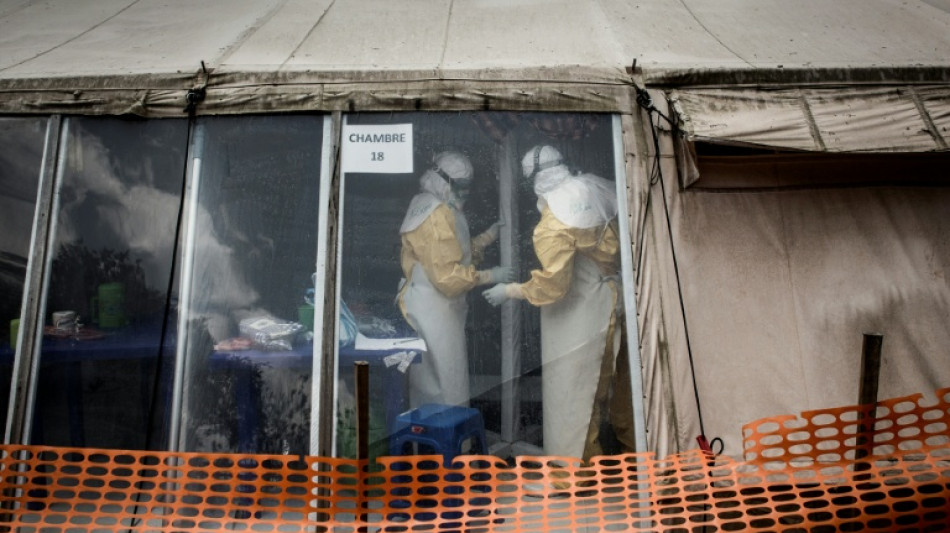
A new outbreak of the deadly Ebola virus has been declared in the eastern Democratic Republic of Congo, African health officials said Friday, voicing concern of the risk it could further spread.
Some 246 suspected cases, including 65 deaths, have been reported, the Africa Centres for Disease Control and Prevention (CDC Africa) said.
The latest outbreak in the vast central African country of more than 100 million inhabitants is in northeastern Ituri province, which borders Uganda and South Sudan, CDC Africa said.
Mining in the gold-rich province creates an intense movement of people on a daily basis.
For years, Ituri has been plagued by recurrent clashes driven by local militias, making it difficult to access certain parts of the province for security reasons.
"Ebola Virus Disease outbreak confirmed in Ituri Province," Africa CDC said in a statement.
Results from 13 of 20 samples tested in the capital, Kinshasa, indicated that "four deaths have been reported among laboratory-confirmed cases", it said.
The last outbreak in the country was in August in the central region and killed at least 34 people, before being declared eradicated in December.
Nearly 2,300 people died in the deadliest outbreak in the DRC between 2018 and 2020.
First identified in 1976 and believed to have originated in bats, Ebola is a deadly viral disease spread through direct contact with bodily fluids. It can cause severe bleeding and organ failure.
"With the insecurity, people are crowded together in the city, and since there are so many people in the city, an epidemic like this would be very serious," Anne-Marie Dive, a resident of Bunia, the main city in Ituri, said by telephone.
- 'We just dug graves' -
The highly contagious haemorrhagic fever has killed an estimated 15,000 people in Africa over the past 50 years, despite advances in vaccines and treatment.
The cases reported in recent weeks were in Mongbwalu and Rwampara health zones, each of which has around 150,000 inhabitants.
The Mongbwalu area lies about 90 kilometres (56 miles) from Bunia, while Rwampara is adjacent to the Bunia urban area.
Suspected cases have been detected in Bunia, which has an estimated population of 300,000, and are awaiting confirmation, CDC Africa said.
Initial results "suggest a non-Zaire ebolavirus" strain but further sequencing is ongoing.
The Zaire ebolavirus -- the deadliest strain with a case fatality rate of 80 to 90 percent -- is the only variant for which an approved vaccine currently exists.
Teams from the World Health Organization as well as from the NGO Doctors Without Borders have been sent to the scene and are trying to assess the risks.
Burials have already taken place and concern is mounting among locals.
"For the past few weeks, the municipality of Mongbwalu has been recording a cascade of deaths, with at least five to six people dying every day in the streets," Gloire Mumbesa, who lives in the area, told AFP by telephone.
"We just dug graves to bury three people, but we don’t actually know what these people died of. We're starting to be afraid of every possible case of illness," Salama Bamunoba, a civil society member in Rwampara, said.
A health source in the Mongbwalu area, who spoke on condition of anonymity, said an "exponential" number of deaths had been seen since mid-April.
Patients are currently placed in isolation in health centres but the staff lack equipment including protective gear, the source said.
In a country four times the size of France, delivering medicines is often a challenge, with transportation infrastructure limited and often in poor condition.
The current Ebola outbreak is the 17th in the DRC since the virus was first detected in the country.
Guinea, Uganda and Sierra Leone have also seen Ebola outbreaks in recent years.
burs-cld/mnk-kjm/rh
M.Anderson--SMC