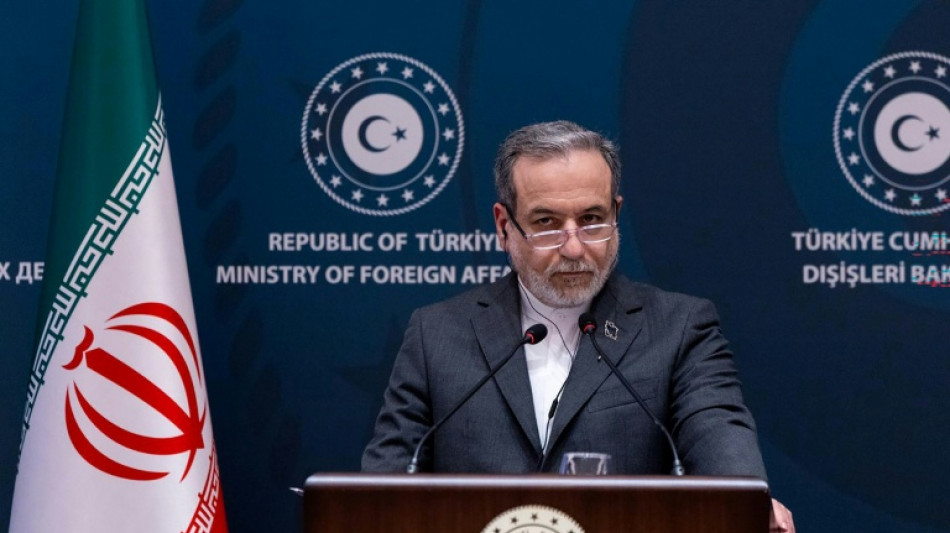
Iran says defence capabilities 'never' up for negotiation / Photo: Handout - TURKISH FOREIGN MINISTRY/AFP


 London
 11 °C
11 °C

 Manchester
 7 °C
7 °C
 Glasgow
9 °C
Glasgow
9 °C
 Dublin
 7 °C
7 °C
 Belfast
 6 °C
6 °C
 Washington
 9 °C
9 °C
 Denver
16 °C
Denver
16 °C
 Atlanta
12 °C
Atlanta
12 °C
 Dallas
17 °C
Dallas
17 °C
 Houston Texas
19 °C
Houston Texas
19 °C
 New Orleans
18 °C
New Orleans
18 °C
 El Paso
22 °C
El Paso
22 °C
 Phoenix
24 °C
Phoenix
24 °C
 Los Angeles
18 °C
San Diego
20 °C
San Francisco
15 °C
Chicago
13 °C
Minneapolis
Los Angeles
18 °C
San Diego
20 °C
San Francisco
15 °C
Chicago
13 °C
Minneapolis
 11 °C
Seattle
9 °C
Portland
11 °C
Salt Lake City
14 °C
Las Vegas
21 °C
Miami
22 °C
Jacksonville
14 °C
San Antonio
17 °C
Bermuda
25 °C
Nassau
10 °C
Iqaluit
-7 °C
Yellowknife
-2 °C
Anchorage
0 °C
Fairbanks
11 °C
Seattle
9 °C
Portland
11 °C
Salt Lake City
14 °C
Las Vegas
21 °C
Miami
22 °C
Jacksonville
14 °C
San Antonio
17 °C
Bermuda
25 °C
Nassau
10 °C
Iqaluit
-7 °C
Yellowknife
-2 °C
Anchorage
0 °C
Fairbanks
 -5 °C
Barrow
-6 °C
Calgary
-5 °C
Barrow
-6 °C
Calgary
 7 °C
Edmonton
7 °C
Winnipeg
4 °C
Goose Bay
7 °C
Halifax
10 °C
Boston
8 °C
Ottawa
3 °C
Toronto
8 °C
Detroit
7 °C
Cleveland
7 °C
New York
11 °C
Baltimore
7 °C
Edmonton
7 °C
Winnipeg
4 °C
Goose Bay
7 °C
Halifax
10 °C
Boston
8 °C
Ottawa
3 °C
Toronto
8 °C
Detroit
7 °C
Cleveland
7 °C
New York
11 °C
Baltimore
 9 °C
Philadelphia
9 °C
Nuuk (Godthåb)
-6 °C
Hong Kong
30 °C
Singapore
33 °C
Melbourne
19 °C
Canberra
18 °C
Adelaide
30 °C
Darwin
32 °C
Perth
19 °C
Fort Worth
16 °C
Honolulu
25 °C
Sydney
9 °C
Philadelphia
9 °C
Nuuk (Godthåb)
-6 °C
Hong Kong
30 °C
Singapore
33 °C
Melbourne
19 °C
Canberra
18 °C
Adelaide
30 °C
Darwin
32 °C
Perth
19 °C
Fort Worth
16 °C
Honolulu
25 °C
Sydney
 19 °C
Johannesburg
25 °C
Dubai
38 °C
Mumbai
37 °C
Zürich
9 °C
Tokyo
21 °C
Seoul
14 °C
Delhi
31 °C
Beijing
16 °C
Riyadh
35 °C
Prague
10 °C
Pennsylvania
6 °C
Valletta
23 °C
Manama
34 °C
Warsaw
14 °C
Stockholm
12 °C
19 °C
Johannesburg
25 °C
Dubai
38 °C
Mumbai
37 °C
Zürich
9 °C
Tokyo
21 °C
Seoul
14 °C
Delhi
31 °C
Beijing
16 °C
Riyadh
35 °C
Prague
10 °C
Pennsylvania
6 °C
Valletta
23 °C
Manama
34 °C
Warsaw
14 °C
Stockholm
12 °C
Iran's top diplomat said Friday that his country's missile and defence capabilities would "never" be on the negotiating table, as US President Donald Trump appeared to cool on threats of a strike after a military build-up in the region.
Tehran and Washington have been trading warnings since Trump first threatened to intervene over a deadly crackdown on recent protests and sent a naval fleet to the Middle East.
But the US president brought the temperature down late on Thursday, saying he hoped to avoid military action and that talks with Iran were on the cards, having pressured Tehran for a deal on its nuclear programme, which the West believes is aimed at making an atomic bomb.
Iranian Foreign Minister Abbas Araghchi said Tehran was "ready to begin negotiations if they take place on an equal footing, based on mutual interests and mutual respect", during a visit to Turkey, which has led a diplomatic push to mediate between Tehran and Washington.
But, he emphasised, "I want to state firmly that Iran's defensive and missile capabilities will never be subject to negotiation", adding that no plans were in place to meet with US officials about resuming talks.
The Axios news site on Monday reported that US officials say any deal with Tehran would have to include a cap on its stockpile of long-range missiles, along with the removal of enriched uranium from the country and a ban on independent enrichment.
Serhan Afacan, director of IRAM, the Ankara-based Centre for Iranian Studies, told AFP that trying to broker a deal now on the nuclear file along with other issues would likely "be impossible".
"For now, the ballistic missile programme remains a red line, as it sits at the core of Iran's defence architecture," he said.
- 'Reducing' tensions -
Turkish Foreign Minister Hakan Fidan said restarting talks between Tehran and Washington over Iran's nuclear programme was "vital for reducing regional tensions".
Speaking at a joint press conference in Istanbul with Araghchi, he said Israel was pushing for the United States to attack Iran, and urged Washington to "act with common sense and not allow this to happen".
Iran has blamed the United States and Israel for the protests that erupted in late December over economic grievances and peaked on January 8 and 9, accusing the two countries of fuelling a "terrorist operation" that turned peaceful demonstrations into "riots".
Araghchi was also due to meet with Turkish President Recep Tayyip Erdogan, who told his Iranian counterpart Masoud Pezeshkian by phone earlier Friday that Turkey was "ready to assume a facilitating role between Iran and the United States to de-escalate the tensions".
Pezeshkian, meanwhile, said the success of diplomacy depended on the "goodwill of the parties involved and the abandonment of belligerent and threatening actions in the region", his office said.
As well as Turkey's diplomatic efforts to stave off a military confrontation, Erdogan has also been pushing Washington for a high-level trilateral meeting, a Turkish diplomat said, confirming local media reports.
- 'Consequences' -
Other regional actors have joined calls for diplomacy, including Gulf states, some of which host US military sites, and Tehran's ally Russia.
Pezeshkian urged coordinated regional efforts to reduce tensions in a call with UAE President Sheikh Mohamed bin Zayed Al Nahyan, saying Iran has "never sought war" but any aggression against it would "receive an immediate and firm response".
The European Union also urged against military action, but sent a message of condemnation to Tehran over the crackdown on protests -- which rights groups say killed thousands of people -- by designating Iran's Islamic Revolutionary Guard Corps (IRGC) a "terrorist organisation".
Iran quickly hit out at the move, with its judiciary chief calling it "hostile" on Friday and saying Europe "will suffer the consequences of their foolish act", without elaborating.
Araghchi in Istanbul also called the designation a "mistake", adding Europe was a "continent in decline, and it has lost its role at the international level".
The US-based Human Rights Activists News Agency (HRANA) said it has confirmed 6,479 people killed in the demonstrations, including 6,092 protesters and 118 children, as internet restrictions imposed on January 8 continue to hinder access to information inside the country.
But rights groups warn the toll is likely far higher, with estimates in the tens of thousands.
Iranian authorities acknowledge that thousands were killed during the protests, giving a toll of more than 3,000 deaths, but say the majority were members of the security forces or bystanders killed by "rioters".
burs-sw/sjw/smw
D.Cameron--SMC