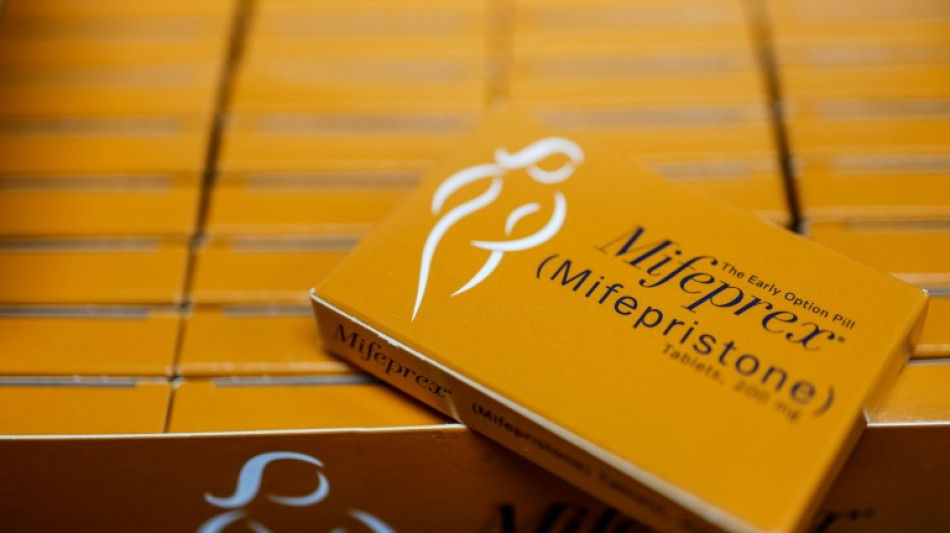
US appeals court temporarily halts mail delivery of abortion pill / Photo: Anna Moneymaker - GETTY IMAGES/AFP/File


 London
 11 °C
11 °C
 Manchester
 9 °C
9 °C
 Glasgow
12 °C
Glasgow
12 °C
 Dublin
 8 °C
8 °C
 Belfast
7 °C
Belfast
7 °C
 Washington
 16 °C
16 °C
 Denver
23 °C
Denver
23 °C
 Atlanta
19 °C
Atlanta
19 °C
 Dallas
21 °C
Dallas
21 °C
 Houston Texas
22 °C
Houston Texas
22 °C
 New Orleans
 22 °C
22 °C
 El Paso
17 °C
El Paso
17 °C
 Phoenix
 25 °C
25 °C
 Los Angeles
29 °C
San Diego
29 °C
San Francisco
17 °C
Chicago
16 °C
Minneapolis
18 °C
Seattle
Los Angeles
29 °C
San Diego
29 °C
San Francisco
17 °C
Chicago
16 °C
Minneapolis
18 °C
Seattle
 12 °C
Portland
13 °C
Salt Lake City
18 °C
Las Vegas
23 °C
Miami
28 °C
Jacksonville
18 °C
San Antonio
21 °C
Bermuda
29 °C
Nassau
14 °C
Iqaluit
-5 °C
Yellowknife
1 °C
Anchorage
3 °C
Fairbanks
-2 °C
Barrow
-4 °C
Calgary
11 °C
Edmonton
18 °C
Winnipeg
14 °C
Goose Bay
15 °C
Halifax
12 °C
Boston
13 °C
Ottawa
15 °C
Toronto
17 °C
Detroit
17 °C
Cleveland
18 °C
New York
14 °C
Baltimore
16 °C
Philadelphia
15 °C
Nuuk (Godthåb)
12 °C
Portland
13 °C
Salt Lake City
18 °C
Las Vegas
23 °C
Miami
28 °C
Jacksonville
18 °C
San Antonio
21 °C
Bermuda
29 °C
Nassau
14 °C
Iqaluit
-5 °C
Yellowknife
1 °C
Anchorage
3 °C
Fairbanks
-2 °C
Barrow
-4 °C
Calgary
11 °C
Edmonton
18 °C
Winnipeg
14 °C
Goose Bay
15 °C
Halifax
12 °C
Boston
13 °C
Ottawa
15 °C
Toronto
17 °C
Detroit
17 °C
Cleveland
18 °C
New York
14 °C
Baltimore
16 °C
Philadelphia
15 °C
Nuuk (Godthåb)
 -1 °C
Hong Kong
-1 °C
Hong Kong
 26 °C
Singapore
28 °C
Melbourne
27 °C
Canberra
8 °C
Adelaide
22 °C
Darwin
27 °C
Perth
14 °C
Fort Worth
20 °C
Honolulu
26 °C
Sydney
13 °C
Johannesburg
22 °C
Dubai
32 °C
Mumbai
32 °C
Zürich
11 °C
Tokyo
20 °C
Seoul
13 °C
Delhi
21 °C
Beijing
4 °C
Riyadh
32 °C
Prague
10 °C
Pennsylvania
15 °C
Valletta
22 °C
Manama
32 °C
Warsaw
8 °C
Stockholm
7 °C
26 °C
Singapore
28 °C
Melbourne
27 °C
Canberra
8 °C
Adelaide
22 °C
Darwin
27 °C
Perth
14 °C
Fort Worth
20 °C
Honolulu
26 °C
Sydney
13 °C
Johannesburg
22 °C
Dubai
32 °C
Mumbai
32 °C
Zürich
11 °C
Tokyo
20 °C
Seoul
13 °C
Delhi
21 °C
Beijing
4 °C
Riyadh
32 °C
Prague
10 °C
Pennsylvania
15 °C
Valletta
22 °C
Manama
32 °C
Warsaw
8 °C
Stockholm
7 °C
A US appeals court on Friday temporarily halted mail delivery of mifepristone, the medication used in the majority of abortions in the United States.
A three-judge panel of the 5th Circuit Court of Appeals delivered the order in a lawsuit brought by the southern state of Louisiana, which has some of the strictest anti-abortion laws in the country, against the Food and Drug Administration (FDA).
The order by the conservative-dominated court requires women seeking abortions anywhere in the United States to obtain mifepristone in person from health clinics, and bans delivery by mail or through a pharmacy.
The appeals court overturned a lower court ruling that allowed mifepristone to continue to be delivered by mail while the FDA conducts a review of its regulations regarding the drug.
Proponents of reviewing mifepristone's safety have cited a study -- which was not peer-reviewed and was published on a website, not in a scientific journal -- conducted by a conservative think-tank.
The FDA originally approved mifepristone in 2000. It is the most common method for abortion care in the United States and is also routinely used for managing early miscarriage.
Mifepristone, which prevents pregnancy progression, and misoprostol, which empties the uterus, are approved to terminate a pregnancy up to 70 days of gestation in the United States.
Louisiana Attorney General Liz Murrill welcomed the appeals court decision calling it a "Victory for Life!"
"The Biden abortion cartel facilitated the deaths of thousands of Louisiana babies (and millions in other states) through illegal mail-order abortion pills," Murrill said. "Today, that nightmare is over."
- 'Isn't about science' -
Nancy Northup, president and CEO of the Center for Reproductive Rights, condemned the appeals court ruling, which is expected to be appealed to the US Supreme Court.
"This isn't about science -- it's about making abortion as difficult, expensive, and unreachable as possible," Northup said in a statement.
Julia Kaye, an attorney with the American Civil Liberties Union (ACLU), said "anti-abortion politicians have just made it much harder for people everywhere in the country to get a medication that abortion and miscarriage patients have been safely using for more than 25 years."
Some 20 states have banned or restricted abortion since the Supreme Court in June 2022 overturned the landmark Roe v. Wade ruling that enshrined the constitutional right to abortion for half a century.
Polls show a majority of Americans support continued access to safe abortion, even as conservative groups push to limit the procedure or ban it outright.
In 2024, the US Supreme Court rejected a bid to restrict mifepristone, ruling that anti-abortion groups and doctors challenging the medication lacked the legal standing to bring the case.
S.Cloutier--SMC