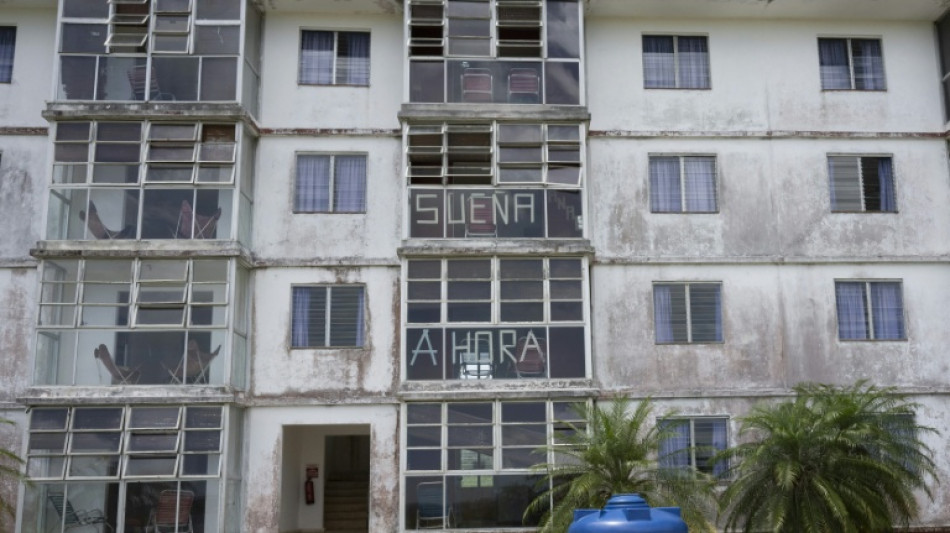
UN warns sanctions chill is stopping Cuba aid / Photo: Pablo PORCIUNCULA - AFP/File


 London
 17 °C
17 °C
 Manchester
 11 °C
11 °C
 Glasgow
 14 °C
14 °C
 Dublin
 11 °C
11 °C
 Belfast
10 °C
Belfast
10 °C
 Washington
18 °C
Washington
18 °C
 Denver
 12 °C
12 °C
 Atlanta
 31 °C
31 °C
 Dallas
32 °C
Dallas
32 °C
 Houston Texas
32 °C
Houston Texas
32 °C
 New Orleans
 30 °C
30 °C
 El Paso
24 °C
El Paso
24 °C
 Phoenix
29 °C
Phoenix
29 °C
 Los Angeles
31 °C
San Diego
31 °C
San Francisco
26 °C
Chicago
18 °C
Minneapolis
Los Angeles
31 °C
San Diego
31 °C
San Francisco
26 °C
Chicago
18 °C
Minneapolis
 9 °C
Seattle
17 °C
Portland
25 °C
Salt Lake City
16 °C
Las Vegas
26 °C
Miami
31 °C
Jacksonville
30 °C
San Antonio
32 °C
Bermuda
27 °C
Nassau
18 °C
Iqaluit
-2 °C
Yellowknife
7 °C
Anchorage
6 °C
Fairbanks
3 °C
Barrow
-9 °C
Calgary
11 °C
Edmonton
30 °C
Winnipeg
9 °C
Goose Bay
12 °C
Halifax
16 °C
Boston
17 °C
Ottawa
12 °C
Toronto
11 °C
Detroit
16 °C
Cleveland
20 °C
New York
19 °C
Baltimore
18 °C
Philadelphia
20 °C
Nuuk (Godthåb)
2 °C
Hong Kong
26 °C
Singapore
27 °C
Melbourne
30 °C
Canberra
9 °C
Adelaide
15 °C
Darwin
9 °C
Seattle
17 °C
Portland
25 °C
Salt Lake City
16 °C
Las Vegas
26 °C
Miami
31 °C
Jacksonville
30 °C
San Antonio
32 °C
Bermuda
27 °C
Nassau
18 °C
Iqaluit
-2 °C
Yellowknife
7 °C
Anchorage
6 °C
Fairbanks
3 °C
Barrow
-9 °C
Calgary
11 °C
Edmonton
30 °C
Winnipeg
9 °C
Goose Bay
12 °C
Halifax
16 °C
Boston
17 °C
Ottawa
12 °C
Toronto
11 °C
Detroit
16 °C
Cleveland
20 °C
New York
19 °C
Baltimore
18 °C
Philadelphia
20 °C
Nuuk (Godthåb)
2 °C
Hong Kong
26 °C
Singapore
27 °C
Melbourne
30 °C
Canberra
9 °C
Adelaide
15 °C
Darwin
 27 °C
Perth
12 °C
Fort Worth
31 °C
Honolulu
28 °C
Sydney
13 °C
Johannesburg
22 °C
Dubai
32 °C
Mumbai
31 °C
Zürich
13 °C
Tokyo
18 °C
Seoul
15 °C
Delhi
21 °C
Beijing
11 °C
Riyadh
30 °C
Prague
11 °C
Pennsylvania
20 °C
Valletta
20 °C
Manama
30 °C
Warsaw
9 °C
Stockholm
11 °C
27 °C
Perth
12 °C
Fort Worth
31 °C
Honolulu
28 °C
Sydney
13 °C
Johannesburg
22 °C
Dubai
32 °C
Mumbai
31 °C
Zürich
13 °C
Tokyo
18 °C
Seoul
15 °C
Delhi
21 °C
Beijing
11 °C
Riyadh
30 °C
Prague
11 °C
Pennsylvania
20 °C
Valletta
20 °C
Manama
30 °C
Warsaw
9 °C
Stockholm
11 °C
The top United Nations official in Cuba has warned vital humanitarian aid is not reaching the island because shipping and financial firms fear US reprisals, stranding deliveries of cancer drugs and water-treatment equipment.
Francisco Pichon, the UN resident coordinator in Cuba, told AFP on Thursday that a climate of fear over US sanctions among shippers, insurers and banks had led to "overcompliance" that was forcing aid agencies to reroute cargo and delay deliveries intended for hospitals and schools.
"They respond to the risk of sanctions by simply withdrawing from providing those services," he said.
Since January the United States has imposed a virtual fuel blockade on the communist-run island, worsening rolling blackouts that make normal life impossible.
Washington has also threatened sanctions on companies doing business with Cuba's government, deepening shortages of basic goods.
"There is no food for us elderly people," said 68-year-old Havana resident Jose Antonio Ortega, a retired truck driver.
"My pension isn't enough for anything," he said. "I have nothing to eat or drink in the morning."
Only one fuel tanker is known to have arrived in Cuba in the last seven months -- although limited private sales of fuel tanks from the United States have risen.
"What initially affected the most vulnerable groups is now affecting the population much more broadly," Pichon said.
Firms are wary of anything that may risk vital access to the US banking system or the world's largest economy.
Pichon said one recent delivery of a medicine used to treat childhood cancer had failed to arrive because refrigerated transport could not be secured in time.
He also pointed to reproductive-health kits for pregnant women that were returned to suppliers and containers carrying medicines and school materials that were diverted rather than shipped on to Cuba.
Cuban government data show the crisis is rapidly accelerating.
Infant deaths are believed to have more than doubled, while survival rates among children with cancer have fallen from 85 percent to 65 percent.
Water shortages are also worsening. According to the UN, around 3.5 million people face disruptions to drinking water supplies, while about one million depend on deliveries by tanker trucks because pumping systems lack sufficient fuel and electricity.
Pichon said the crisis was affecting not only Cuban institutions but also the UN's own relief effort, which has been forced to rely on increasingly scarce fuel supplies obtained through private channels.
With the Caribbean hurricane season under way, UN officials are particularly concerned about the vulnerability of water and sanitation systems and the potential for disease outbreaks.
"What we are seeing is that humanitarian risks are being translated into humanitarian impacts," Pichon said, warning that conditions had continued to deteriorate over recent months.
W.Fortin--SMC