Musk grilled on AI profits at OpenAI trial
/ Photo: JOSH EDELSON - AFP


 London
 17 °C
17 °C

 Manchester
17 °C
Manchester
17 °C
 Glasgow
 7 °C
7 °C
 Dublin
17 °C
Dublin
17 °C
 Belfast
16 °C
Belfast
16 °C
 Washington
24 °C
Washington
24 °C
 Denver
 27 °C
27 °C
 Atlanta
 28 °C
28 °C
 Dallas
 31 °C
31 °C
 Houston Texas
31 °C
Houston Texas
31 °C
 New Orleans
31 °C
New Orleans
31 °C
 El Paso
29 °C
El Paso
29 °C
 Phoenix
27 °C
Phoenix
27 °C
 Los Angeles
19 °C
San Diego
21 °C
San Francisco
18 °C
Chicago
31 °C
Minneapolis
26 °C
Seattle
15 °C
Portland
15 °C
Salt Lake City
Los Angeles
19 °C
San Diego
21 °C
San Francisco
18 °C
Chicago
31 °C
Minneapolis
26 °C
Seattle
15 °C
Portland
15 °C
Salt Lake City
 10 °C
Las Vegas
22 °C
Miami
30 °C
Jacksonville
31 °C
San Antonio
32 °C
Bermuda
28 °C
Nassau
22 °C
Iqaluit
0 °C
Yellowknife
8 °C
Anchorage
7 °C
Fairbanks
3 °C
Barrow
-3 °C
Calgary
6 °C
Edmonton
31 °C
Winnipeg
6 °C
Goose Bay
15 °C
Halifax
20 °C
Boston
22 °C
Ottawa
16 °C
Toronto
22 °C
Detroit
26 °C
Cleveland
26 °C
New York
22 °C
Baltimore
24 °C
Philadelphia
22 °C
Nuuk (Godthåb)
4 °C
Hong Kong
10 °C
Las Vegas
22 °C
Miami
30 °C
Jacksonville
31 °C
San Antonio
32 °C
Bermuda
28 °C
Nassau
22 °C
Iqaluit
0 °C
Yellowknife
8 °C
Anchorage
7 °C
Fairbanks
3 °C
Barrow
-3 °C
Calgary
6 °C
Edmonton
31 °C
Winnipeg
6 °C
Goose Bay
15 °C
Halifax
20 °C
Boston
22 °C
Ottawa
16 °C
Toronto
22 °C
Detroit
26 °C
Cleveland
26 °C
New York
22 °C
Baltimore
24 °C
Philadelphia
22 °C
Nuuk (Godthåb)
4 °C
Hong Kong
 26 °C
Singapore
27 °C
Melbourne
29 °C
Canberra
14 °C
Adelaide
11 °C
Darwin
26 °C
Perth
13 °C
Fort Worth
30 °C
Honolulu
29 °C
Sydney
19 °C
Johannesburg
14 °C
Dubai
32 °C
Mumbai
32 °C
Zürich
9 °C
Tokyo
19 °C
Seoul
26 °C
Singapore
27 °C
Melbourne
29 °C
Canberra
14 °C
Adelaide
11 °C
Darwin
26 °C
Perth
13 °C
Fort Worth
30 °C
Honolulu
29 °C
Sydney
19 °C
Johannesburg
14 °C
Dubai
32 °C
Mumbai
32 °C
Zürich
9 °C
Tokyo
19 °C
Seoul
 19 °C
Delhi
23 °C
Beijing
12 °C
Riyadh
31 °C
Prague
8 °C
Pennsylvania
21 °C
Valletta
24 °C
Manama
19 °C
Delhi
23 °C
Beijing
12 °C
Riyadh
31 °C
Prague
8 °C
Pennsylvania
21 °C
Valletta
24 °C
Manama
 32 °C
Warsaw
9 °C
Stockholm
7 °C
32 °C
Warsaw
9 °C
Stockholm
7 °C
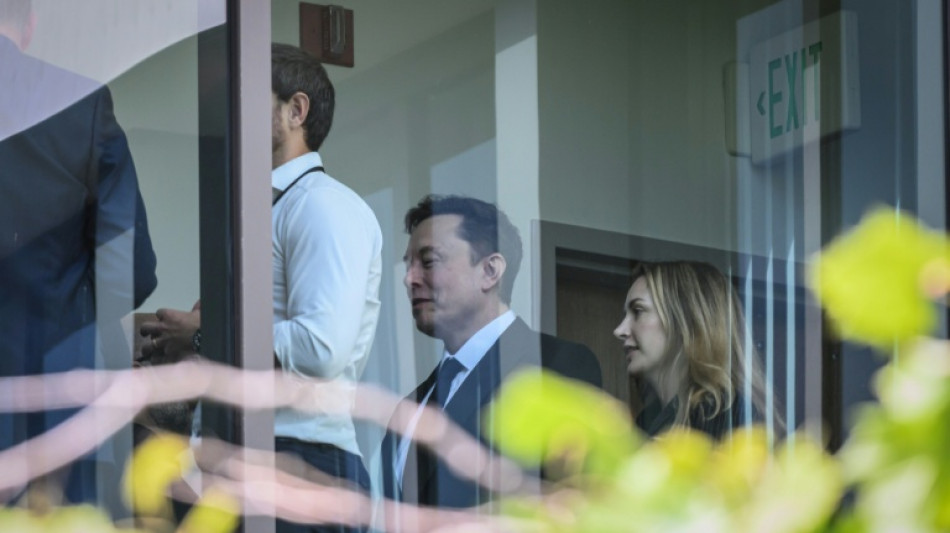
Elon Musk sparred with lawyers for a third day Thursday at his California trial against OpenAI, struggling to explain why his own for-profit AI empire differs from the one he is trying to take down.
"Few answers are going to be complete, especially when you cut me off all the time," the visibly irritated multibillionaire said as he resumed his duel Thursday morning with the defense attorney for OpenAI.
Federal Judge Yvonne Gonzalez Rogers, who must decide whether OpenAI -- the creator of ChatGPT -- betrayed its original nonprofit mission, had to intervene several times to compel the world's richest man to answer questions.
After the judge accused him of playing lawyer by complaining that opposing counsel's questions were "leading," the tech mogul conceded: "I am not a lawyer."
"Well, technically I did take Law 101 in school," he added, drawing laughter from the courtroom.
A benefactor to OpenAI's co-founders -- to whom he gave $38 million during the project's early days from 2015 to 2017 -- Musk accuses CEO Sam Altman and his partner Greg Brockman of betraying the startup's charitable mission by transforming it into a commercial company valued at more than $850 billion and poised to go public.
He is seeking to have OpenAI -- which rivals Anthropic and Google at the top of the global AI race -- return to nonprofit status, in a trial whose outcome could reshape the question of who controls AI innovation in the United States.
OpenAI's attorney William Savitt sought to demonstrate that Musk is a mirror image of what he denounces: all of his companies -- Tesla, Neuralink, X and his own AI firm xAI, recently absorbed into SpaceX -- are for-profit, and the entrepreneur himself presents them as beneficial to humanity.
"There's nothing wrong with having a for-profit organization," Musk answered, repeating his mantra: "You just can't steal a charity" -- meaning OpenAI should simply have started as a normal company from the outset.
"The worst-case situation would be that AI kills us all, I suppose," Musk declared with a smile, seizing an opening from his own attorney to invoke the climactic scenario from the film "Terminator."
The judge had sought to bar such digressions, telling Musk's attorney at the start of the hearing: "I think it's ironic that your client, despite these risks, is creating a company that's in the exact same space."
Musk's testimony concluded Thursday, his third day on the stand, although he could be called back before mid-May.
Altman, his former protégé turned adversary, was present for Thursday's exchanges and left the courthouse shortly after Musk finished.
Altman's testimony is expected next week or the week after. OpenAI President Brockman, another early co-founder, will precede him on the witness stand. A ruling on the merits is expected in mid-May.
M.Johnson--SMC