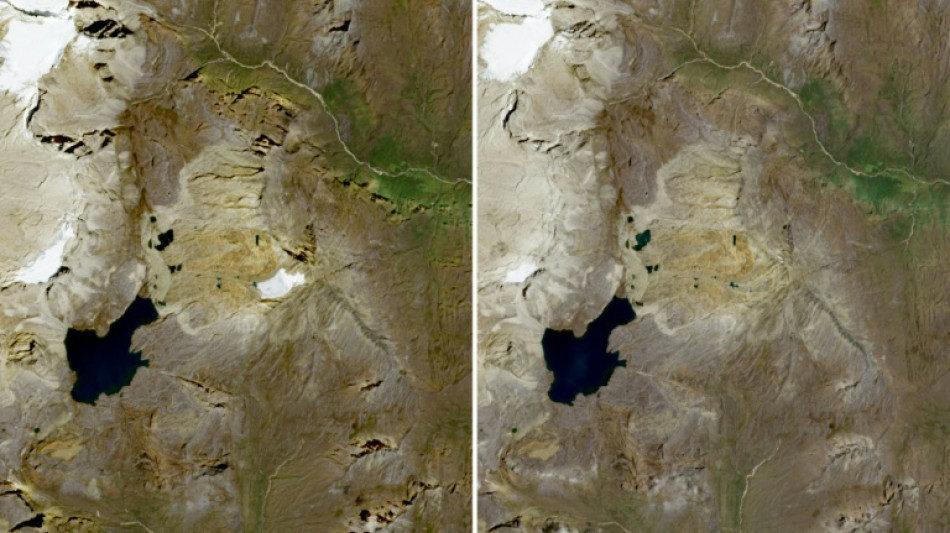
Global warming causes Colombian glacier to disappear / Photo: - - COPERNICUS SENTINEL DATA 2026/AFP


 London
 20 °C
20 °C

 Manchester
 19 °C
19 °C
 Glasgow
20 °C
Glasgow
20 °C
 Dublin
 17 °C
17 °C
 Belfast
18 °C
Belfast
18 °C
 Washington
30 °C
Washington
30 °C
 Denver
 29 °C
29 °C
 Atlanta
32 °C
Atlanta
32 °C
 Dallas
 37 °C
37 °C
 Houston Texas
38 °C
Houston Texas
38 °C
 New Orleans
35 °C
New Orleans
35 °C
 El Paso
38 °C
El Paso
38 °C
 Phoenix
46 °C
Phoenix
46 °C
 Los Angeles
35 °C
San Diego
30 °C
San Francisco
Los Angeles
35 °C
San Diego
30 °C
San Francisco
 22 °C
Chicago
29 °C
Minneapolis
28 °C
Seattle
21 °C
Portland
26 °C
Salt Lake City
34 °C
Las Vegas
42 °C
Miami
30 °C
Jacksonville
31 °C
San Antonio
38 °C
Bermuda
30 °C
Nassau
26 °C
Iqaluit
10 °C
Yellowknife
23 °C
Anchorage
15 °C
Fairbanks
12 °C
Barrow
22 °C
Chicago
29 °C
Minneapolis
28 °C
Seattle
21 °C
Portland
26 °C
Salt Lake City
34 °C
Las Vegas
42 °C
Miami
30 °C
Jacksonville
31 °C
San Antonio
38 °C
Bermuda
30 °C
Nassau
26 °C
Iqaluit
10 °C
Yellowknife
23 °C
Anchorage
15 °C
Fairbanks
12 °C
Barrow
 3 °C
Calgary
29 °C
Edmonton
29 °C
Winnipeg
24 °C
Goose Bay
25 °C
Halifax
26 °C
Boston
26 °C
Ottawa
26 °C
Toronto
24 °C
Detroit
27 °C
Cleveland
27 °C
New York
28 °C
Baltimore
29 °C
Philadelphia
29 °C
Nuuk (Godthåb)
12 °C
Hong Kong
3 °C
Calgary
29 °C
Edmonton
29 °C
Winnipeg
24 °C
Goose Bay
25 °C
Halifax
26 °C
Boston
26 °C
Ottawa
26 °C
Toronto
24 °C
Detroit
27 °C
Cleveland
27 °C
New York
28 °C
Baltimore
29 °C
Philadelphia
29 °C
Nuuk (Godthåb)
12 °C
Hong Kong
 28 °C
Singapore
26 °C
Melbourne
28 °C
Canberra
5 °C
Adelaide
8 °C
Darwin
28 °C
Singapore
26 °C
Melbourne
28 °C
Canberra
5 °C
Adelaide
8 °C
Darwin
 22 °C
Perth
11 °C
Fort Worth
37 °C
Honolulu
29 °C
Sydney
12 °C
Johannesburg
15 °C
Dubai
39 °C
Mumbai
28 °C
Zürich
21 °C
Tokyo
28 °C
Seoul
24 °C
Delhi
29 °C
Beijing
22 °C
Riyadh
35 °C
Prague
18 °C
Pennsylvania
28 °C
Valletta
31 °C
Manama
34 °C
Warsaw
16 °C
Stockholm
13 °C
22 °C
Perth
11 °C
Fort Worth
37 °C
Honolulu
29 °C
Sydney
12 °C
Johannesburg
15 °C
Dubai
39 °C
Mumbai
28 °C
Zürich
21 °C
Tokyo
28 °C
Seoul
24 °C
Delhi
29 °C
Beijing
22 °C
Riyadh
35 °C
Prague
18 °C
Pennsylvania
28 °C
Valletta
31 °C
Manama
34 °C
Warsaw
16 °C
Stockholm
13 °C
Where once there was ice, only rock remains.
One of the glaciers in a chain of snow-capped mountains in the Colombian Andes has vanished due to high temperatures driven by climate change.
Satellite images show how the ice sheet covering the mountain gradually shrank from 2015 until it disappeared completely in March 2026.
Situated in the Sierra Nevada del Cocuy range, in the northeast of Colombia, the Cerros de la Plaza glacier was officially declared disappeared last week by the Institute of Hydrology, Meteorology and Environmental Studies (IDEAM).
Its surface area shrank from five square kilometers (1.93 square miles) in the 19th century to zero today, according to the agency.
"Climate change is a reality that is already transforming our territories. And what is at stake is not only the landscape, but the very balance of these ecosystems," IDEAM said in a statement.
The Colombian Andes, like the country's other ecosystems, are incredibly biodiverse, home to condors and mammals such as the spectacled bear.
The Sierra Nevada del Cocuy, with peaks over 5,000 meters above sea level, is one of the last six remaining glacial systems in the country, where the area covered by ice has shrunk by 90 percent since the 19th century, according to the environment ministry.
Glaciers feed the Andes' freshwater sources, sustain mountain ecosystems and play a crucial role in crop irrigation, fishing, and other human activities.
The last 11 years have been the hottest 11 on record, according to the EU's Copernicus Climate Change Service and Berkeley Earth, a California-based non-profit research organization.
A study published in Science magazine in January 2023 predicted that half the planet's glaciers will have melted by 2100 even if the world meets its goal under the Paris Agreement of limiting warming to 1.5C.
D.Fraser--SMC