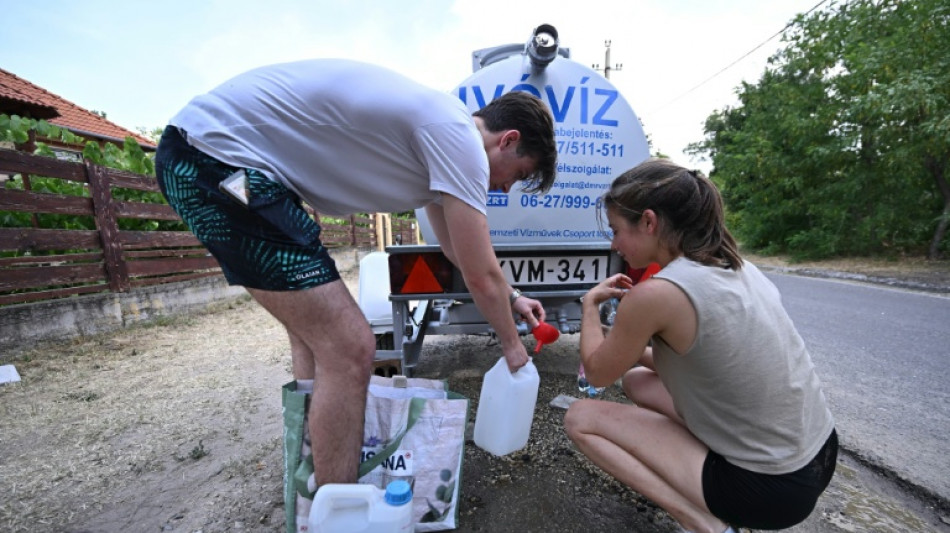
Taps run dry in Hungarian village as heatwave bites / Photo: Attila KISBENEDEK - AFP


 London
 20 °C
20 °C

 Manchester
 17 °C
17 °C
 Glasgow
 18 °C
18 °C
 Dublin
 17 °C
17 °C
 Belfast
16 °C
Belfast
16 °C
 Washington
27 °C
Washington
27 °C
 Denver
16 °C
Denver
16 °C
 Atlanta
25 °C
Atlanta
25 °C
 Dallas
21 °C
Dallas
21 °C
 Houston Texas
30 °C
Houston Texas
30 °C
 New Orleans
31 °C
New Orleans
31 °C
 El Paso
 20 °C
20 °C
 Phoenix
26 °C
Phoenix
26 °C
 Los Angeles
22 °C
San Diego
22 °C
San Francisco
15 °C
Chicago
21 °C
Minneapolis
15 °C
Seattle
13 °C
Portland
14 °C
Salt Lake City
19 °C
Las Vegas
26 °C
Miami
24 °C
Jacksonville
30 °C
San Antonio
29 °C
Bermuda
26 °C
Nassau
22 °C
Iqaluit
5 °C
Yellowknife
4 °C
Anchorage
1 °C
Fairbanks
Los Angeles
22 °C
San Diego
22 °C
San Francisco
15 °C
Chicago
21 °C
Minneapolis
15 °C
Seattle
13 °C
Portland
14 °C
Salt Lake City
19 °C
Las Vegas
26 °C
Miami
24 °C
Jacksonville
30 °C
San Antonio
29 °C
Bermuda
26 °C
Nassau
22 °C
Iqaluit
5 °C
Yellowknife
4 °C
Anchorage
1 °C
Fairbanks
 -1 °C
Barrow
-5 °C
Calgary
6 °C
Edmonton
30 °C
Winnipeg
10 °C
Goose Bay
19 °C
Halifax
23 °C
Boston
23 °C
Ottawa
18 °C
Toronto
20 °C
Detroit
22 °C
Cleveland
27 °C
New York
23 °C
Baltimore
26 °C
Philadelphia
23 °C
Nuuk (Godthåb)
3 °C
Hong Kong
30 °C
Singapore
-1 °C
Barrow
-5 °C
Calgary
6 °C
Edmonton
30 °C
Winnipeg
10 °C
Goose Bay
19 °C
Halifax
23 °C
Boston
23 °C
Ottawa
18 °C
Toronto
20 °C
Detroit
22 °C
Cleveland
27 °C
New York
23 °C
Baltimore
26 °C
Philadelphia
23 °C
Nuuk (Godthåb)
3 °C
Hong Kong
30 °C
Singapore
 28 °C
Melbourne
29 °C
Canberra
13 °C
Adelaide
28 °C
Melbourne
29 °C
Canberra
13 °C
Adelaide
 14 °C
Darwin
25 °C
Perth
14 °C
Darwin
25 °C
Perth
 12 °C
Fort Worth
22 °C
Honolulu
25 °C
Sydney
19 °C
Johannesburg
14 °C
Dubai
35 °C
Mumbai
31 °C
Zürich
20 °C
Tokyo
12 °C
Fort Worth
22 °C
Honolulu
25 °C
Sydney
19 °C
Johannesburg
14 °C
Dubai
35 °C
Mumbai
31 °C
Zürich
20 °C
Tokyo
 23 °C
Seoul
12 °C
Delhi
29 °C
Beijing
7 °C
Riyadh
35 °C
Prague
22 °C
Pennsylvania
23 °C
Valletta
26 °C
Manama
33 °C
Warsaw
17 °C
Stockholm
16 °C
23 °C
Seoul
12 °C
Delhi
29 °C
Beijing
7 °C
Riyadh
35 °C
Prague
22 °C
Pennsylvania
23 °C
Valletta
26 °C
Manama
33 °C
Warsaw
17 °C
Stockholm
16 °C
In a hilly village northwest of Budapest, siblings Andras and Blanka Arki have brought a bag of plastic containers and bottles to fill up at a roadside water cart in scorching 41C heat.
They are hoping to bring home clean water for the rest of their family.
"It's mainly to quench our thirst, and we have to give our animals water too," Andras, a student, told AFP.
"We have a dog, a cat, and about 10 chickens," the 23-year-old said, adding that they have to make this trip three times a day.
Like most inhabitants of the village of Szada, 25 kilometres northwest of Budapest, their home has been without tap water for almost two days.
Rising demand has overwhelmed Hungary's ageing water network as a record-breaking heatwave batters Europe.
Hungary on Tuesday hit a new temperature record, reaching 42C in Szecseny in northern Hungary, according to the national weather service, beating a previous record of 41.9C from 2007.
- 'Never happened before' -
Around three-quarters of the Szada's 6,600 residents have faced water outages since Monday morning.
Services may only return on Wednesday, Endre Marton Laszlo, a local MP from the ruling Tisza party, told AFP, urging people "to use water sparingly" and to resist from "stockpiling water".
Another local, 25-year-old office worker Edina Fabian, said she and her partner are trying to conserve what they can gather from water carts.
"We use as little as possible," she said, standing at the locker room of a local sports field, which was turned into a temporary showering facility.
She is looking forward for a refreshing shower after sweating for over a day.
"Our bedroom is hot, even with air conditioning we only managed to cool it to 27-28 degrees," she said.
Many residents feel frustrated how the water shortage is hindering their daily activities.
"It's quite an inconvenience that we can't wash up, use the toilet, or do things like that," said 53-year economist Claudio Pittia.
In the past the village only would have only brief summer interruptions to the water supply to "one or two higher-lying streets", according to mayor Lajos Pinter.
"A water outage lasting more than half a day has never happened here before," he told AFP.
The regional waterworks set up four water carts around the village.
The Hungarian army has also brought thousands of half-litre water sachets for volunteers to deliver to vulnerable people who cannot leave their homes.
Dozens of places across Hungary have imposed restrictions on water use to pre-empt service outages.
The problems affect many towns and villages in the Budapest metropolitan area situated close to the River Danube, whose levels are lower than usual
Prime Minister Peter Magyar has repeatedly urged Hungarians to moderate their water consumption and postpone non-urgent use such as washing cars, warning that the ageing water network could otherwise collapse.
In Szada, a Hungarian couple said they have extreme difficulty adjusting to the scorching heat and water outage, as they recently came from Norway for a family visit.
"As outsiders, we also don't understand why it could not be prevented," Peter, a financial analyst who refused to give his full name told AFP.
"If something is starting to run out, why do they had to wait instead of suspending service before the water was completely gone?"
M.Johnston--SMC