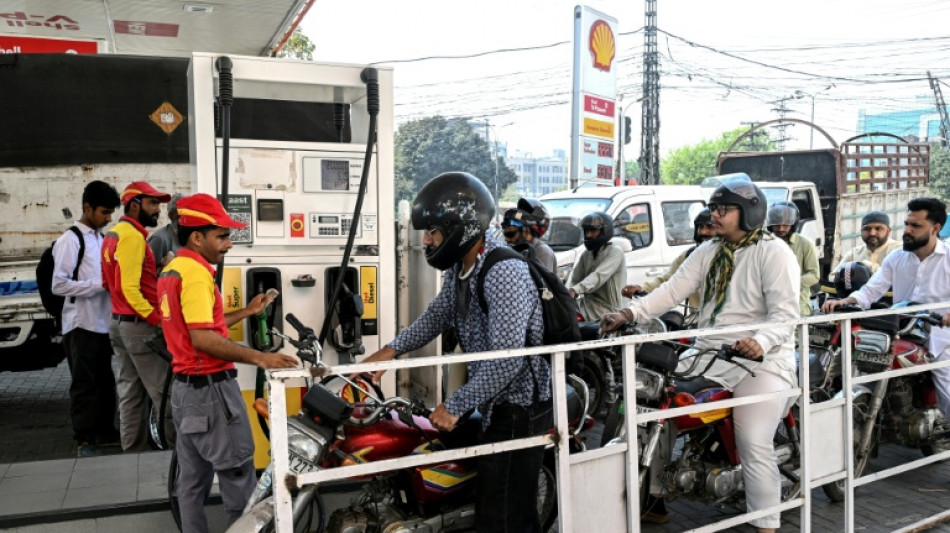
Pakistan hikes petrol, diesel prices due to Middle East war / Photo: Arif ALI - AFP/File


 London
 22 °C
22 °C
 Manchester
20 °C
Manchester
20 °C
 Glasgow
19 °C
Glasgow
19 °C
 Dublin
17 °C
Dublin
17 °C
 Belfast
 17 °C
17 °C
 Washington
21 °C
Washington
21 °C
 Denver
 16 °C
16 °C
 Atlanta
24 °C
Atlanta
24 °C
 Dallas
26 °C
Dallas
26 °C
 Houston Texas
28 °C
Houston Texas
28 °C
 New Orleans
29 °C
New Orleans
29 °C
 El Paso
22 °C
El Paso
22 °C
 Phoenix
27 °C
Phoenix
27 °C
 Los Angeles
18 °C
San Diego
19 °C
San Francisco
Los Angeles
18 °C
San Diego
19 °C
San Francisco
 14 °C
Chicago
14 °C
Chicago
 18 °C
Minneapolis
14 °C
Seattle
12 °C
Portland
12 °C
Salt Lake City
13 °C
Las Vegas
22 °C
Miami
26 °C
Jacksonville
28 °C
San Antonio
26 °C
Bermuda
29 °C
Nassau
18 °C
Iqaluit
3 °C
Yellowknife
8 °C
Anchorage
8 °C
Fairbanks
8 °C
Barrow
18 °C
Minneapolis
14 °C
Seattle
12 °C
Portland
12 °C
Salt Lake City
13 °C
Las Vegas
22 °C
Miami
26 °C
Jacksonville
28 °C
San Antonio
26 °C
Bermuda
29 °C
Nassau
18 °C
Iqaluit
3 °C
Yellowknife
8 °C
Anchorage
8 °C
Fairbanks
8 °C
Barrow
 -1 °C
Calgary
7 °C
Edmonton
25 °C
Winnipeg
15 °C
Goose Bay
12 °C
Halifax
16 °C
Boston
16 °C
Ottawa
11 °C
Toronto
13 °C
Detroit
16 °C
Cleveland
17 °C
New York
18 °C
Baltimore
21 °C
Philadelphia
20 °C
Nuuk (Godthåb)
3 °C
Hong Kong
28 °C
Singapore
30 °C
Melbourne
28 °C
Canberra
-1 °C
Calgary
7 °C
Edmonton
25 °C
Winnipeg
15 °C
Goose Bay
12 °C
Halifax
16 °C
Boston
16 °C
Ottawa
11 °C
Toronto
13 °C
Detroit
16 °C
Cleveland
17 °C
New York
18 °C
Baltimore
21 °C
Philadelphia
20 °C
Nuuk (Godthåb)
3 °C
Hong Kong
28 °C
Singapore
30 °C
Melbourne
28 °C
Canberra
 10 °C
Adelaide
21 °C
Darwin
27 °C
Perth
16 °C
Fort Worth
27 °C
Honolulu
10 °C
Adelaide
21 °C
Darwin
27 °C
Perth
16 °C
Fort Worth
27 °C
Honolulu
 25 °C
Sydney
21 °C
Johannesburg
22 °C
Dubai
37 °C
Mumbai
25 °C
Sydney
21 °C
Johannesburg
22 °C
Dubai
37 °C
Mumbai
 29 °C
Zürich
24 °C
Tokyo
23 °C
Seoul
21 °C
Delhi
32 °C
Beijing
21 °C
Riyadh
41 °C
Prague
23 °C
Pennsylvania
19 °C
Valletta
23 °C
Manama
35 °C
Warsaw
21 °C
Stockholm
18 °C
29 °C
Zürich
24 °C
Tokyo
23 °C
Seoul
21 °C
Delhi
32 °C
Beijing
21 °C
Riyadh
41 °C
Prague
23 °C
Pennsylvania
19 °C
Valletta
23 °C
Manama
35 °C
Warsaw
21 °C
Stockholm
18 °C
Pakistan's government on Thursday drastically raised fuel prices in response to spiking global energy prices caused by the Iran war, the country's petroleum minister said in a press conference.
The new prices mark an increase of 42.7 percent in petrol prices and 54.9 percent in the price of diesel.
"The decision made today is that as per international markets, after the increase in the petrol prices the new price will be 458.40 rupees ($1.64 per litre) which will be effective from tomorrow (Friday)," said the minister, Ali Pervaiz Malik.
As for diesel, "which has great importance for our workers and public transport," the price was set at 520.35 Pakistani rupees ($1.86) per litre, he said.
"The government has done its best, looking at its budget, to give people blanket protection" but was "forced" to pass along the price increase "because resources are limited and we do not currently see indications of the end of this war", Pervaiz said.
The US-Israel war on Iran, launched on February 28, has plunged the Middle East into conflict, with Iranian retaliatory strikes hitting targets across the Gulf and virtually freezing shipping in the Strait of Hormuz.
The key waterway normally sees a fifth of the world's energy supplies pass through it, much of it bound for Asia.
Pakistan is heavily reliant on such oil and gas, and had earlier raised prices by 20 percent on March 6, about a week into the war.
The government has unveiled a raft of austerity measures designed to save fuel, including moving many government offices to a four-day work week, extending school holidays and moving some classes online.
Pakistan is classified as a lower-middle-income country, with roughly 25 percent of its 240 million population living in poverty, as per World Bank data.
Several Asian countries have hiked fuel prices or implemented other measures to address the crisis sparked by the war on Iran.
On Thursday, Bangladesh hiked prices of liquefied petroleum gas used for cooking and compressed natural gas used in some cars by 29 percent.
Earlier this week, the International Monetary Fund warned that vulnerable economies, such as Pakistan, did not just face pressure from higher energy prices, but from supply chain snarls as well.
"Parts of the Middle East, Africa, Asia-Pacific, and Latin America face the added strain of higher food and fertilizer prices and tighter financial conditions," the IMF said in a post on its website.
L.Mitchell--SMC