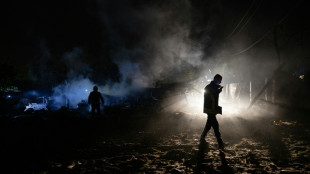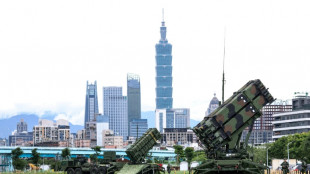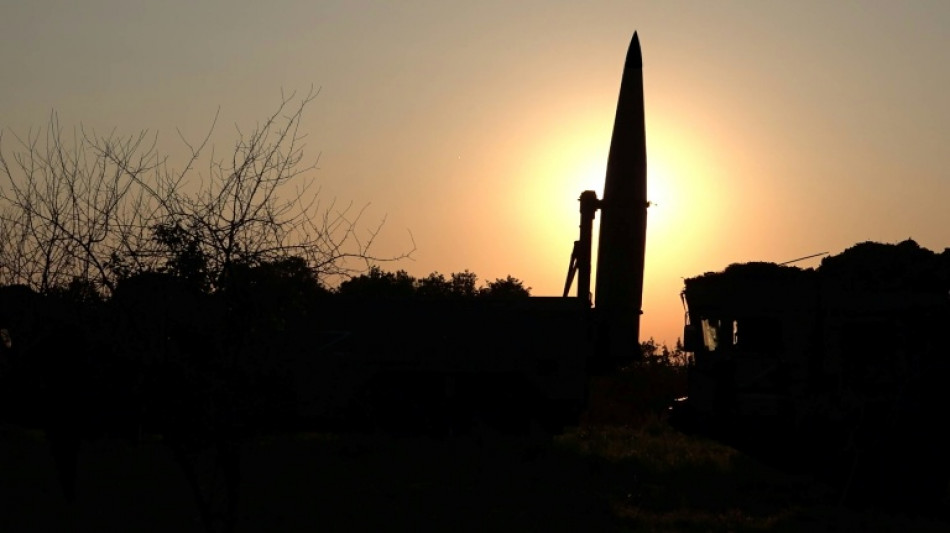
Last US-Russia nuclear treaty ends in 'grave moment' for world / Photo: Handout - Russian Defence Ministry/AFP


 London
 10 °C
10 °C
 Manchester
 7 °C
7 °C
 Glasgow
 10 °C
10 °C
 Dublin
 8 °C
8 °C
 Belfast
5 °C
Belfast
5 °C
 Washington
 10 °C
10 °C
 Denver
19 °C
Denver
19 °C
 Atlanta
15 °C
Atlanta
15 °C
 Dallas
21 °C
Dallas
21 °C
 Houston Texas
23 °C
Houston Texas
23 °C
 New Orleans
 17 °C
17 °C
 El Paso
27 °C
El Paso
27 °C
 Phoenix
26 °C
Phoenix
26 °C
 Los Angeles
17 °C
San Diego
23 °C
San Francisco
17 °C
Chicago
16 °C
Minneapolis
15 °C
Seattle
13 °C
Portland
16 °C
Salt Lake City
15 °C
Las Vegas
26 °C
Miami
26 °C
Jacksonville
17 °C
San Antonio
21 °C
Bermuda
25 °C
Nassau
13 °C
Iqaluit
-6 °C
Yellowknife
7 °C
Anchorage
1 °C
Fairbanks
Los Angeles
17 °C
San Diego
23 °C
San Francisco
17 °C
Chicago
16 °C
Minneapolis
15 °C
Seattle
13 °C
Portland
16 °C
Salt Lake City
15 °C
Las Vegas
26 °C
Miami
26 °C
Jacksonville
17 °C
San Antonio
21 °C
Bermuda
25 °C
Nassau
13 °C
Iqaluit
-6 °C
Yellowknife
7 °C
Anchorage
1 °C
Fairbanks
 -4 °C
Barrow
-6 °C
Calgary
11 °C
Edmonton
12 °C
Winnipeg
7 °C
Goose Bay
3 °C
Halifax
11 °C
Boston
9 °C
Ottawa
6 °C
Toronto
9 °C
Detroit
10 °C
Cleveland
8 °C
New York
14 °C
Baltimore
12 °C
Philadelphia
12 °C
Nuuk (Godthåb)
-7 °C
Hong Kong
-4 °C
Barrow
-6 °C
Calgary
11 °C
Edmonton
12 °C
Winnipeg
7 °C
Goose Bay
3 °C
Halifax
11 °C
Boston
9 °C
Ottawa
6 °C
Toronto
9 °C
Detroit
10 °C
Cleveland
8 °C
New York
14 °C
Baltimore
12 °C
Philadelphia
12 °C
Nuuk (Godthåb)
-7 °C
Hong Kong
 27 °C
Singapore
30 °C
Melbourne
23 °C
Canberra
21 °C
Adelaide
27 °C
Singapore
30 °C
Melbourne
23 °C
Canberra
21 °C
Adelaide
 30 °C
Darwin
31 °C
Perth
19 °C
Fort Worth
21 °C
Honolulu
30 °C
Darwin
31 °C
Perth
19 °C
Fort Worth
21 °C
Honolulu
 28 °C
Sydney
21 °C
Johannesburg
17 °C
Dubai
28 °C
Sydney
21 °C
Johannesburg
17 °C
Dubai
 27 °C
Mumbai
27 °C
Mumbai
 31 °C
Zürich
7 °C
Tokyo
23 °C
Seoul
12 °C
Delhi
21 °C
Beijing
12 °C
Riyadh
25 °C
Prague
9 °C
Pennsylvania
8 °C
Valletta
19 °C
Manama
29 °C
Warsaw
12 °C
Stockholm
12 °C
31 °C
Zürich
7 °C
Tokyo
23 °C
Seoul
12 °C
Delhi
21 °C
Beijing
12 °C
Riyadh
25 °C
Prague
9 °C
Pennsylvania
8 °C
Valletta
19 °C
Manama
29 °C
Warsaw
12 °C
Stockholm
12 °C
The last nuclear treaty between Russia and the United States expired Thursday, abruptly ending decades of restrictions on how many warheads the two top powers can deploy and triggering fears of a global arms race.
New START, signed during a warmer period of relations, ended with the turn of the calendar to February 5, with President Donald Trump not following up on Russian counterpart Vladimir Putin's proposal to extend the treaty's limits for one year.
UN Secretary-General Antonio Guterres called it a "grave moment for international peace and security" and urged Washington and Moscow to head quickly to the negotiating table.
"For the first time in more than half a century, we face a world without any binding limits on the strategic nuclear arsenals of the Russian Federation and the United States of America," Guterres said in a statement, which considered the treaty over at midnight GMT or 7 pm in New York.
"This dissolution of decades of achievement could not come at a worse time -- the risk of a nuclear weapon being used is the highest in decades," he said, after Russian suggestions of using tactical nuclear weapons early in the Ukraine war.
Pope Leo XIV said each side needed to do "everything possible" to avert a new arms race.
"I urge you not to abandon this instrument without seeking to ensure that it is followed up in a concrete and effective manner," the American-born pope said at his weekly general audience.
Russia's foreign ministry said it considered that both countries are "no longer bound by any obligations or symmetrical declarations within the context of the treaty."
"The Russian Federation intends to act responsibly and prudently," it added, but warned it was ready to take "decisive" countermeasures if its national security is threatened.
- US demands China involvement -
Trump has frequently lashed out at international limits on the United States and called for nuclear testing to resume after a long moratorium, although he has not followed up.
But some observers say the expiration of New START owes less to ideology than to the workings of the Trump administration, where career diplomats are sidelined, simply not having the bandwidth to negotiate a complex agreement.
Trump, asked in October in front of his helicopter about Putin's proposal for a one-year extension, said it sounded "like a good idea," but there were no subsequent negotiations.
Secretary of State Marco Rubio said Wednesday that Trump would make a decision later and reiterated a call for a new agreement that includes China.
"The president's been clear in the past that in order to have true arms control in the 21st century, it's impossible to do something that doesn't include China, because of their vast and rapidly growing stockpile," Rubio said.
China's nuclear arsenal is growing quickly with an estimated 550 strategic nuclear launchers, which is still well below the 800 each of Russia and the United States capped under New START. France and Britain, treaty-bound US allies, together have another 100.
Trump in his first term also looked ready to let New START lapse as he insisted on including China, with a US negotiator even provocatively setting up an empty seat with a Chinese flag.
Daryl Kimball, executive director of the Arms Control Association, which warns of nuclear risks, agreed that China should engage on its nuclear program but wondered if Trump has even tried.
"Despite Trump's talk about involving China in nuclear negotiations, there is no indication that Trump or his team have taken the time to propose risk reduction or arms control talks with China since returning to office in 2025," Kimball said.
He said that Trump and Putin could agree to keep current limits and then press China.
Joe Biden agreed with Russia to extend New START for five years after he defeated Trump in the 2020 election, but tensions between the two countries later soared over Moscow's invasion of Ukraine.
The treaty, signed in 2010 in Prague by then presidents Barack Obama and Dmitry Medvedev, limited each side's nuclear arsenal to 1,550 deployed strategic warheads, a reduction of nearly 30 percent from the previous limit set in 2002.
A.Rogen--SMC