Conservative Thai PM heading for election victory: projections / Photo: Chanakarn LAOSARAKHAM - AFP


 London
 13 °C
13 °C

 Manchester
9 °C
Manchester
9 °C
 Glasgow
 7 °C
7 °C
 Dublin
10 °C
Dublin
10 °C
 Belfast
 9 °C
9 °C
 Washington
13 °C
Washington
13 °C
 Denver
18 °C
Denver
18 °C
 Atlanta
18 °C
Atlanta
18 °C
 Dallas
 23 °C
23 °C
 Houston Texas
 25 °C
25 °C
 New Orleans
22 °C
New Orleans
22 °C
 El Paso
28 °C
El Paso
28 °C
 Phoenix
 27 °C
27 °C
 Los Angeles
19 °C
San Diego
Los Angeles
19 °C
San Diego
 21 °C
San Francisco
16 °C
Chicago
16 °C
Minneapolis
18 °C
Seattle
13 °C
Portland
15 °C
Salt Lake City
21 °C
San Francisco
16 °C
Chicago
16 °C
Minneapolis
18 °C
Seattle
13 °C
Portland
15 °C
Salt Lake City
 14 °C
Las Vegas
14 °C
Las Vegas
 19 °C
Miami
25 °C
Jacksonville
18 °C
San Antonio
26 °C
Bermuda
24 °C
Nassau
15 °C
Iqaluit
-12 °C
Yellowknife
-1 °C
Anchorage
2 °C
Fairbanks
-5 °C
Barrow
-2 °C
Calgary
16 °C
Edmonton
15 °C
Winnipeg
18 °C
Goose Bay
11 °C
Halifax
9 °C
Boston
13 °C
Ottawa
9 °C
Toronto
13 °C
Detroit
14 °C
Cleveland
11 °C
New York
16 °C
Baltimore
13 °C
Philadelphia
15 °C
Nuuk (Godthåb)
-6 °C
Hong Kong
25 °C
Singapore
19 °C
Miami
25 °C
Jacksonville
18 °C
San Antonio
26 °C
Bermuda
24 °C
Nassau
15 °C
Iqaluit
-12 °C
Yellowknife
-1 °C
Anchorage
2 °C
Fairbanks
-5 °C
Barrow
-2 °C
Calgary
16 °C
Edmonton
15 °C
Winnipeg
18 °C
Goose Bay
11 °C
Halifax
9 °C
Boston
13 °C
Ottawa
9 °C
Toronto
13 °C
Detroit
14 °C
Cleveland
11 °C
New York
16 °C
Baltimore
13 °C
Philadelphia
15 °C
Nuuk (Godthåb)
-6 °C
Hong Kong
25 °C
Singapore
 28 °C
Melbourne
22 °C
Canberra
19 °C
Adelaide
24 °C
Darwin
30 °C
Perth
16 °C
Fort Worth
23 °C
Honolulu
28 °C
Melbourne
22 °C
Canberra
19 °C
Adelaide
24 °C
Darwin
30 °C
Perth
16 °C
Fort Worth
23 °C
Honolulu
 28 °C
Sydney
22 °C
Johannesburg
16 °C
Dubai
29 °C
Mumbai
29 °C
Zürich
6 °C
Tokyo
17 °C
Seoul
28 °C
Sydney
22 °C
Johannesburg
16 °C
Dubai
29 °C
Mumbai
29 °C
Zürich
6 °C
Tokyo
17 °C
Seoul
 11 °C
Delhi
20 °C
Beijing
11 °C
Riyadh
25 °C
Prague
7 °C
Pennsylvania
11 °C
Valletta
19 °C
Manama
31 °C
Warsaw
9 °C
Stockholm
12 °C
11 °C
Delhi
20 °C
Beijing
11 °C
Riyadh
25 °C
Prague
7 °C
Pennsylvania
11 °C
Valletta
19 °C
Manama
31 °C
Warsaw
9 °C
Stockholm
12 °C
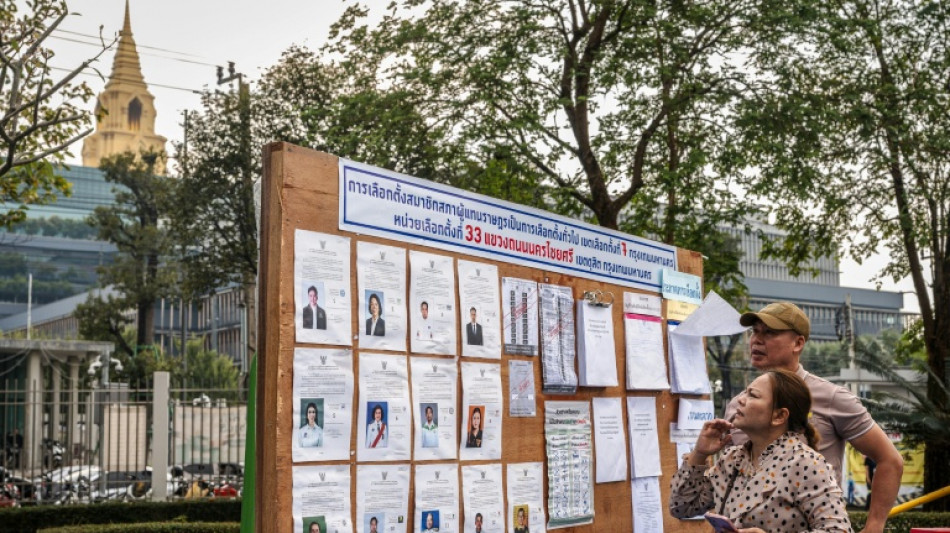
Thailand's conservative prime minister was heading for a victory in the country's general election Sunday, television stations projected, with his party set to be by far the largest in parliament after riding a wave of nationalism.
Anutin Charnvirakul's Bhumjaithai was forecast to win nearly 200 seats by Channel 3 on the basis of results from the parties. The progressive People's Party trailed far behind, just below 100 seats, but ahead of jailed former prime minister Thaksin Shinawatra's Pheu Thai party in third.
It would be a stunning turnaround for Anutin, whose party came third at the last election and who was only installed as prime minister by parliament in September, after two predecessors from Pheu Thai were ousted by the courts.
Conceding defeat, People's Party leader Natthaphong Ruengpanyawut told reporters in Bangkok that "we stand by our principle of respecting the party that finishes first and its right to form the government".
Foremost on many voters' minds was a longstanding border dispute with Cambodia that erupted into deadly fighting twice last year.
"We need a strong leader who can protect our sovereignty," said Yuernyong Loonboot, 64, the first voter to cast his ballot at a polling station in Buriram, Anutin's hometown.
"Living here, the border conflict has made me anxious. War was never something we used to think about."
Soon after taking office, Anutin authorised the armed forces to take whatever action they saw fit on the border, without referring to the government first.
Thailand's military took control of some disputed areas in the latest fighting in December, and a ceasefire is now in place.
After voting at the same polling station, Anutin -- heir to a construction fortune and an amateur jet pilot who championed the legalisation of cannabis -- told reporters he hoped voters would "trust us".
The Southeast Asian nation's next government will also need to contend with anaemic economic growth -- the tourism sector is vital but arrivals yet to return to their pre-Covid highs -- and the multibillion-dollar transnational cyberscam networks operating from several neighbouring countries.
- Early release? -
While Bhumjaithai looked unlikely to secure an overall majority in the 500-seat lower house, its seat share would give it the upper hand in coalition negotiations.
Thailand uses a mixed representation system, where 400 MPs are elected by individual constituencies, and 100 are allocated according to a separate ballot for party lists.
In its previous incarnation, Move Forward, the People's Party won the most seats at the last poll three years ago, but its candidate was blocked from the premiership and the party was later dissolved.
While Bhumjaithai touted its national defence credentials, especially after last year's clashes with Cambodia, the People's Party advocated ending conscription and cutting the number of generals.
Pheu Thai is seen as Anutin's most likely coalition partner -- they were allies until Bhumjaithai pulled out of a deal over the handling of the border dispute by then prime minister Paetongtarn Shinawatra, Thaksin's daughter.
Paetongtarn had referred to Cambodia's strongman Hun Sen as "uncle" in a leaked phone call and described a Thai military commander as her "opponent".
Thaksin is currently serving a one-year prison sentence for corruption in office but many observers expect him to be released earlier than scheduled alongside a political agreement.
Pheu Thai has been Thailand's most successful political organisation of recent years and Thaksin's nephew was seeking to become the family's fifth prime minister, but the party's support has dropped precipitously from its heyday.
All three major parties offered various populist handouts and socioeconomic policies, including Pheu Thai's pledge to award nine daily prizes of one million baht ($31,000) each to boost the economy.
- Constitution referendum -
Thailand's political history is replete with military coups, bloody street protests and judicial bans on prime ministers and parties.
A constitution drafted under military rule following the last coup in 2014 gives significant power to institutions appointed by the senate, which is not directly elected.
Move Forward was dissolved after the constitutional court ruled its pledge to reform the strict royal insult law amounted to an attempt to overthrow the constitutional monarchy.
The issue did not feature in the People's Party campaign this time.
But a referendum ballot on Sunday also gave voters a chance to voice whether they want constitutional reform in principle, albeit with no specific measures on the table.
N.Fournier--SMC