Malinin wilts at Olympics as Heraskevych loses ban appeal / Photo: Gabriel BOUYS - AFP


 London
 9 °C
9 °C
 Manchester
 8 °C
8 °C
 Glasgow
10 °C
Glasgow
10 °C
 Dublin
 9 °C
9 °C
 Belfast
9 °C
Belfast
9 °C
 Washington
 20 °C
20 °C
 Denver
22 °C
Denver
22 °C
 Atlanta
 23 °C
23 °C
 Dallas
26 °C
Dallas
26 °C
 Houston Texas
 28 °C
28 °C
 New Orleans
24 °C
New Orleans
24 °C
 El Paso
 25 °C
25 °C
 Phoenix
29 °C
Phoenix
29 °C
 Los Angeles
22 °C
San Diego
26 °C
San Francisco
18 °C
Chicago
21 °C
Minneapolis
21 °C
Seattle
Los Angeles
22 °C
San Diego
26 °C
San Francisco
18 °C
Chicago
21 °C
Minneapolis
21 °C
Seattle
 13 °C
Portland
18 °C
Salt Lake City
21 °C
Las Vegas
27 °C
Miami
29 °C
Jacksonville
25 °C
San Antonio
28 °C
Bermuda
28 °C
Nassau
17 °C
Iqaluit
-6 °C
Yellowknife
10 °C
Anchorage
13 °C
Portland
18 °C
Salt Lake City
21 °C
Las Vegas
27 °C
Miami
29 °C
Jacksonville
25 °C
San Antonio
28 °C
Bermuda
28 °C
Nassau
17 °C
Iqaluit
-6 °C
Yellowknife
10 °C
Anchorage
 1 °C
Fairbanks
-6 °C
Barrow
-9 °C
Calgary
17 °C
Edmonton
23 °C
Winnipeg
13 °C
Goose Bay
13 °C
Halifax
12 °C
Boston
13 °C
Ottawa
14 °C
Toronto
15 °C
Detroit
18 °C
Cleveland
18 °C
New York
17 °C
Baltimore
19 °C
Philadelphia
18 °C
Nuuk (Godthåb)
-4 °C
Hong Kong
27 °C
Singapore
27 °C
Melbourne
28 °C
Canberra
12 °C
Adelaide
19 °C
Darwin
28 °C
Perth
17 °C
Fort Worth
26 °C
Honolulu
26 °C
Sydney
18 °C
Johannesburg
19 °C
Dubai
32 °C
Mumbai
32 °C
Zürich
9 °C
Tokyo
23 °C
Seoul
4 °C
Delhi
22 °C
Beijing
2 °C
Riyadh
30 °C
Prague
13 °C
Pennsylvania
17 °C
Valletta
22 °C
Manama
32 °C
Warsaw
12 °C
Stockholm
11 °C
1 °C
Fairbanks
-6 °C
Barrow
-9 °C
Calgary
17 °C
Edmonton
23 °C
Winnipeg
13 °C
Goose Bay
13 °C
Halifax
12 °C
Boston
13 °C
Ottawa
14 °C
Toronto
15 °C
Detroit
18 °C
Cleveland
18 °C
New York
17 °C
Baltimore
19 °C
Philadelphia
18 °C
Nuuk (Godthåb)
-4 °C
Hong Kong
27 °C
Singapore
27 °C
Melbourne
28 °C
Canberra
12 °C
Adelaide
19 °C
Darwin
28 °C
Perth
17 °C
Fort Worth
26 °C
Honolulu
26 °C
Sydney
18 °C
Johannesburg
19 °C
Dubai
32 °C
Mumbai
32 °C
Zürich
9 °C
Tokyo
23 °C
Seoul
4 °C
Delhi
22 °C
Beijing
2 °C
Riyadh
30 °C
Prague
13 °C
Pennsylvania
17 °C
Valletta
22 °C
Manama
32 °C
Warsaw
12 °C
Stockholm
11 °C
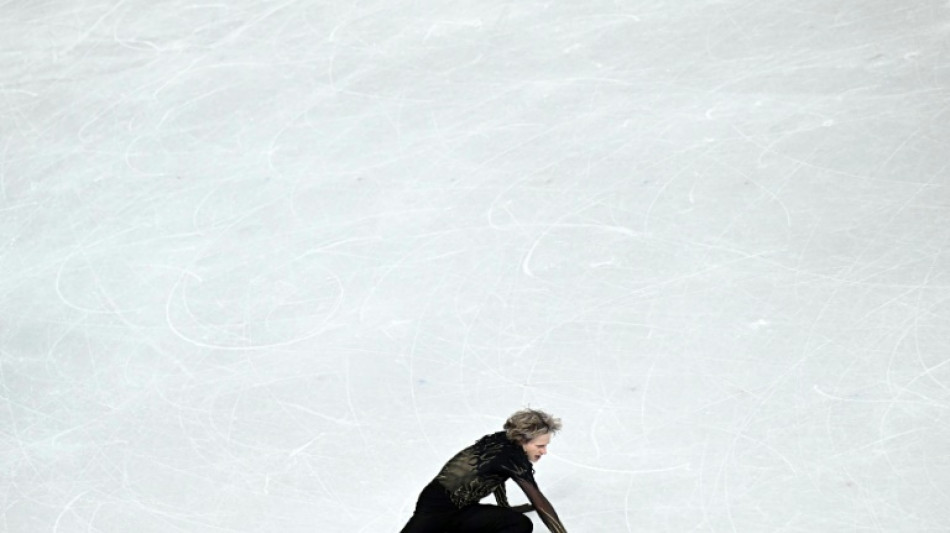
Ilia Malinin's hopes of double Olympic figure skating gold crumbled Friday as he suffered a nightmare on the ice while Ukrainian skeleton racer Vladyslav Heraskevych lost his appeal against his ban from the Milan-Cortina Games.
Expected to romp to the individual men's Olympic title after a stunning display in Tuesday's short programme, US sensation Malinin capitulated in the free skate, finishing in eighth spot overall.
The disconsolate skater held his head in his hands after his disastrous performance in front of a stunned crowd at the Milano Ice Skating Arena, who witnessed the biggest shock of the Games so far.
The 21-year-old said his failure was "definitely mental" after falling twice in a surprisingly awkward effort from the man who has revolutionised and dominated the sport.
"Maybe I was too confident it was going to go well. Honestly, it happened. I can't process what just happened," he said.
Mikhail Shaidorov, leading the way with an overall score of 291.58 points could barely believe his eyes when he saw Malinin's score of 264.49, which confirmed a shock Olympic triumph for the 21-year-old Kazakh.
Malinin's two-year unbeaten run came to an abrupt end following an error-strewn performance, which drew gasps from fans and left him a lowly 15th in the free skate.
His failure to add to add to the team gold he won earlier in the Games was all the more surprising given all of his competitors stumbled, including Japan's Yuma Kagiyama, who took silver with 280.06 points.
- Heraskevych's ban confirmed -
Earlier, sport's highest court dismissed Heraskevych's appeal against his ban from the Winter Olympics for wearing a helmet adorned with pictures of Ukrainian sportsmen and women killed since Russian forces invaded Ukraine in 2022.
The International Olympic Committee kicked Heraskevych out of the Games on Thursday following a stand-off between the 27-year-old, the IOC and the International Bobsleigh & Skeleton Federation (IBSF) over his refusal to ditch the helmet.
The IOC said the pictures on the helmet breached rules on political neutrality during competition, a ruling that was confirmed by the Court of Arbitration for Sport (CAS).
CAS secretary general Matthieu Reeb told reporters the court had "found that freedom of expression is guaranteed at the Olympic Games, but not on the field of play, which is a sacred principle".
The IOC had tried and failed to come to a compromise with Heraskevych by allowing him to wear a plain black armband during Thursday's men's heats.
Heraskevych said his disqualification was "frustrating" as he presented the helmet to Ukrainian President Volodymyr Zelensky in Munich later Friday.
"Nobody was complaining about this helmet, so it was a purely discriminatory decision... and I should be there," he added.
In early action, Norwegian cross-country skier Johannes Klaebo equalled the Winter Olympics record of eight gold medals by winning the men's individual 10 km time trial -- his third victory of the 2026 Games.
Australian snowboard veteran Scotty James's dreams of an elusive gold medal in his fifth Winter Games were shattered after he was beaten by Japan's Yuto Totsuka in a gripping men's halfpipe final.
James came to Italy in top form after winning his fifth consecutive X Games title but he tumbled towards the end of his run in Livigno when he believed he had the gold medal in his grasp.
An emotional James, 31, said he was targeting the 2030 Winter Olympics in France for another shot at topping the podium.
"I'm going to be that bad smell for four years," he said. "I'm going to come back. I hate losing, so this has motivated me now.
Matt Weston claimed Great Britain's first medal of the Games by storming to the men's skeleton title.
W.Richard--SMC