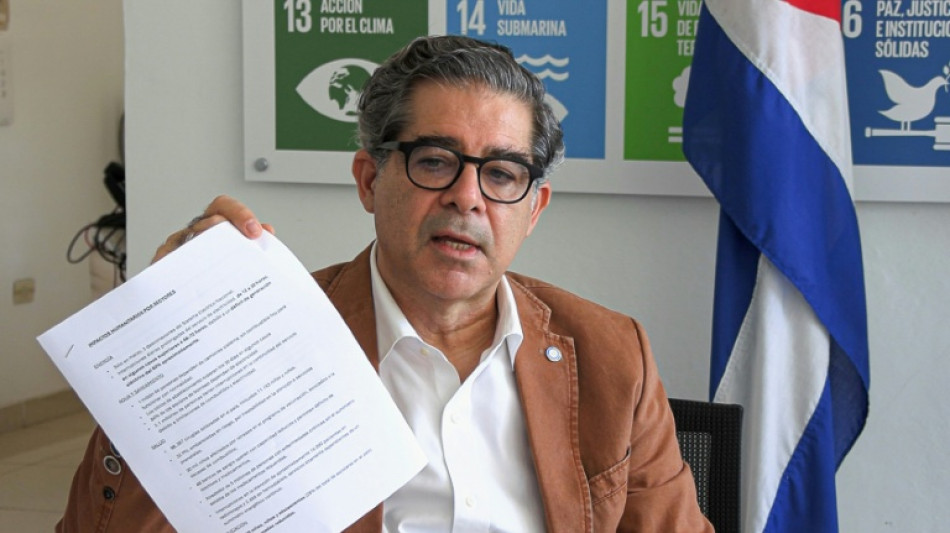
UN pushes fuel solution for Cuba aid work amid US talks / Photo: MAYLIN ALONSO - AFP


 London
 12 °C
12 °C
 Manchester
 12 °C
12 °C
 Glasgow
 4 °C
4 °C
 Dublin
10 °C
Dublin
10 °C
 Belfast
8 °C
Belfast
8 °C
 Washington
 11 °C
11 °C
 Denver
14 °C
Denver
14 °C
 Atlanta
12 °C
Atlanta
12 °C
 Dallas
19 °C
Dallas
19 °C
 Houston Texas
22 °C
Houston Texas
22 °C
 New Orleans
 19 °C
19 °C
 El Paso
23 °C
El Paso
23 °C
 Phoenix
27 °C
Phoenix
27 °C
 Los Angeles
22 °C
San Diego
22 °C
San Francisco
14 °C
Chicago
13 °C
Minneapolis
11 °C
Seattle
12 °C
Portland
14 °C
Salt Lake City
16 °C
Las Vegas
24 °C
Miami
26 °C
Jacksonville
17 °C
San Antonio
20 °C
Bermuda
27 °C
Nassau
12 °C
Iqaluit
-4 °C
Yellowknife
-3 °C
Anchorage
3 °C
Fairbanks
0 °C
Barrow
-7 °C
Calgary
7 °C
Edmonton
10 °C
Winnipeg
9 °C
Goose Bay
9 °C
Halifax
6 °C
Boston
6 °C
Ottawa
9 °C
Toronto
11 °C
Detroit
9 °C
Cleveland
8 °C
New York
13 °C
Baltimore
12 °C
Philadelphia
12 °C
Nuuk (Godthåb)
Los Angeles
22 °C
San Diego
22 °C
San Francisco
14 °C
Chicago
13 °C
Minneapolis
11 °C
Seattle
12 °C
Portland
14 °C
Salt Lake City
16 °C
Las Vegas
24 °C
Miami
26 °C
Jacksonville
17 °C
San Antonio
20 °C
Bermuda
27 °C
Nassau
12 °C
Iqaluit
-4 °C
Yellowknife
-3 °C
Anchorage
3 °C
Fairbanks
0 °C
Barrow
-7 °C
Calgary
7 °C
Edmonton
10 °C
Winnipeg
9 °C
Goose Bay
9 °C
Halifax
6 °C
Boston
6 °C
Ottawa
9 °C
Toronto
11 °C
Detroit
9 °C
Cleveland
8 °C
New York
13 °C
Baltimore
12 °C
Philadelphia
12 °C
Nuuk (Godthåb)
 -3 °C
Hong Kong
-3 °C
Hong Kong
 30 °C
Singapore
30 °C
Singapore
 31 °C
Melbourne
23 °C
Canberra
31 °C
Melbourne
23 °C
Canberra
 22 °C
Adelaide
21 °C
Darwin
32 °C
Perth
20 °C
Fort Worth
18 °C
Honolulu
28 °C
Sydney
24 °C
Johannesburg
9 °C
Dubai
29 °C
Mumbai
30 °C
Zürich
12 °C
Tokyo
25 °C
Seoul
20 °C
Delhi
19 °C
Beijing
10 °C
Riyadh
26 °C
Prague
6 °C
Pennsylvania
8 °C
Valletta
23 °C
Manama
30 °C
Warsaw
8 °C
Stockholm
4 °C
22 °C
Adelaide
21 °C
Darwin
32 °C
Perth
20 °C
Fort Worth
18 °C
Honolulu
28 °C
Sydney
24 °C
Johannesburg
9 °C
Dubai
29 °C
Mumbai
30 °C
Zürich
12 °C
Tokyo
25 °C
Seoul
20 °C
Delhi
19 °C
Beijing
10 °C
Riyadh
26 °C
Prague
6 °C
Pennsylvania
8 °C
Valletta
23 °C
Manama
30 °C
Warsaw
8 °C
Stockholm
4 °C
The United Nations has proposed an emergency plan for crisis-hit Cuba, including tracking fuel use, amid talks with the United States on allowing energy imports for humanitarian services, a UN official said Wednesday.
Francisco Pichon, the UN coordinator in Cuba, said the $94.1 million plan was proposed to keep critical services running for the country's most vulnerable people and "save lives."
"If the current situation continues and the country's fuel reserves are exhausted, we do fear a rapid deterioration, with the potential loss of life," Pichon told reporters including AFP.
"The feasibility and implementation of this action plan obviously depend on fuel solutions," he said.
US President Donald Trump imposed a de facto oil blockade on Cuba in January, deepening an energy and economic crisis as he squeezes the communist government.
The UN has been in talks with Washington to allow fuel in for humanitarian purposes.
Pichon said the action plan and a "fuel traceability model" were being proposed "as instruments to try to reach an agreement, a pathway to gain access to fuel."
He said a fuel monitoring plan was needed "to ensure that it goes to the critical, essential services that are prioritized in the plan."
"All solutions are being considered, including working with the non-state sector," he said.
Washington slightly eased the embargo last month to allow oil sales to Cuba's small private sector.
Pichon said the plan was presented to dozens of diplomats and representatives of international NGOs on Tuesday. US diplomats were invited, but Pichon said he did not know if they were there.
The UN's plan is an expansion of its response to Hurricane Melissa, which slammed Cuba in October, to include the humanitarian impact of the energy crisis.
UN staff have been largely unable to carry out field work and UN agencies are having difficulty retrieving aid shipments from Havana's airports.
UN chief Antonio Guterres warned last month that Cuba risked a humanitarian "collapse" if it were denied oil.
Cubans have endured regular blackouts that can last more than 20 hours, with two nationwide outages last week alone.
President Miguel Diaz-Canel has imposed emergency measures to conserve fuel, including strict fuel rationing.
K.Evans--SMC