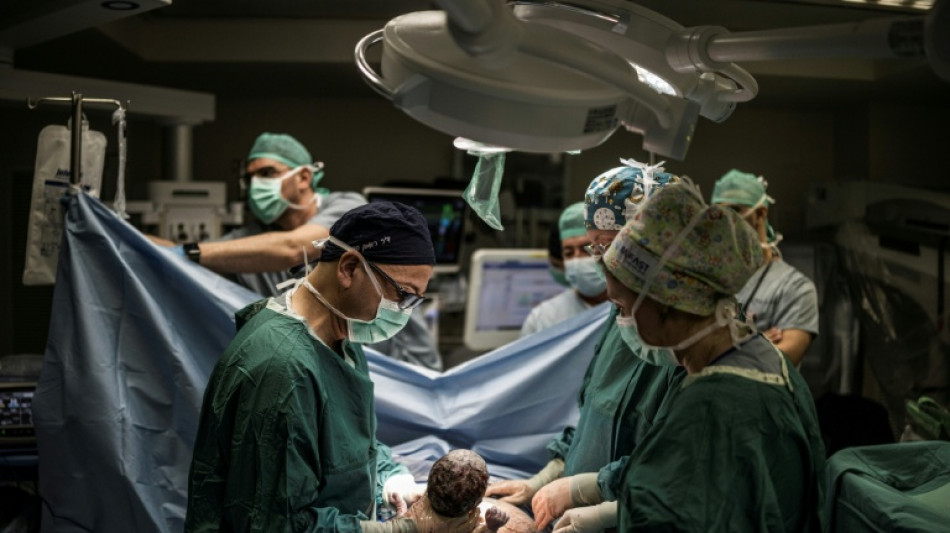
Giving birth in a shelter in Israel / Photo: MARCO LONGARI - AFP


 London
 14 °C
14 °C
 Manchester
 14 °C
14 °C
 Glasgow
12 °C
Glasgow
12 °C
 Dublin
13 °C
Dublin
13 °C
 Belfast
12 °C
Belfast
12 °C
 Washington
 14 °C
14 °C
 Denver
11 °C
Denver
11 °C
 Atlanta
13 °C
Atlanta
13 °C
 Dallas
16 °C
Dallas
16 °C
 Houston Texas
18 °C
Houston Texas
18 °C
 New Orleans
17 °C
New Orleans
17 °C
 El Paso
14 °C
El Paso
14 °C
 Phoenix
20 °C
Phoenix
20 °C
 Los Angeles
19 °C
San Diego
18 °C
San Francisco
13 °C
Chicago
13 °C
Minneapolis
10 °C
Seattle
9 °C
Portland
9 °C
Salt Lake City
13 °C
Las Vegas
17 °C
Miami
29 °C
Jacksonville
19 °C
San Antonio
16 °C
Bermuda
28 °C
Nassau
14 °C
Iqaluit
-5 °C
Yellowknife
Los Angeles
19 °C
San Diego
18 °C
San Francisco
13 °C
Chicago
13 °C
Minneapolis
10 °C
Seattle
9 °C
Portland
9 °C
Salt Lake City
13 °C
Las Vegas
17 °C
Miami
29 °C
Jacksonville
19 °C
San Antonio
16 °C
Bermuda
28 °C
Nassau
14 °C
Iqaluit
-5 °C
Yellowknife
 -3 °C
Anchorage
-3 °C
Anchorage
 3 °C
Fairbanks
-5 °C
Barrow
-12 °C
Calgary
2 °C
Edmonton
15 °C
Winnipeg
2 °C
Goose Bay
14 °C
Halifax
12 °C
Boston
3 °C
Fairbanks
-5 °C
Barrow
-12 °C
Calgary
2 °C
Edmonton
15 °C
Winnipeg
2 °C
Goose Bay
14 °C
Halifax
12 °C
Boston
 12 °C
Ottawa
13 °C
Toronto
13 °C
Detroit
13 °C
Cleveland
14 °C
New York
13 °C
Baltimore
14 °C
Philadelphia
13 °C
Nuuk (Godthåb)
-3 °C
Hong Kong
27 °C
Singapore
29 °C
Melbourne
24 °C
Canberra
12 °C
Ottawa
13 °C
Toronto
13 °C
Detroit
13 °C
Cleveland
14 °C
New York
13 °C
Baltimore
14 °C
Philadelphia
13 °C
Nuuk (Godthåb)
-3 °C
Hong Kong
27 °C
Singapore
29 °C
Melbourne
24 °C
Canberra
 10 °C
Adelaide
21 °C
Darwin
29 °C
Perth
15 °C
Fort Worth
15 °C
Honolulu
24 °C
Sydney
16 °C
Johannesburg
21 °C
Dubai
34 °C
Mumbai
33 °C
Zürich
13 °C
Tokyo
22 °C
Seoul
12 °C
Delhi
24 °C
Beijing
10 °C
Riyadh
35 °C
Prague
10 °C
Pennsylvania
11 °C
Valletta
24 °C
Manama
33 °C
Warsaw
8 °C
Stockholm
9 °C
10 °C
Adelaide
21 °C
Darwin
29 °C
Perth
15 °C
Fort Worth
15 °C
Honolulu
24 °C
Sydney
16 °C
Johannesburg
21 °C
Dubai
34 °C
Mumbai
33 °C
Zürich
13 °C
Tokyo
22 °C
Seoul
12 °C
Delhi
24 °C
Beijing
10 °C
Riyadh
35 °C
Prague
10 °C
Pennsylvania
11 °C
Valletta
24 °C
Manama
33 °C
Warsaw
8 °C
Stockholm
9 °C
Inside an underground shelter at a hospital in the Israeli city of Haifa, a television screen flickers with images of Iranian missiles as doctors and midwives deliver Sarah Bird's third child.
"She's beautiful," a midwife says, placing the newborn in her mother's arms for a first kiss.
"She is!" exclaims Bird, 38, breaking into a broad smile.
Her husband Yitzhak, tense throughout, finally exhales, then explains that the couple will wait a week before choosing a name.
The couple had arrived just hours earlier at the Mount Carmel Medical Center and were taken straight to the facility's underground shelter, carved into the mountainside.
About 10 babies are born there each day, according to Clalit, Israel's main healthcare provider, which operates the hospital.
Since the war began on February 28 with US-Israeli strikes on Iran, 370 newborns have been delivered in the shelter.
Within hours of the initial strikes on Iran, major hospitals across Israel shifted to maximum emergency readiness, moving patients and critical departments underground.
Operating theatres, intensive care units and even maternity wards have been relocated to protected subterranean spaces.
A fragile ceasefire between Washington and Tehran took effect on April 8, and no Iranian missiles have been fired at Israel since.
But in Haifa — still reeling from a strike on a residential building that killed four people days before the truce — sirens continue to wail.
Rocket fire from Lebanon's Hezbollah movement, an ally of Tehran, has not stopped. Israel says Lebanon is not covered by the ceasefire and has continued strikes on its neighbour, which have left more than 300 people dead this week.
More than 20 rocket alerts sounded in northern Israel on Thursday alone, along the Lebanese border, after Hezbollah said it had fired multiple barrages.
K.Morrison--SMC