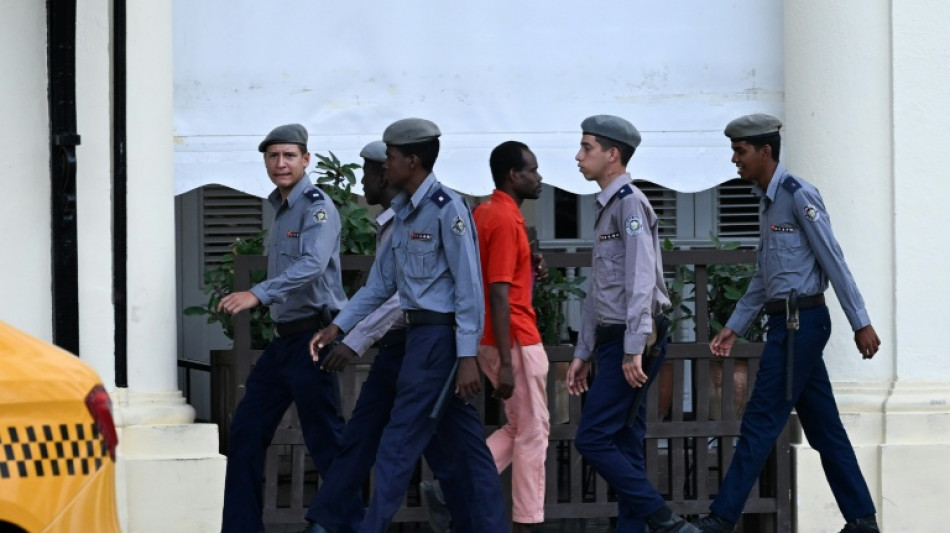
CIA director visits Cuba as communist island runs out of oil / Photo: Yamil LAGE - AFP


 London
 12 °C
12 °C
 Manchester
 10 °C
10 °C
 Glasgow
 11 °C
11 °C
 Dublin
9 °C
Dublin
9 °C
 Belfast
9 °C
Belfast
9 °C
 Washington
 4 °C
4 °C
 Denver
 11 °C
11 °C
 Atlanta
8 °C
Atlanta
8 °C
 Dallas
10 °C
Dallas
10 °C
 Houston Texas
13 °C
Houston Texas
13 °C
 New Orleans
14 °C
New Orleans
14 °C
 El Paso
11 °C
El Paso
11 °C
 Phoenix
20 °C
Phoenix
20 °C
 Los Angeles
22 °C
San Diego
21 °C
San Francisco
15 °C
Chicago
7 °C
Minneapolis
9 °C
Seattle
7 °C
Portland
7 °C
Salt Lake City
Los Angeles
22 °C
San Diego
21 °C
San Francisco
15 °C
Chicago
7 °C
Minneapolis
9 °C
Seattle
7 °C
Portland
7 °C
Salt Lake City
 12 °C
Las Vegas
18 °C
Miami
24 °C
Jacksonville
18 °C
San Antonio
10 °C
Bermuda
27 °C
Nassau
5 °C
Iqaluit
-7 °C
Yellowknife
2 °C
Anchorage
4 °C
Fairbanks
-2 °C
Barrow
-6 °C
Calgary
3 °C
Edmonton
4 °C
Winnipeg
13 °C
Goose Bay
6 °C
Halifax
2 °C
Boston
1 °C
Ottawa
1 °C
Toronto
5 °C
Detroit
5 °C
Cleveland
3 °C
New York
6 °C
Baltimore
5 °C
Philadelphia
4 °C
Nuuk (Godthåb)
12 °C
Las Vegas
18 °C
Miami
24 °C
Jacksonville
18 °C
San Antonio
10 °C
Bermuda
27 °C
Nassau
5 °C
Iqaluit
-7 °C
Yellowknife
2 °C
Anchorage
4 °C
Fairbanks
-2 °C
Barrow
-6 °C
Calgary
3 °C
Edmonton
4 °C
Winnipeg
13 °C
Goose Bay
6 °C
Halifax
2 °C
Boston
1 °C
Ottawa
1 °C
Toronto
5 °C
Detroit
5 °C
Cleveland
3 °C
New York
6 °C
Baltimore
5 °C
Philadelphia
4 °C
Nuuk (Godthåb)
 -1 °C
Hong Kong
29 °C
Singapore
31 °C
Melbourne
23 °C
Canberra
14 °C
Adelaide
-1 °C
Hong Kong
29 °C
Singapore
31 °C
Melbourne
23 °C
Canberra
14 °C
Adelaide
 24 °C
Darwin
30 °C
Perth
17 °C
Fort Worth
9 °C
Honolulu
24 °C
Sydney
17 °C
Johannesburg
24 °C
Darwin
30 °C
Perth
17 °C
Fort Worth
9 °C
Honolulu
24 °C
Sydney
17 °C
Johannesburg
 30 °C
Dubai
35 °C
Mumbai
34 °C
Zürich
11 °C
Tokyo
22 °C
Seoul
18 °C
Delhi
30 °C
Beijing
16 °C
Riyadh
38 °C
Prague
12 °C
Pennsylvania
2 °C
Valletta
25 °C
Manama
38 °C
Warsaw
9 °C
Stockholm
10 °C
30 °C
Dubai
35 °C
Mumbai
34 °C
Zürich
11 °C
Tokyo
22 °C
Seoul
18 °C
Delhi
30 °C
Beijing
16 °C
Riyadh
38 °C
Prague
12 °C
Pennsylvania
2 °C
Valletta
25 °C
Manama
38 °C
Warsaw
9 °C
Stockholm
10 °C
The head of the CIA visited Cuba on Thursday, an extraordinary step-up in contact between Washington and Havana as the communist-run island reels from US pressure, declaring that it is out of oil.
The Central Intelligence Agency, at the heart of the decades-long struggle between the United States and Cuba, confirmed a Cuban government statement about Director John Ratcliffe's visit.
Photos posted by the agency on X showed Ratcliffe alongside several people with blurred-out faces meeting with Ramon Romero Curbelo, chief of the intelligence of the Cuban Interior ministry, and other Cuban officials.
The visit comes during a deepening crisis in US-Cuba relations, with the island enduring constant power outages prompted by President Donald Trump's fuel blockade.
Only one tanker from Russia -- a historic ally of the Cuban authorities -- has got through.
And that oil has now "run out," Energy Minister Vicente de la O Levy told state television. "The impact of the blockade is indeed causing us significant harm...because we are still not receiving fuel."
Trump has repeatedly signalled that he wants to topple the communist government in Cuba.
According to a report on CBS News, citing unidentified US officials, the Trump administration is also seeking to indict Raul Castro, the 94-year-old brother of the late Cuban communist leader Fidel Castro.
But Cuba framed the Ratcliffe visit as a chance to calm tensions.
The meeting with Ratcliffe took place "in a context marked by the complexity of bilateral relations, with the aim of contributing to the political dialogue between both nations," a government statement read.
The exchanges "made it possible to demonstrate categorically that Cuba does not constitute a threat to US national security, nor are there any legitimate reasons to include it on the list of countries that allegedly sponsor terrorism," the Cuban statement added.
Cuba "has never supported any hostile activity against the United States, nor will it permit actions against any other nation to be carried out from Cuba," it emphasized, referring to allegations of a Chinese presence.
- Blockade -
One of Cuba's last economic lifelines was cut in January when US forces toppled the strongman leader of oil-rich Venezuela, Nicolas Maduro, and instituted a fuel blockade.
US Secretary of State Marco Rubio has renewed an offer of $100 million in aid on the condition that the assistance be distributed by the Catholic Church, bypassing the government.
In a post on X, Cuban President Miguel Diaz-Canel urged the United States to instead lift its blockade.
"The damage could be eased in a much simpler and faster way by lifting or relaxing the blockade, since it is known that the humanitarian situation is coldly calculated and induced," he said.
Despite tensions, intergovernmental talks are ongoing, with a high-level diplomatic meeting taking place in Havana on April 10 -- the first time a US government plane landed in the Cuban capital since 2016.
- 'Turn on the lights!' -
Eastern Cuba was Thursday plunged into the latest outage affecting the whole country, with power returning to some areas later in the day.
The crisis prompted protests on the island.
A resident of San Miguel del Padron, a neighborhood on the outskirts of Havana, told AFP that people had protested by banging pots and pans on Wednesday evening.
Several other similar small demonstrations were held in neighborhoods across the capital, according to accounts gathered by AFP.
"Turn on the lights!" shouted residents in Playa, in the western part of the city.
Data compiled by AFP showed prolonged blackouts and record generation shortfalls in recent days. Some 65 percent of Cuban territory endured simultaneous blackouts on Tuesday.
"It's a broken, nonfunctional economy, and it's impossible to change it. I wish it were different," Rubio told Fox News.
"I don't think we're going to be able to change the trajectory of Cuba as long as these people are in charge."
burs-sms/msp
W.Fortin--SMC