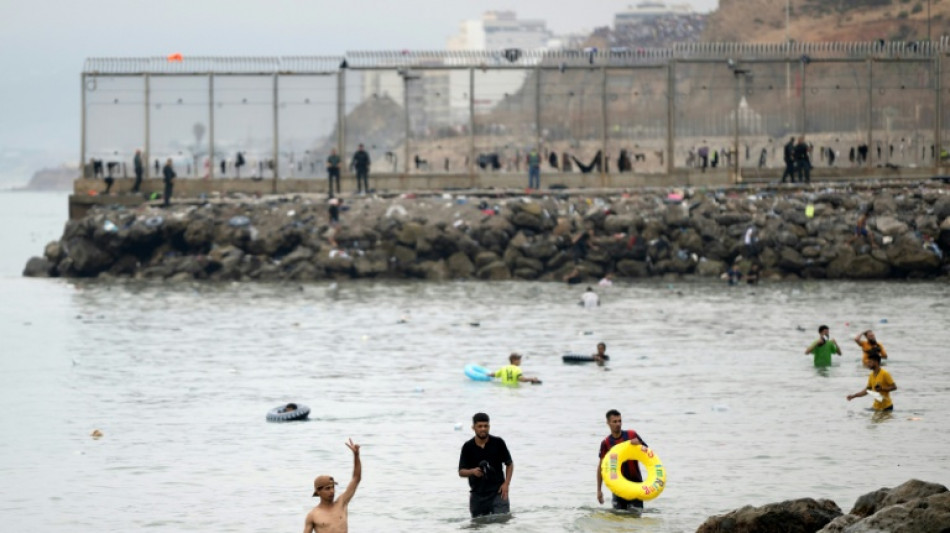
Morocco says not involved in Ceuta migrant influx / Photo: JORGE GUERRERO - AFP


 London
 18 °C
18 °C

 Manchester
16 °C
Manchester
16 °C
 Glasgow
16 °C
Glasgow
16 °C
 Dublin
20 °C
Dublin
20 °C
 Belfast
18 °C
Belfast
18 °C
 Washington
 31 °C
31 °C
 Denver
 28 °C
28 °C
 Atlanta
 32 °C
32 °C
 Dallas
35 °C
Dallas
35 °C
 Houston Texas
33 °C
Houston Texas
33 °C
 New Orleans
 28 °C
28 °C
 El Paso
27 °C
El Paso
27 °C
 Phoenix
37 °C
Phoenix
37 °C
 Los Angeles
33 °C
San Diego
31 °C
San Francisco
24 °C
Chicago
24 °C
Minneapolis
25 °C
Seattle
18 °C
Portland
22 °C
Salt Lake City
27 °C
Las Vegas
35 °C
Miami
23 °C
Jacksonville
32 °C
San Antonio
33 °C
Bermuda
28 °C
Nassau
29 °C
Iqaluit
7 °C
Yellowknife
15 °C
Anchorage
10 °C
Fairbanks
9 °C
Barrow
4 °C
Calgary
11 °C
Edmonton
28 °C
Winnipeg
23 °C
Goose Bay
24 °C
Halifax
29 °C
Boston
29 °C
Ottawa
22 °C
Toronto
25 °C
Detroit
26 °C
Cleveland
27 °C
New York
30 °C
Baltimore
31 °C
Philadelphia
30 °C
Nuuk (Godthåb)
6 °C
Hong Kong
26 °C
Singapore
29 °C
Melbourne
31 °C
Canberra
Los Angeles
33 °C
San Diego
31 °C
San Francisco
24 °C
Chicago
24 °C
Minneapolis
25 °C
Seattle
18 °C
Portland
22 °C
Salt Lake City
27 °C
Las Vegas
35 °C
Miami
23 °C
Jacksonville
32 °C
San Antonio
33 °C
Bermuda
28 °C
Nassau
29 °C
Iqaluit
7 °C
Yellowknife
15 °C
Anchorage
10 °C
Fairbanks
9 °C
Barrow
4 °C
Calgary
11 °C
Edmonton
28 °C
Winnipeg
23 °C
Goose Bay
24 °C
Halifax
29 °C
Boston
29 °C
Ottawa
22 °C
Toronto
25 °C
Detroit
26 °C
Cleveland
27 °C
New York
30 °C
Baltimore
31 °C
Philadelphia
30 °C
Nuuk (Godthåb)
6 °C
Hong Kong
26 °C
Singapore
29 °C
Melbourne
31 °C
Canberra
 3 °C
Adelaide
10 °C
Darwin
3 °C
Adelaide
10 °C
Darwin
 26 °C
Perth
15 °C
Fort Worth
35 °C
Honolulu
26 °C
Sydney
10 °C
Johannesburg
17 °C
Dubai
38 °C
Mumbai
29 °C
Zürich
17 °C
Tokyo
26 °C
Perth
15 °C
Fort Worth
35 °C
Honolulu
26 °C
Sydney
10 °C
Johannesburg
17 °C
Dubai
38 °C
Mumbai
29 °C
Zürich
17 °C
Tokyo
 19 °C
Seoul
14 °C
Delhi
30 °C
Beijing
13 °C
Riyadh
39 °C
Prague
17 °C
Pennsylvania
28 °C
Valletta
29 °C
Manama
35 °C
Warsaw
15 °C
Stockholm
13 °C
19 °C
Seoul
14 °C
Delhi
30 °C
Beijing
13 °C
Riyadh
39 °C
Prague
17 °C
Pennsylvania
28 °C
Valletta
29 °C
Manama
35 °C
Warsaw
15 °C
Stockholm
13 °C
Morocco said on Thursday there were "no facts" establishing its involvement in the massive migrant rush into Spain's North African exclave of Ceuta in July.
More than 70,000 migrants entered Ceuta from Morocco on July 30 and 31 in an unprecedented, chaotic surge that left scores dead and sparked European Union infighting over the touchy issue of migration.
The Moroccan foreign ministry said there were "no facts or reports proving any involvement by the Moroccan authorities".
The ministry added that Rabat refused to become the "scapegoat for political score-settling" in Spain.
The statement marked the kingdom's first official reaction to a Spanish police report accusing Morocco's security forces of "total permissiveness" when the mass crossing took place.
Spain's Prime Minister Pedro Sanchez has consistently avoided blaming Morocco, noting that there was no "solid proof" that the North African country orchestrated the migrant rush.
On Wednesday, Spain declassified intelligence reports that had warned of potential "mass entries" by migrants into Ceuta just before the incident happened.
A declassified military intelligence document on July 30 states that it is "highly likely that the Moroccan authorities are not actively encouraging the migratory wave, but have so far acted in a negligent and passive manner".
But Sanchez on Wednesday said on X that with the information available "no one could have foreseen the migration crisis that unfolded".
- 'Regrettable' -
Morocco's foreign ministry instead questioned Spain's handling of the crisis.
"Why are illegal migrants not being turned back when the Moroccan government has officially agreed to readmit them?" the statement said.
"Why are unaccompanied minors being kept away from their families when Morocco has urgently requested their return?"
"The answer to these questions is not to be found in Morocco, but rather with the relevant Spanish stakeholders," the ministry said.
Still, Rabat called the crisis "regrettable" and said the events warranted "a thorough examination" to establish their circumstances and "ensure that they do not happen again".
The ministry also stressed the importance of ties with Madrid, saying Morocco had chosen to pursue relations based on "good neighbourliness, political understanding, economic partnership, and security cooperation".
Morocco also noted that Spain was its leading economic partner.
Most of the migrants who entered Ceuta have returned to Morocco, but thousands have remained in often dire living conditions, increasing tensions in the small city and causing a political storm for the government.
The EU on Wednesday said it was granting Spain 115 million euros ($130 million) in emergency aid to help bolster border security and assist returns.
A.Jackson--SMC