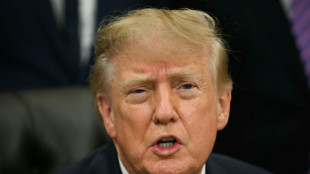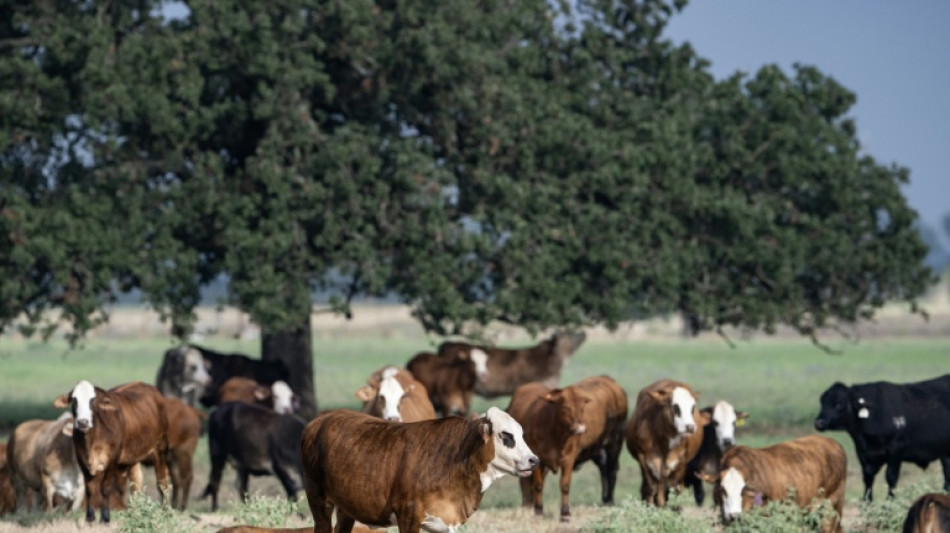
Trump's beef policies irk Texas ranchers, testing their loyalty / Photo: RONALDO SCHEMIDT - AFP


 London
 17 °C
17 °C
 Manchester
 16 °C
16 °C
 Glasgow
14 °C
Glasgow
14 °C
 Dublin
17 °C
Dublin
17 °C
 Belfast
15 °C
Belfast
15 °C
 Washington
 23 °C
23 °C
 Denver
19 °C
Denver
19 °C
 Atlanta
 26 °C
26 °C
 Dallas
 32 °C
32 °C
 Houston Texas
30 °C
Houston Texas
30 °C
 New Orleans
28 °C
New Orleans
28 °C
 El Paso
28 °C
El Paso
28 °C
 Phoenix
35 °C
Phoenix
35 °C
 Los Angeles
22 °C
San Diego
22 °C
San Francisco
Los Angeles
22 °C
San Diego
22 °C
San Francisco
 16 °C
Chicago
21 °C
Minneapolis
15 °C
Seattle
19 °C
Portland
18 °C
Salt Lake City
16 °C
Las Vegas
32 °C
Miami
25 °C
Jacksonville
24 °C
San Antonio
27 °C
Bermuda
28 °C
Nassau
22 °C
Iqaluit
0 °C
Yellowknife
10 °C
Anchorage
16 °C
Chicago
21 °C
Minneapolis
15 °C
Seattle
19 °C
Portland
18 °C
Salt Lake City
16 °C
Las Vegas
32 °C
Miami
25 °C
Jacksonville
24 °C
San Antonio
27 °C
Bermuda
28 °C
Nassau
22 °C
Iqaluit
0 °C
Yellowknife
10 °C
Anchorage
 11 °C
Fairbanks
12 °C
Barrow
1 °C
Calgary
17 °C
Edmonton
28 °C
Winnipeg
18 °C
Goose Bay
14 °C
Halifax
18 °C
Boston
19 °C
Ottawa
12 °C
Toronto
15 °C
Detroit
17 °C
Cleveland
18 °C
New York
24 °C
Baltimore
23 °C
Philadelphia
22 °C
Nuuk (Godthåb)
3 °C
Hong Kong
30 °C
Singapore
30 °C
Melbourne
26 °C
Canberra
22 °C
Adelaide
24 °C
Darwin
31 °C
Perth
18 °C
Fort Worth
31 °C
Honolulu
11 °C
Fairbanks
12 °C
Barrow
1 °C
Calgary
17 °C
Edmonton
28 °C
Winnipeg
18 °C
Goose Bay
14 °C
Halifax
18 °C
Boston
19 °C
Ottawa
12 °C
Toronto
15 °C
Detroit
17 °C
Cleveland
18 °C
New York
24 °C
Baltimore
23 °C
Philadelphia
22 °C
Nuuk (Godthåb)
3 °C
Hong Kong
30 °C
Singapore
30 °C
Melbourne
26 °C
Canberra
22 °C
Adelaide
24 °C
Darwin
31 °C
Perth
18 °C
Fort Worth
31 °C
Honolulu
 30 °C
Sydney
27 °C
Johannesburg
11 °C
Dubai
31 °C
Mumbai
26 °C
Zürich
12 °C
Tokyo
24 °C
Seoul
24 °C
Delhi
26 °C
Beijing
24 °C
Riyadh
29 °C
Prague
12 °C
Pennsylvania
20 °C
Valletta
23 °C
Manama
31 °C
Warsaw
12 °C
Stockholm
12 °C
30 °C
Sydney
27 °C
Johannesburg
11 °C
Dubai
31 °C
Mumbai
26 °C
Zürich
12 °C
Tokyo
24 °C
Seoul
24 °C
Delhi
26 °C
Beijing
24 °C
Riyadh
29 °C
Prague
12 °C
Pennsylvania
20 °C
Valletta
23 °C
Manama
31 °C
Warsaw
12 °C
Stockholm
12 °C
As dawn breaks over the Texas prairie, where a herd of cattle grazes peacefully, there's growing discontent among ranchers over President Donald Trump's moves to lower beef prices.
His policies are testing the loyalty of ranchers here -- among his staunchest supporters -- just weeks before November's midterm elections in which affordability is a top concern.
In a bid to ease prices for consumers, Trump authorized an additional 300,000 tons of ground beef to be imported starting September 1, with reduced tariffs.
But Texas ranchers warn that the move could hurt an industry already struggling with the smallest cattle herd in 75 years and higher fuel and fertilizer costs thanks to the war with Iran.
"President Trump, who I fully support, decided that we needed to import some hamburger meat, which I don't agree with," Texas Agriculture Commissioner Sid Miller told AFP from his ranch in Stephenville, located in central Texas.
Miller sees two problems with the decision: It does not increase the cow herd, and it widens America's agricultural trade deficit.
The stakes are particularly high in Texas, home to the nation's largest cattle herd, with 12.1 million head.
The state is a Republican stronghold where Trump won more than 56 percent of the vote in 2024.
Cattle numbers have declined in Texas amid a regional drought the past three years, prompting farmers to sell their cows, Miller said.
And now they're being hit by soaring diesel fuel prices.
Those concerns could cost Trump's Republicans in November, despite their firm grip over the years on many of the state's congressional districts.
"It's going to be a closer election than we've ever had," said Miller, whom Trump has called a "warrior" in his "Make America Great Again" (MAGA) movement.
"I think we're going to lose some statewide offices...because the beef issue has disappointed a lot of ranchers and farmers," he said.
- Turning against Trump -
With a nationwide approval rating in the mid-30s, Trump and his Republican Party face headwinds in the midterm elections, even in rural farming areas that solidly backed him when he ran for office two years ago.
In 2024, Trump won an average of 77.7 percent of the vote in the 444 US counties that are agriculturally dependent, according to the specialized publication Investigate Midwest.
But an August poll by ActiVote showed that only 42 percent of rural voters approved of Trump, while 52 percent disapproved.
"While we appreciate the Trump administration's support for ranchers, increasing beef imports is not the solution to high prices," the Texas and Southwest Cattlemen's Association said in a statement.
"As the herd rebuilds, beef supplies will increase and prices will normalize, but it will take time," it said.
Bill Bullard, executive director of the producers' organization R-CALF USA, agreed that importing ground beef is a "bad policy" for American farmers.
- Mexican cattle -
The dispute over ground beef imports comes on top of another Trump policy that has angered some Texas ranchers: a halt in live-cattle imports from Mexico to contain the screwworm fly, whose flesh-eating larvae can kill cows.
"Normally we get about 1,500,000 head every year from Mexico," Miller said. The cattle graze on US land and are slaughtered and processed by American workers, he said, but that's been shut down since May 2025.
Miller said that during previous outbreaks of the screwworm, the live cattle trade was not stopped.
Although a border crossing in Arizona has reopened, it remains closed to Texas.
Demand for beef across the US, meanwhile, remains strong, and prices are expected to rise nearly 10 percent this year due to the declining supply of cattle and higher fuel costs.
Texas is beef country, where the smell of grilled steaks fills many a restaurant.
Mark Jeter, a diner at a restaurant in Stephenville, has noticed the rise in steak prices.
"To get a good ribeye right now, I think they've come back a little to $19.99 a pound for prime, where I buy it, and also a New York strip for $17.99 (a pound)," he said.
A few years ago, "you could get those for $10, $11 a pound," he said. "So it's pretty dramatic."
S.Clark--SMC