Five things to know about Poland's constitutional crisis / Photo: Mladen ANTONOV - AFP/File


 London
 11 °C

 Manchester
 11 °C
 Glasgow
10 °C
 Dublin
 12 °C
 Belfast
12 °C
 Washington
14 °C
 Denver
9 °C
 Atlanta
14 °C
 Dallas
20 °C
 Houston Texas
22 °C
 New Orleans
24 °C
 El Paso
16 °C
 Phoenix
19 °C
 Los Angeles
15 °C
San Diego
 16 °C
San Francisco
 10 °C
Chicago
14 °C
Minneapolis
13 °C
Seattle
7 °C
Portland
6 °C
Salt Lake City
9 °C
Las Vegas
14 °C
Miami
 26 °C
Jacksonville
24 °C
San Antonio
 21 °C
Bermuda
22 °C
Nassau
11 °C
Iqaluit
 -2 °C
Yellowknife
 -2 °C
Anchorage
1 °C
Fairbanks
-7 °C
Barrow
-1 °C
Calgary
-3 °C
Edmonton
14 °C
Winnipeg
9 °C
Goose Bay
10 °C
Halifax
9 °C
Boston
9 °C
Ottawa
3 °C
Toronto
11 °C
Detroit
14 °C
Cleveland
14 °C
New York
11 °C
Baltimore
14 °C
Philadelphia
12 °C
Nuuk (Godthåb)
-3 °C
Hong Kong
26 °C
Singapore
29 °C
Melbourne
26 °C
Canberra
11 °C
Adelaide
 17 °C
Darwin
28 °C
Perth
17 °C
Fort Worth
18 °C
Honolulu
24 °C
Sydney
19 °C
Johannesburg
29 °C
Dubai
 32 °C
Mumbai
30 °C
Zürich
9 °C
Tokyo
17 °C
Seoul
10 °C
Delhi
24 °C
Beijing
3 °C
Riyadh
33 °C
Prague
9 °C
Pennsylvania
11 °C
Valletta
21 °C
Manama
31 °C
Warsaw
8 °C
Stockholm
8 °C
Poland's latest constitutional crisis has exposed deep political divisions between the country's pro-European government and conservative-nationalist opposition, triggering demonstrations and a new confrontation over the future of the Constitutional Tribunal.
Here are five things to know about the dispute.
- Politicisation -
Poland's wider rule-of-law conflict dates back to 2015 and centres largely on the Constitutional Tribunal.
Before parliamentary elections that year, the outgoing centrist majority in the chamber appointed five judges to the tribunal. The court later ruled that three of those appointments were valid, while two were unconstitutional because the vacancies arose during the next parliamentary term.
After coming to power, the Law and Justice (PiS) party rejected the previous government's appointments and selected its own candidates.
The dispute prompted concerns from the European Commission and became a central element of a long-running confrontation between Warsaw and Brussels over the rule of law.
Following the 2023 parliamentary election victory of a coalition led by Donald Tusk, the government pledged to restore judicial independence and resolve the tribunal dispute.
The election, in June 2025, of Karol Nawrocki, backed by PiS, created a period of difficult cohabitation between the presidency and government.
- New judges -
The dispute intensified after rulings by European institutions challenging the independence of the tribunal in its current form.
In March, the lower-house chamber, Sejm, with its centrist majority, elected new judges but President Nawrocki declined to swear in all of them.
The Venice Commission later recommended that judges should be able to assume office without requiring a presidential oath.
- Demonstrations -
Tusk's government says it wants to end institutional deadlock and reform the tribunal.
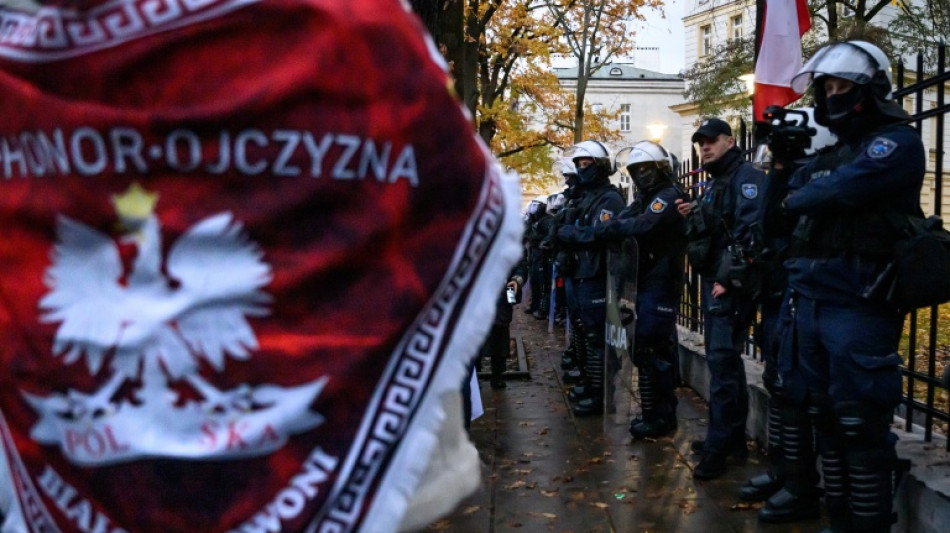
Supporters of the right began gathering outside the court in Warsaw, saying they wanted to defend judges appointed during PiS's years in power and prevent government intervention.
Tensions escalated after police were deployed around the tribunal and judicial and political authorities took steps affecting the court's leadership.
Prominent PiS and far-right figures denounced the government's actions as unconstitutional, while government supporters argued reforms were necessary to restore judicial legitimacy.
Nawrocki later travelled to the tribunal, where disagreements with newly elected judges further heightened tensions.
- A way out -
The president held consultations on October 31 with political parties in an effort to find a compromise, but no breakthrough emerged.
The European Commission has urged progress on resolving the judicial impasse, while legal scholars, civil-society groups and political leaders continue to advocate reforms aimed at strengthening judicial independence.
However, deep political polarisation has made agreement difficult.
- Political split -
Polish politics is dominated by two rival camps: Tusk's pro-European Civic Coalition and the conservative-nationalist right headed by PiS leader Jaroslaw Kaczynski.
Other groups, such as the left, remain electorally marginal.
The political divide extends to issues including abortion, relations with the European Union, support for Ukraine, ties with Germany and the role of the Catholic Church in public life.
Relations between the government and presidency have remained tense since Nawrocki's election.
- Parliamentary elections -
The constitutional dispute is unfolding against the backdrop of the next parliamentary election, expected in 2027.
According to political scientist Ewa Marciniak, the country's political forces are already focused on mobilising supporters.
At the same time, tensions within the conservative camp have raised questions about future alliances, particularly regarding cooperation with far-right parties that have gained support in opinion polls.
G.Boudreau--SMC