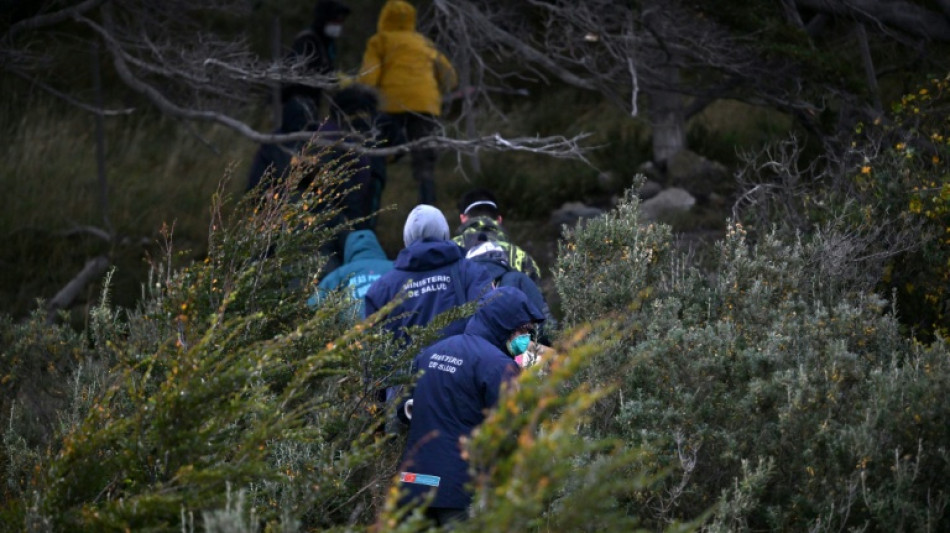
Argentine scientists lay first traps in hantavirus hunt / Photo: JUAN MABROMATA - AFP


 London
 17 °C
17 °C
 Manchester
17 °C
Manchester
17 °C
 Glasgow
 12 °C
12 °C
 Dublin
 21 °C
21 °C
 Belfast
17 °C
Belfast
17 °C
 Washington
21 °C
Washington
21 °C
 Denver
 22 °C
22 °C
 Atlanta
25 °C
Atlanta
25 °C
 Dallas
27 °C
Dallas
27 °C
 Houston Texas
30 °C
Houston Texas
30 °C
 New Orleans
28 °C
New Orleans
28 °C
 El Paso
24 °C
El Paso
24 °C
 Phoenix
23 °C
Phoenix
23 °C
 Los Angeles
16 °C
San Diego
17 °C
San Francisco
14 °C
Chicago
27 °C
Minneapolis
22 °C
Seattle
7 °C
Portland
7 °C
Salt Lake City
14 °C
Las Vegas
18 °C
Miami
32 °C
Jacksonville
27 °C
San Antonio
Los Angeles
16 °C
San Diego
17 °C
San Francisco
14 °C
Chicago
27 °C
Minneapolis
22 °C
Seattle
7 °C
Portland
7 °C
Salt Lake City
14 °C
Las Vegas
18 °C
Miami
32 °C
Jacksonville
27 °C
San Antonio
 27 °C
Bermuda
28 °C
Nassau
19 °C
Iqaluit
-4 °C
Yellowknife
5 °C
Anchorage
5 °C
Fairbanks
2 °C
Barrow
27 °C
Bermuda
28 °C
Nassau
19 °C
Iqaluit
-4 °C
Yellowknife
5 °C
Anchorage
5 °C
Fairbanks
2 °C
Barrow
 -2 °C
Calgary
-1 °C
Edmonton
23 °C
Winnipeg
6 °C
Goose Bay
14 °C
Halifax
14 °C
Boston
16 °C
Ottawa
15 °C
Toronto
18 °C
Detroit
20 °C
Cleveland
20 °C
New York
19 °C
Baltimore
21 °C
Philadelphia
20 °C
Nuuk (Godthåb)
5 °C
Hong Kong
-2 °C
Calgary
-1 °C
Edmonton
23 °C
Winnipeg
6 °C
Goose Bay
14 °C
Halifax
14 °C
Boston
16 °C
Ottawa
15 °C
Toronto
18 °C
Detroit
20 °C
Cleveland
20 °C
New York
19 °C
Baltimore
21 °C
Philadelphia
20 °C
Nuuk (Godthåb)
5 °C
Hong Kong
 27 °C
Singapore
27 °C
Singapore
 28 °C
Melbourne
28 °C
Canberra
15 °C
Adelaide
11 °C
Darwin
28 °C
Perth
28 °C
Melbourne
28 °C
Canberra
15 °C
Adelaide
11 °C
Darwin
28 °C
Perth
 16 °C
Fort Worth
26 °C
Honolulu
23 °C
Sydney
16 °C
Fort Worth
26 °C
Honolulu
23 °C
Sydney
 19 °C
Johannesburg
23 °C
Dubai
33 °C
Mumbai
32 °C
Zürich
15 °C
Tokyo
19 °C
Seoul
21 °C
Delhi
25 °C
Beijing
14 °C
Riyadh
32 °C
Prague
12 °C
Pennsylvania
21 °C
Valletta
24 °C
Manama
33 °C
Warsaw
9 °C
Stockholm
7 °C
19 °C
Johannesburg
23 °C
Dubai
33 °C
Mumbai
32 °C
Zürich
15 °C
Tokyo
19 °C
Seoul
21 °C
Delhi
25 °C
Beijing
14 °C
Riyadh
32 °C
Prague
12 °C
Pennsylvania
21 °C
Valletta
24 °C
Manama
33 °C
Warsaw
9 °C
Stockholm
7 °C
Scientists attempting to determine whether or not hantavirus is present in Argentina's Ushuaia on Monday laid the very first traps to catch rodents potentially carrying the disease, AFP journalists observed.
The MV Hondius cruise ship, where a hantavirus outbreak on board killed three people and triggered a global health scare, set sail from the city at Argentina's southernmost tip on April 1.
Beginning Monday, biologists from Buenos Aires are spending several days setting traps at various locations on the southern island of Tierra del Fuego to analyze whether the captured rodents carry the Andes strain of the virus, the only one known to spread between people.
The rare respiratory disease, for which there is no cure, typically spreads through the urine, feces and saliva of infected rodents.
Biologists and national park staff wearing masks and gloves set up dozens of small rectangular metal cages on trails outside Ushuaia as night fell.
Others were placed in Tierra del Fuego National Park, 70,000 hectares (173,000 acres) of forests, lakes and mountains located 15 kilometers (nine miles) from the city.
The team set up to 150 traps, according to a local healthcare source.
Provincial officials insist that Tierra del Fuego has not had a case of hantavirus since its reporting became mandatory 30 years ago -- unlike in provinces to the north, such as Rio Negro and Chubut.
Local scientists believe it is more likely that the infections aboard the cruise ship occurred in another region.
Two of the vessel's hantavirus victims -- a married Dutch couple -- had traveled extensively in Argentina for four months, with forays into Chile and Uruguay.
M.Anderson--SMC