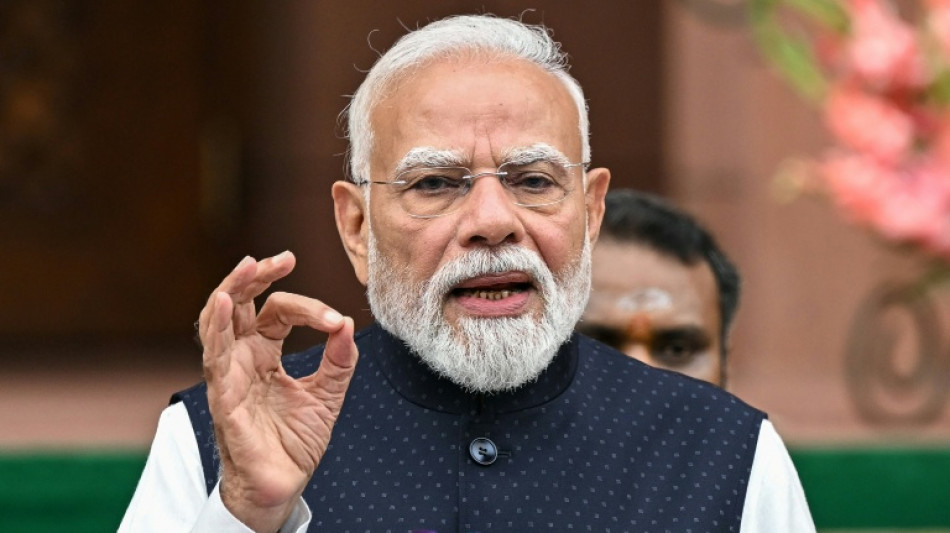
Modi pitches India as global chipmaking hub / Photo: Sajjad HUSSAIN - AFP


 London
 17 °C
17 °C

 Manchester
 15 °C
15 °C
 Glasgow
 16 °C
16 °C
 Dublin
15 °C
Dublin
15 °C
 Belfast
 13 °C
13 °C
 Washington
 21 °C
21 °C
 Denver
18 °C
Denver
18 °C
 Atlanta
 20 °C
20 °C
 Dallas
28 °C
Dallas
28 °C
 Houston Texas
28 °C
Houston Texas
28 °C
 New Orleans
27 °C
New Orleans
27 °C
 El Paso
22 °C
El Paso
22 °C
 Phoenix
24 °C
Phoenix
24 °C
 Los Angeles
20 °C
San Diego
21 °C
San Francisco
16 °C
Chicago
Los Angeles
20 °C
San Diego
21 °C
San Francisco
16 °C
Chicago
 20 °C
Minneapolis
14 °C
Seattle
13 °C
Portland
15 °C
Salt Lake City
21 °C
Las Vegas
26 °C
Miami
25 °C
Jacksonville
25 °C
San Antonio
26 °C
Bermuda
27 °C
Nassau
21 °C
Iqaluit
2 °C
Yellowknife
7 °C
Anchorage
20 °C
Minneapolis
14 °C
Seattle
13 °C
Portland
15 °C
Salt Lake City
21 °C
Las Vegas
26 °C
Miami
25 °C
Jacksonville
25 °C
San Antonio
26 °C
Bermuda
27 °C
Nassau
21 °C
Iqaluit
2 °C
Yellowknife
7 °C
Anchorage
 9 °C
Fairbanks
7 °C
Barrow
-1 °C
Calgary
7 °C
Edmonton
24 °C
Winnipeg
7 °C
Goose Bay
14 °C
Halifax
17 °C
Boston
19 °C
Ottawa
14 °C
Toronto
17 °C
Detroit
18 °C
Cleveland
22 °C
New York
22 °C
Baltimore
21 °C
Philadelphia
21 °C
Nuuk (Godthåb)
4 °C
Hong Kong
9 °C
Fairbanks
7 °C
Barrow
-1 °C
Calgary
7 °C
Edmonton
24 °C
Winnipeg
7 °C
Goose Bay
14 °C
Halifax
17 °C
Boston
19 °C
Ottawa
14 °C
Toronto
17 °C
Detroit
18 °C
Cleveland
22 °C
New York
22 °C
Baltimore
21 °C
Philadelphia
21 °C
Nuuk (Godthåb)
4 °C
Hong Kong
 31 °C
Singapore
32 °C
Melbourne
27 °C
Canberra
8 °C
Adelaide
13 °C
Darwin
28 °C
Perth
21 °C
Fort Worth
28 °C
Honolulu
27 °C
Sydney
13 °C
Johannesburg
25 °C
Dubai
39 °C
Mumbai
30 °C
Zürich
18 °C
Tokyo
23 °C
Seoul
25 °C
Delhi
34 °C
Beijing
28 °C
Riyadh
40 °C
Prague
18 °C
Pennsylvania
20 °C
Valletta
29 °C
Manama
38 °C
Warsaw
15 °C
Stockholm
16 °C
31 °C
Singapore
32 °C
Melbourne
27 °C
Canberra
8 °C
Adelaide
13 °C
Darwin
28 °C
Perth
21 °C
Fort Worth
28 °C
Honolulu
27 °C
Sydney
13 °C
Johannesburg
25 °C
Dubai
39 °C
Mumbai
30 °C
Zürich
18 °C
Tokyo
23 °C
Seoul
25 °C
Delhi
34 °C
Beijing
28 °C
Riyadh
40 °C
Prague
18 °C
Pennsylvania
20 °C
Valletta
29 °C
Manama
38 °C
Warsaw
15 °C
Stockholm
16 °C
Prime Minister Narendra Modi pitched India as a new global hub for semiconductor production on Thursday, urging technology firms to invest in what he called a "reliable" location.
"Chips from Indian plants are reaching customers in India and across the world," Modi told executives from major global technology firms at a semiconductor conference in New Delhi.
Modi met senior executives from Indian and global technology companies on Wednesday ahead of the conference, according to his office.
Representatives of Tata Electronics and CG Power, as well as Advantest, Applied Materials, ASML, Foxconn, Intel and Micron, were among those attending.
Countries are seeking to secure semiconductor supply chains and bolster vulnerabilities in global chip production.
"There are many challenges in front of the semiconductor industry. Amidst these challenges, the semiconductor industry also needs new and reliable locations," Modi said. "And India, I can assure you, is preparing itself for this."
"When supply chains are being weaponised, its importance goes up further," Modi added.
India launched its domestic chipmaking push in 2021 and has since backed a range of fabrication, design and packaging units.
Critics say India is decades late starting, and remains far behind chip leaders in Taiwan, the Netherlands, Japan and China.
- 'Goldmine' -
But Modi reiterated plans to train 100,000 engineers for semiconductor projects and 10 million people in artificial intelligence.
"Such a huge talent pool is a goldmine for all of you," he told industry officials, painting India as a secure place to set up operations.
India in July approved a new semiconductor programme, offering more than $13 billion in financial assistance to expand domestic chip production and build a wider semiconductor ecosystem.
The "Semicon 2.0" initiative builds on a programme launched in 2021 to reduce India's reliance on imported chips and attract investment into the sector.
On Thursday, Modi remotely opened commercial production for two sites, taking the number of semiconductor projects in commercial production in India to five.
"For any country to reach here in such a short time isn't easy. This isn't a sector where you set up a factory, and work is done. It takes decades to achieve tech capabilities in this sector," Modi told industry heads.
"In India, with your assistance, chip design, manufacturing, equipment manufacturing, material ecosystem, testing capability -- we worked at all of it, at the same time, and have achieved success in it."
India's semiconductor market has expanded from $38 billion in 2023 to an estimated $45-$50 billion in 2024-25, with government targets of $100-$110 billion by 2030.
S.Clark--SMC