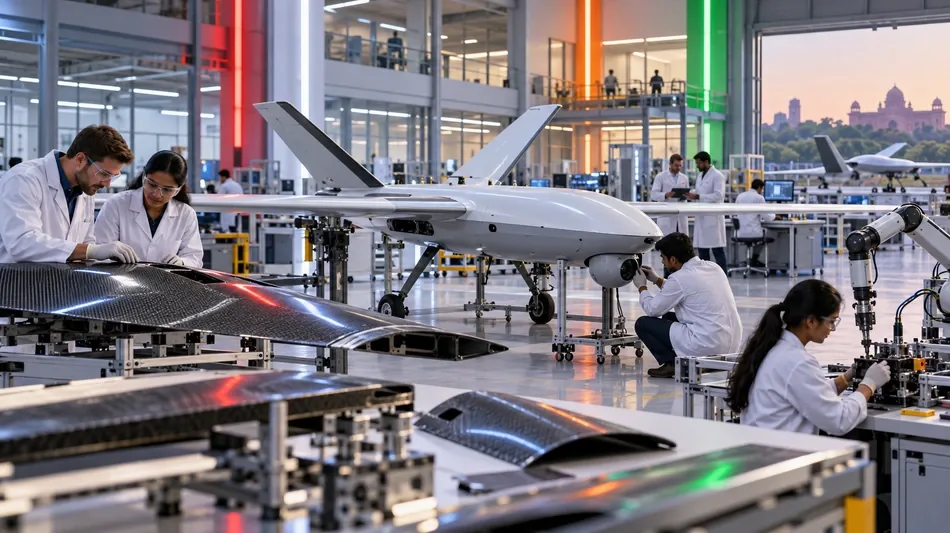
Poland’s WB Group plans $100 million India investment for drone production


 London
 14 °C

 Manchester
 11 °C
 Glasgow
12 °C
 Dublin
11 °C
 Belfast
 12 °C
 Washington
14 °C
 Denver
5 °C
 Atlanta
 15 °C
 Dallas
19 °C
 Houston Texas
22 °C
 New Orleans
20 °C
 El Paso
15 °C
 Phoenix
17 °C
 Los Angeles
16 °C
San Diego
16 °C
San Francisco
13 °C
Chicago
16 °C
Minneapolis
10 °C
Seattle
 9 °C
Portland
10 °C
Salt Lake City
7 °C
Las Vegas
13 °C
Miami
 26 °C
Jacksonville
20 °C
San Antonio
20 °C
Bermuda
21 °C
Nassau
14 °C
Iqaluit
-4 °C
Yellowknife
-6 °C
Anchorage
 3 °C
Fairbanks
 -2 °C
Barrow
-1 °C
Calgary
-2 °C
Edmonton
18 °C
Winnipeg
2 °C
Goose Bay
12 °C
Halifax
13 °C
Boston
12 °C
Ottawa
9 °C
Toronto
12 °C
Detroit
 11 °C
Cleveland
13 °C
New York
14 °C
Baltimore
13 °C
Philadelphia
12 °C
Nuuk (Godthåb)
-5 °C
Hong Kong
 26 °C
Singapore
26 °C
Melbourne
26 °C
Canberra
15 °C
Adelaide
 9 °C
Darwin
30 °C
Perth
13 °C
Fort Worth
19 °C
Honolulu
23 °C
Sydney
22 °C
Johannesburg
30 °C
Dubai
33 °C
Mumbai
33 °C
Zürich
13 °C
Tokyo
21 °C
Seoul
19 °C
Delhi
23 °C
Beijing
10 °C
Riyadh
32 °C
Prague
11 °C
Pennsylvania
11 °C
Valletta
22 °C
Manama
33 °C
Warsaw
13 °C
Stockholm
9 °C
The Polish defence company plans manufacturing and research facilities through its Indian joint venture as it markets combat-tested unmanned systems to the armed forces.
Polish defence company WB Group plans to invest about $100 million in India over the next three to five years to establish manufacturing capacity for several classes of unmanned systems, Vice-President Adam Bartosiewicz said.
The investment would be routed through WB Electronics India Pvt Ltd, the company’s Indian joint venture, and would fund manufacturing and research-and-development facilities. The group is assessing possible locations in the Uttar Pradesh Defence Industrial Corridor.
Bartosiewicz spoke during a visit to Delhi as part of the delegation accompanying Polish Prime Minister Donald Tusk’s October 21-23 visit to India.
According to the executive, a WB Group drone was used in Operation Sindoor. He also said the company’s unmanned platforms have been central to those deployed by Ukraine during 12 years of fighting against Russia.
WB Group wants to use that operational experience to help build India into a leading drone producer, Bartosiewicz said. He noted that the company has supported the Ukrainian military since 2014 and stopped counting equipment flight hours after they exceeded one million.
He said battlefield feedback has informed the development of the group’s systems and could help India obtain equipment with a high degree of combat readiness.
Bartosiewicz said the length of the company’s involvement in supporting Ukraine had produced a volume of operational experience that competitors would find difficult to match. Product development has drawn on direct feedback from frontline use as well as the accumulated flight time of its equipment.
Asked how WB Group would compete with increasingly capable Indian manufacturers and growing pressure to control the cost of warfare, Bartosiewicz said the company’s strategy was to prioritise superior technology and capability. He acknowledged that its products are not the cheapest.
The company first designs what it considers the best aircraft and then looks for ways to reduce the price, he said. The higher cost reflects sophisticated engineering, high-quality components and experience accumulated in war zones.
He argued that this approach produces systems without direct equivalents among existing products. In his account, the proposed Indian manufacturing programme would combine that technology base with local production and research capacity rather than simply importing finished equipment.
Bartosiewicz also left open the possibility that the future Indian facility and its associated supply chain could manufacture unmanned systems for export once operations are established.
F.Davis--SMC